



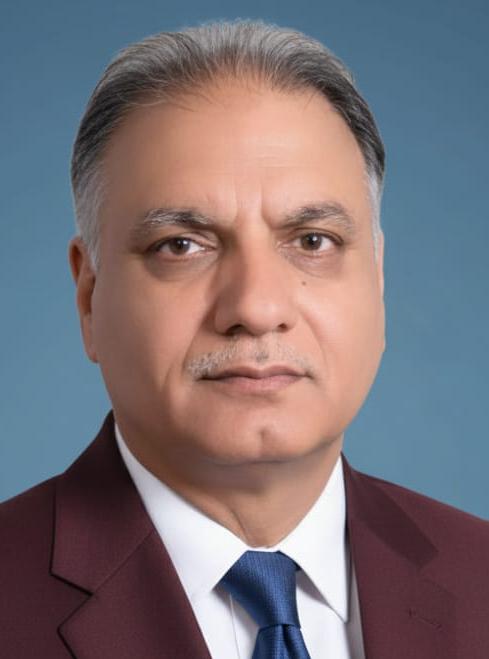
Dr Alamdar Hussain Malik
How many more of our brave sons must return home in coffins before we, as a nation, ask ourselves whether enough is enough? Every time a Pakistani soldier, police officer or other security personnel lays down his life defending the motherland, an entire family is shattered. A mother loses her son, a wife loses her husband, children lose their father, and a home that once waited for his return is left with memories and an unbearable silence. These sacrifices are not statistics; they are precious Pakistani lives.
The painful reports emerging from Ziarat Cross in Balochistan have once again brought this agony before us. Whatever the final confirmed casualty figure may be, the loss of our security personnel is a tragedy for the whole nation. They stood between the terrorists and the people of Pakistan and paid the ultimate price. We salute their courage, honour their sacrifice and pray for their families—but we must also have the courage to ask: How long will we continue to witness the sacrifice of our beloved security forces? Why can we not bring this bloodshed to an end?
Ziarat Cross should not become another tragic incident that dominates the headlines for a few days and then disappears from national attention. It should be a wake-up call for the entire country. Our security forces have fought terrorism for years and made enormous sacrifices. But the recurring attacks force us to ask whether we are doing enough to prevent such tragedies before they happen.
Every major attack must therefore lead to a serious assessment of intelligence, surveillance, security arrangements and coordination among the relevant institutions. We must understand how the attackers were able to reach their targets and identify every weakness that allowed them to succeed. The objective should not simply be to respond after an attack; it must be to prevent the next attack.
The issue is also much bigger than security alone. Continued violence in Balochistan is directly damaging Pakistan’s economic prospects. At a time when the country desperately needs foreign investment, domestic investment, employment, exports and business expansion, insecurity sends exactly the wrong message to investors.
An investor looks first for a secure environment. If people, machinery, goods and capital cannot move safely, the cost and risk of doing business increase. Investment decisions are postponed, projects are delayed and investors can choose other countries where they feel more secure.
Balochistan has enormous mineral wealth, a strategic location, a long coastline and tremendous potential for tourism. The province could become an important engine of Pakistan’s economic growth. But none of this potential can be fully realised without peace and stability.
Tourism is particularly sensitive to insecurity. Balochistan’s mountains, coastline, deserts, historical places and cultural heritage could attract visitors from across Pakistan and abroad. Tourism could create thousands of jobs and generate income for hotels, restaurants, transporters, guides and local businesses. But people will not travel freely to places where they fear for their safety.
The same is true of ordinary business activity. Insecurity disrupts transportation, weakens supply chains, increases security costs and discourages entrepreneurs from expanding. Ultimately, the economic burden is transferred to the entire nation.
Pakistan is already facing serious economic challenges. We simply cannot afford to allow terrorism and economic recovery to continue side by side. We need peace to attract investment, expand business, promote tourism, develop our mineral resources and create employment.
Therefore, Balochistan requires a comprehensive and sustained strategy. Terrorism must be dealt with firmly through effective intelligence, modern surveillance, secure communications, border management and coordinated operations. At the same time, political engagement, good governance, education, employment and economic opportunities must be strengthened so that the people of Balochistan become active partners in peace and development.
Our security forces deserve more than our condolences after every tragedy. They deserve the best intelligence, technology, equipment and institutional support so that they can perform their duties with greater protection. Their families deserve the assurance that the state is doing everything possible to prevent another son, husband or father from being lost.
We must also recognise that lasting peace in Balochistan is essential for Pakistan’s economic future. The province cannot remain a place of enormous opportunity but persistent insecurity. Its mineral resources, tourism potential, strategic routes and coastline can contribute enormously to the country’s prosperity—but only if they are developed in a secure environment.
The government, security institutions, political leadership and civil society must therefore come together with one clear objective: to end this cycle of violence rather than merely manage it.
How many more sacrifices can the nation bear? How many more of our brave personnel must give their lives before we settle this crisis permanently?
There must be a point where the nation says: enough.
We owe our fallen personnel more than words. We owe their families more than condolences. We owe them results.
Ziarat Cross must not be remembered merely as another tragic headline. It must become a turning point—a moment when Pakistan decides that the sacrifices of its brave security forces will not continue indefinitely and that Balochistan’s future will be defined by peace, development and prosperity rather than violence.
Our beloved security forces have sacrificed enough. Now it is the responsibility of the state and the nation to ensure that their blood is not shed in vain.
The writer is Advisor Academics University of Veterinary and Animal Sciences, Swat and Former Financial Adviser Finance Division, Government of Pakistan


