


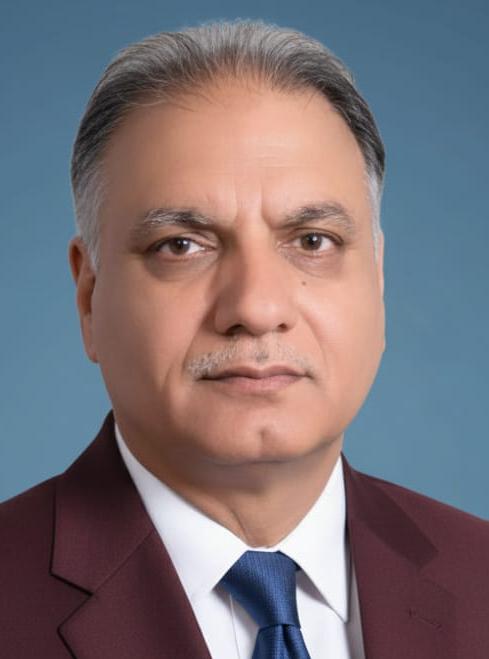
Dr. Alamdar Hussain Malik
Harvard University, one of the world’s most prestigious universities and a global benchmark for excellence in higher education, research and scholarship, has given us a thought-provoking reason to examine the real value of a university degree in today’s rapidly changing world. Harvard has produced an extraordinary number of Nobel laureates and generations of leading scholars, and its research has influenced knowledge across virtually every major discipline. Yet Harvard Medical School, while discussing the “half-life of knowledge,” points out that knowledge is continuously being replaced, revised and sometimes disproved, and that in health and medicine the half-life of published knowledge may be only two to three years. If knowledge can change so dramatically within only a few years—even at the world’s highest levels of scholarship—then what happens to the knowledge contained in a university degree five years after it is awarded? And if one of the world’s foremost universities recognises the extraordinary speed at which knowledge changes, the question Pakistan must confront is even more fundamental: are our universities, our curricula, our research, our faculty and our financial investment in higher education keeping pace with this rapidly expanding world of knowledge—or are we continuing to produce degrees whose certificates remain valid while the knowledge behind them gradually becomes outdated?
This is not a theoretical question. It is a question about the future of Pakistan.
Pakistan has made considerable progress in expanding higher education.
Universities have been established across the country, student enrolment has increased, and thousands of young people graduate every year from undergraduate, postgraduate and professional programmes. But the success of higher education cannot be measured simply by counting universities, students or degrees.
The real question is: what is the quality, relevance and continuing value of the knowledge contained in those degrees?
A student may spend four or five years at a university, study an approved curriculum, pass examinations and receive a degree.
On the day of graduation, that degree represents years of effort and academic achievement. But knowledge does not stop developing on the day the degree is awarded.
Research continues.
New discoveries are made.
Existing theories are challenged.
New technologies emerge.
New methods replace old methods.
And entirely new areas of knowledge appear.
The certificate remains unchanged, but the world of knowledge does not.
This is where Pakistan needs to examine its higher education system very seriously.
The first and most fundamental issue is the curriculum.
A university curriculum cannot remain a static document for years while the discipline itself is changing rapidly. It must be a living academic instrument that evolves with new knowledge, research, technology and professional requirements.
We need to ask how frequently our curricula are genuinely reviewed and updated. Are new discoveries being incorporated quickly enough? Are outdated concepts and methods being removed? Are emerging technologies being introduced where relevant? Are students being prepared for the skills they will need not only when they graduate but five or ten years afterwards?
Curriculum revision should not merely be an administrative exercise or something undertaken because an accreditation body requires it. It should be a continuous academic responsibility.
If the world is moving forward while our curricula remain largely unchanged, our graduates will inevitably face a knowledge gap.
The second major issue is research.
A university cannot become a centre of excellence simply by teaching knowledge produced elsewhere. A serious university must also contribute to the creation of new knowledge.
Research is the engine of a modern university. It challenges established ideas, produces discoveries, develops technologies, creates innovation and provides solutions to national problems.
It also keeps faculty members connected with the latest developments in their disciplines.
We therefore need to ask ourselves honestly: where does university research in Pakistan stand in comparison with the international research community?
How much of our research is internationally competitive?
How much is published in high-quality journals?
How much produces patents, technologies, innovation or practical applications?
How much addresses Pakistan’s economic, social, environmental and technological challenges?
And how much research is undertaken primarily to fulfil requirements for academic degrees or promotion?
These questions may be uncomfortable, but a serious higher education system must ask them.
Research, however, cannot be separated from the quality and competency of university faculty.
A university is ultimately as strong as the people who teach, research and lead it.
Buildings do not teach students.
Laboratories do not conduct research by themselves.
Libraries do not supervise postgraduate students. Expensive equipment does not produce discoveries on its own. It is the faculty that transforms buildings, laboratories, libraries, equipment and financial resources into education, research and knowledge.
This is why the competency of university faculty must be at the centre of our higher education policy.
Are faculty appointments based on merit and academic excellence?
Do teachers possess the research competence required at the level at which they teach?
Are they actively engaged in contemporary research?
Are they regularly updating their knowledge?
Do they have opportunities for professional development, international collaboration and exposure to new research?
Are young faculty members being properly mentored?
And are universities rewarding genuine teaching excellence, research productivity and innovation?
A university cannot produce globally competitive graduates if its faculty themselves are not continuously connected with the advancing frontiers of knowledge.
A teacher who stops learning cannot effectively prepare students for a world that never stops changing.
Faculty development should therefore be regarded not as an optional activity but as an essential component of university quality.
The fourth major issue is the financial strength of our universities.
Quality education and serious research require investment.
Modern laboratories require sophisticated equipment.
Research requires sustained grants. Libraries need access to international journals, databases and digital resources. Faculty development requires funding. Universities need modern information technology and research infrastructure.
It is therefore unrealistic to expect universities to produce internationally competitive graduates and world-class research while denying them adequate financial resources.
But increased funding must also be accompanied by accountability.
We cannot expect universities to produce world-class research while denying them the resources necessary for research. At the same time, we cannot simply increase university budgets without asking what results are being achieved.
We need both adequate investment and academic and financial accountability.
The question is not merely how much money a university receives. The question is how effectively that money is converted into knowledge, research, innovation and quality graduates.
Higher education should not be viewed merely as a recurring expenditure. It is an investment in the intellectual capital and future competitiveness of Pakistan.
Another major issue is the academic culture and leadership of our universities.
Universities need leadership that understands that higher education is not simply about administration, examinations and the awarding of degrees. It is about creating an environment where teaching, research, innovation and intellectual curiosity can flourish.
Academic decisions must be driven by merit and quality. Research must be valued. Faculty must be encouraged to learn and innovate. Students must be encouraged to question, investigate and think critically.
A university that stops learning eventually begins teaching the past.
This is particularly important because the world is entering a period of extraordinary technological transformation.
Artificial intelligence, biotechnology, advanced computing, data science, automation and other emerging technologies are changing the nature of education, employment and professional life. A student entering university today will graduate into a world that may be substantially different from the world in which he or she began the degree.
Our universities must therefore prepare students not merely for today’s employment market but for a changing future.
This requires a fundamental change in our understanding of the degree itself.
A degree should not be considered the completion of education.
It should be considered the foundation for lifelong learning.
A graduate who continues learning can remain professionally relevant even when knowledge changes dramatically. A graduate who stops learning may become outdated despite holding a perfectly valid degree.The same principle applies to universities themselves.
Every university should periodically examine its degree programmes through a five-year knowledge test.
What was being taught five years ago?
What is being taught today?
What new knowledge has emerged?
What has become outdated?
What new technologies have appeared?
What skills are now required?
What research has changed the discipline?
And what should a graduate know five years from now?
The answers should influence what we teach today.
This should become an essential part of quality assurance in higher education.
We need to move away from measuring university success primarily through the number of students enrolled or degrees awarded. The real indicators should include the quality of teaching, relevance of curricula, research output and impact, faculty competency, innovation, graduate employability and the university’s contribution to national development.
The issue is therefore not whether Pakistan needs more universities. It certainly needs access to quality higher education. But expansion without quality can create a dangerous illusion of progress.
We need better universities, not simply more universities.
We need better research, not simply more research papers.
We need competent and continuously developing faculty, not simply larger numbers of faculty.
We need relevant curricula, not simply approved curricula.
And we need adequately funded universities that are accountable for the quality and impact of their work.
The Harvard reference therefore provides the starting point, but the real subject of this discussion is Pakistan.
If one of the world’s most prestigious universities and research institutions recognises that knowledge itself has a short and continuously changing life cycle, where do our universities stand?
Are our curricula keeping pace?
Is our research keeping pace?
Are our faculty keeping pace?
Are our university budgets sufficient to support modern education and research?
Are our institutions creating new knowledge or mainly transmitting old knowledge?
And are our graduates capable of remaining relevant five years after receiving their degrees?
These are questions we cannot avoid any longer.
The world will not slow down while we catch up.
Knowledge will continue to expand.
Research will continue to challenge established ideas.
Technology will continue to transform professional life.
The universities that continuously adapt will lead.
Those that fail to adapt will gradually fall behind.
And their graduates will face the same fate.A degree may remain valid for a lifetime. But the knowledge behind that degree must continuously be renewed.
That is the real lesson we should take from the Harvard discussion of the half-life of knowledge.
And that is the real challenge before Pakistan: not simply to produce more graduates, but to ensure that the knowledge represented by their degrees remains alive, relevant and competitive in a world that refuses to stand still.
The writer is Advisor Academics, University of Veterinary and Animal Sciences, Swat and Former Financial Advisor, Finance Division, Government of Pakistan.