


ISLAMABAD (Web Desk) –Iran has rejected fresh threats of sweeping economic pressure from US President Donald Trump as tensions across the Middle East deepen, with developments involving Gaza, the occupied West Bank, Syria and Red Sea shipping adding to an increasingly volatile regional picture.
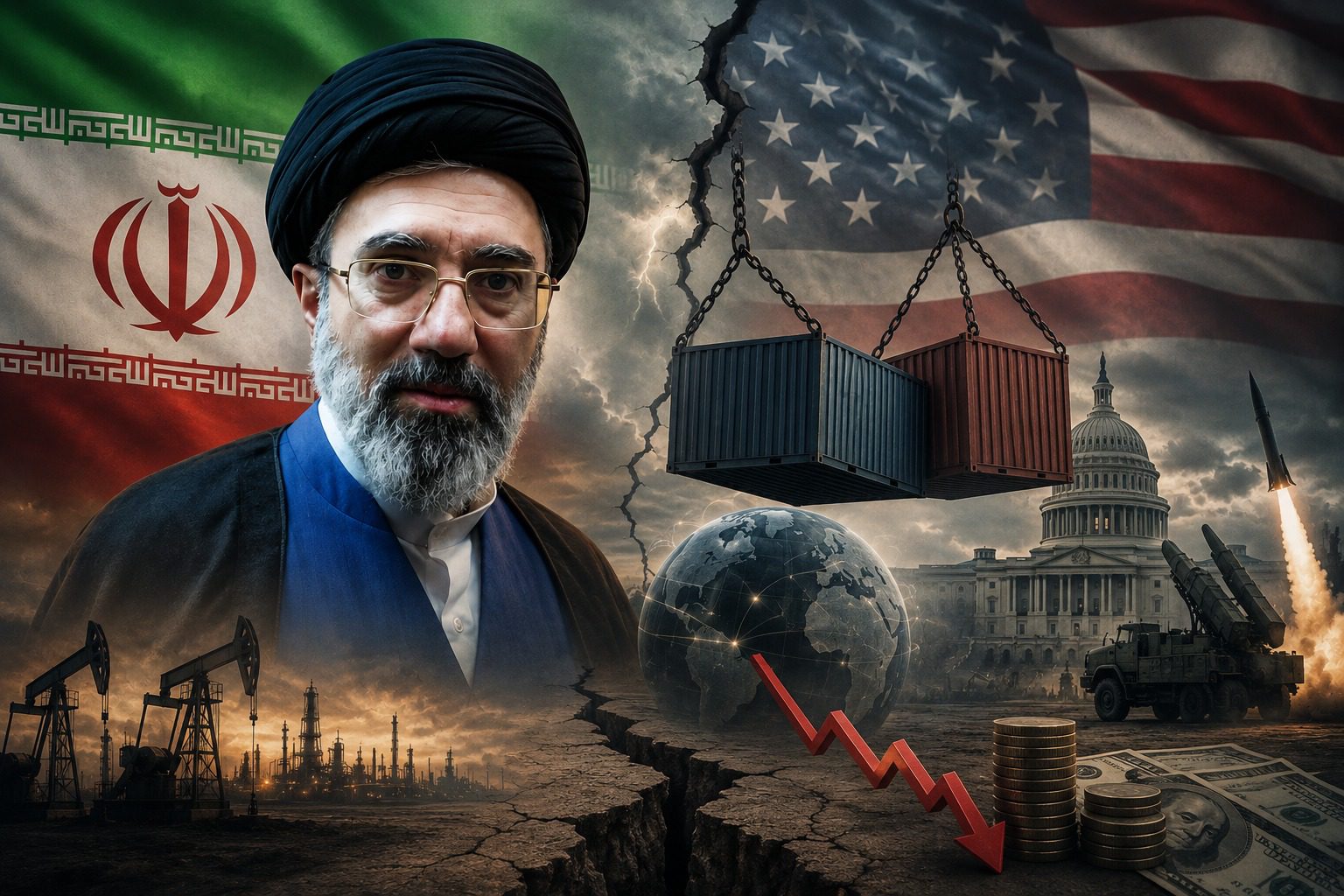
Iranian Foreign Minister Abbas Araghchi dismissed Washington’s warning of tougher economic measures, arguing that previous attempts to pressure Tehran had failed and that renewed coercion would only deepen hostility toward the United States.
Read also: Suspected anti-Muslim attacks in Edinburgh leave five injured, counterterrorism police investigate
22 soldiers laid to rest after Pakistan army helicopter crash in Muzaffarabad
Trump had threatened Iran with what he described as severe economic measures and unprecedented isolation, without immediately providing detailed measures that Washington planned to impose.
Araghchi responded by accusing the United States of using economic pressure as a political weapon. He also argued that such policies threatened not only Iran but the economic sovereignty of other countries.
The exchange comes at a sensitive moment as regional governments attempt to prevent further escalation and revive diplomatic engagement.
Read also: Grocery stores may stay open longer as government weighs extension of austerity measures
Pakistan pushes for Iran-US de-escalation
Pakistan has emerged as an important diplomatic player in efforts to reduce tensions between Washington and Tehran.
Pakistani officials have maintained contacts with both Iran and the United States as Islamabad pushes for de-escalation and a return to negotiations following the expiry of a 60-day deadline linked to a June memorandum of understanding.
The diplomatic activity coincided with Syrian Foreign Minister Assad al-Shibani’s visit to Islamabad for talks expected to cover regional security and broader Middle Eastern developments.
The visit assumes additional significance after Israeli strikes hit the Abu Duhur air base in northern Syria earlier this week.
Turkey, meanwhile, rejected claims that a Turkish military delegation had visited the Syrian base before the Israeli attack. Ankara has reiterated that it intends to continue supporting efforts to rebuild Syria’s military capabilities.
The overlapping diplomatic and military developments underscore Pakistan’s growing challenge of maintaining relations with key regional and global actors while avoiding being drawn directly into expanding Middle Eastern confrontations.
West Bank settlement plan draws international criticism
Separately, Britain, Egypt and Jordan criticised a new Israeli settlement initiative near Jerusalem amid concerns that further construction could undermine the territorial continuity of a future Palestinian state.
Israel’s Ministry of Construction and Housing has issued a tender involving more than 1,200 housing units in an area east of Jerusalem.
Critics argue that construction in the area could effectively divide the occupied West Bank and further complicate prospects for a viable contiguous Palestinian state.
British Foreign Secretary Ed Miliband called for the move to be reversed, while Egypt warned that the project could further separate East Jerusalem from surrounding Palestinian areas.
Israeli Foreign Minister Gideon Saar defended Israel’s position, invoking what he described as the Jewish people’s historic connection to the land and criticising the British government’s approach.
The settlement dispute adds another diplomatic flashpoint at a time when international attention remains focused on the continuing humanitarian consequences of the Gaza conflict.
Gaza families bury victims recovered after years
In Gaza City, Palestinians held a mass funeral for 50 people whose bodies were recently recovered from rubble nearly three years after they were killed in Israeli airstrikes.
The victims belonged to three families and were killed during strikes in November and December 2023.
Mourners carried remains through heavily damaged streets before burial, bringing a measure of closure to families that had waited years to recover their relatives.
Gaza’s Health Ministry says more than 73,400 Palestinians have been killed during the nearly three-year conflict. The ministry does not distinguish between combatants and civilians in its overall death toll.
Pakistani sailors return after Houthi attack
The regional conflict has also directly affected Pakistani nationals.
The bodies of two Pakistani sailors killed in a Houthi attack on a Tanzanian-flagged commercial vessel in the Bab el-Mandeb Strait have been brought back to Pakistan.
Foreign Minister Ishaq Dar said six Pakistani sailors injured in the attack had also returned safely.
The incident highlights the risks facing Pakistani seafarers as instability around the Red Sea and Bab el-Mandeb continues to threaten international shipping.
What the developments mean
The latest events show that Middle East tensions are no longer confined to a single battlefield. Economic confrontation between Washington and Tehran, Israeli military activity in Syria, settlement expansion in the occupied West Bank, the Gaza conflict and attacks on commercial shipping are increasingly interconnected.
Any further escalation between Iran and the United States could have consequences far beyond the region, particularly for global energy supplies, shipping costs and oil prices.
For Pakistan, stability in the Middle East carries significant economic and strategic importance. The country relies heavily on imported energy and maintains close political, economic and security relationships with Gulf states while sharing a long border with Iran.
Higher oil prices or disruption to major maritime routes could increase Pakistan’s import bill, transport costs and inflationary pressures.
Islamabad’s efforts to encourage dialogue between Iran and the United States therefore have both diplomatic and economic significance. Pakistan will likely continue advocating negotiations while seeking to maintain working relations with Washington, Tehran and major Arab capitals.
Attention will now focus on whether Washington translates Trump’s warning into additional sanctions or other economic restrictions and how Tehran responds.
Diplomatic efforts by Pakistan and other regional states could become increasingly important if both sides remain willing to keep indirect channels open. At the same time, developments in Gaza, Syria, the West Bank and the Red Sea could complicate efforts to prevent a broader regional confrontation.