


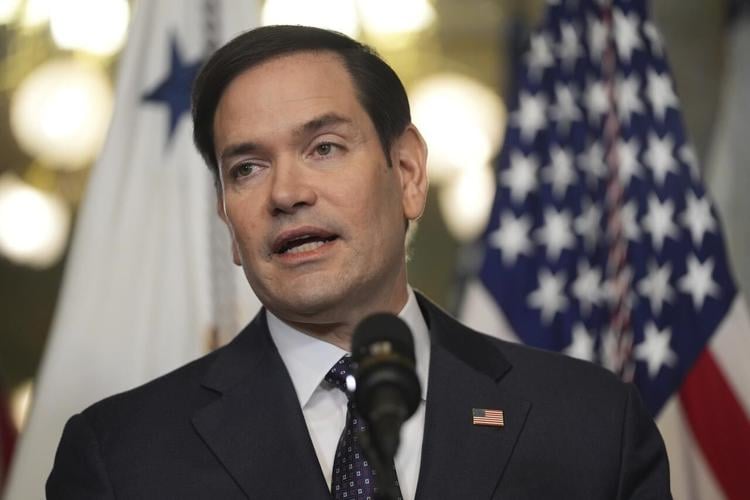
WASHINGTON/JAIPUR (News Desk) – United States Secretary of State Marco Rubio has said that a diplomatic agreement with Iran remains achievable despite renewed American military strikes that have raised concerns about the future of a fragile ceasefire and ongoing negotiations.
Speaking to reporters in Jaipur during an official visit to India, Rubio acknowledged that tensions remain high but stressed that diplomatic channels are still open and active. His remarks came amid growing international concern that the latest military actions could undermine efforts to ease hostilities and revive dialogue between Washington and Tehran.
“There were some talks going on in Qatar today, so we’ll see if we can make progress. I think it’s a lot of talking back and forth going on about specific language in the initial document, so it’ll take a few days,” Rubio said.
The top US diplomat indicated that negotiators are currently focused on resolving differences over the wording and framework of a potential agreement. According to Rubio, discussions have not collapsed despite recent developments on the ground, and both sides remain engaged in efforts to find common ground.
Rubio also reiterated President Donald Trump’s position regarding negotiations with Iran, emphasizing that Washington seeks a deal that adequately addresses its security concerns and strategic objectives.
“The president’s expressed his desire to make it. He’s either going to make a good deal or no deal,” Rubio said, signaling that the administration is unwilling to accept compromises it views as unfavorable.
The comments come at a sensitive moment in US-Iran relations. Recent American strikes have cast doubt on the durability of a ceasefire that was intended to reduce tensions and create space for diplomacy. While details of the strikes and their impact remain under scrutiny, analysts say they have complicated an already delicate negotiating environment.
Qatar has continued to play a key mediating role in contacts between the two sides. The Gulf state has frequently served as a diplomatic bridge during periods of heightened tension, facilitating communication and helping prevent direct confrontation between Washington and Tehran.
International observers are closely monitoring the negotiations, as any breakthrough could have significant implications for regional stability, global energy markets, and broader Middle East security. A successful agreement could ease tensions that have persisted for years over Iran’s nuclear activities, regional influence, and relations with Western powers.
However, significant challenges remain. Differences over sanctions, security guarantees, verification mechanisms, and the scope of any future commitments continue to complicate the talks. Political pressures within both the United States and Iran also limit the flexibility of negotiators.
Despite these obstacles, Rubio’s remarks suggest that the US administration believes diplomacy remains the preferred path forward. His statement reflects cautious optimism that ongoing discussions in Qatar could eventually produce a framework acceptable to both sides.
Diplomatic sources say the coming days may prove critical as negotiators work through technical and political details. While no immediate breakthrough is expected, continued engagement is viewed as an encouraging sign that dialogue has not been abandoned despite renewed military tensions.
Analysts warn that failure to reach an agreement could lead to further instability in the region, while a successful deal could mark an important step toward reducing one of the Middle East’s most persistent security challenges.