


By Dr Alamdar Hussain Malik
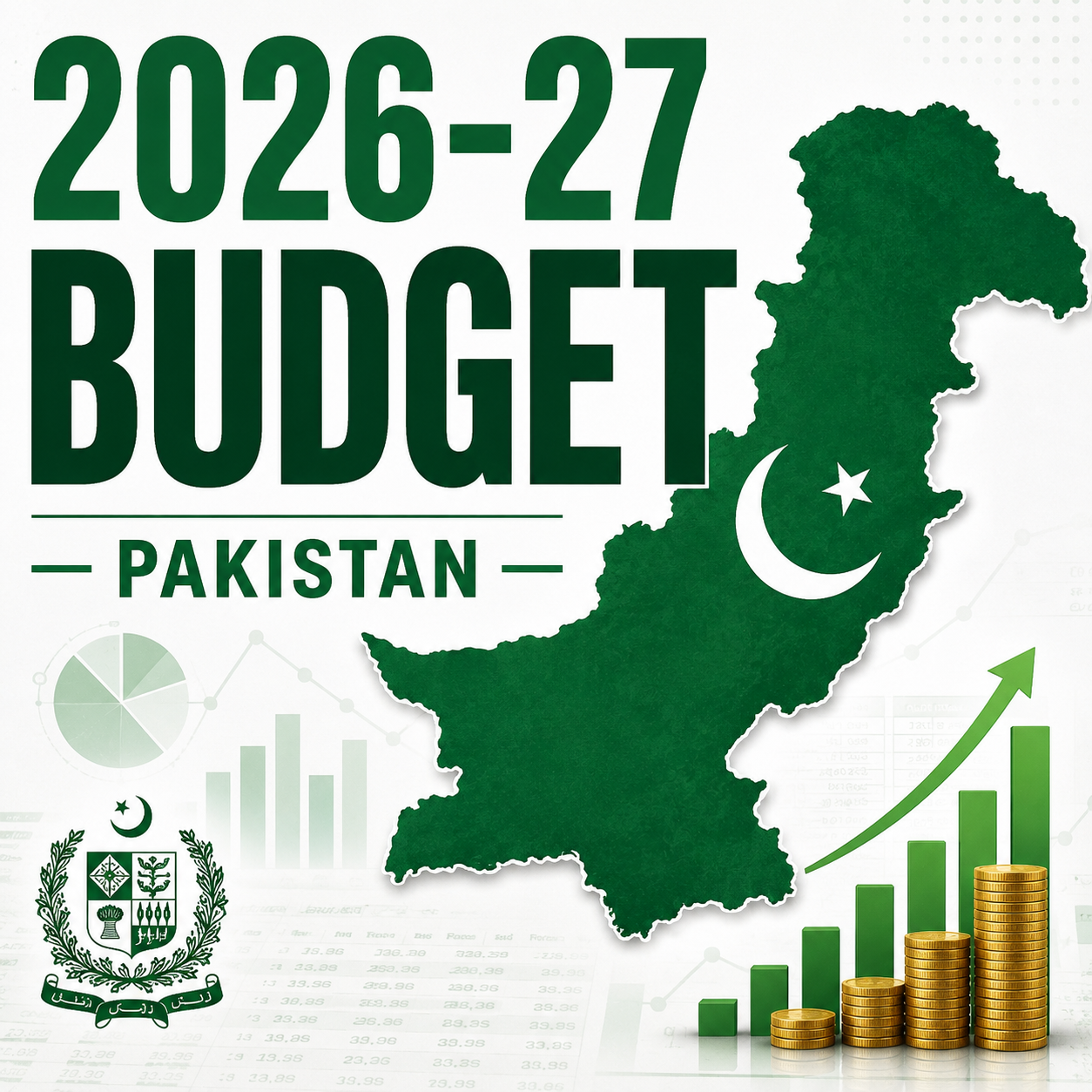
Pakistan is preparing to announce the Federal Budget 2026–27 at a time when the country is facing one of the most difficult economic periods in its history. The budget is being formulated under strict IMF oversight, with the government attempting to balance public expectations, economic survival, and international financial commitments simultaneously.
Unfortunately, many analysts fear that the upcoming budget may become another austerity-driven document aimed more at satisfying external lenders than addressing the suffering of ordinary Pakistanis.
Pakistan’s economy is currently under immense pressure from rising debt, inflation, unemployment, currency depreciation, and declining industrial growth.
. According to recent estimates, Pakistan’s total public debt has approached nearly Rs97,000 billion, marking a historic increase in national liabilities. This means that every Pakistani — whether a newborn child or an elderly citizen — is effectively burdened with approximately Rs370,000 in debt. Such figures highlight the dangerous pace at which borrowing has increased over recent years.
Even more alarming is the fact that a major portion of Pakistan’s annual budget is now consumed by debt servicing alone. Estimates suggest that debt repayments and interest payments may exceed Rs11 trillion in the coming fiscal year, leaving limited resources for development, education, healthcare, agriculture, livestock, and social welfare. In simple terms, Pakistan is increasingly borrowing not for development, but merely to repay previous loans and keep the economy afloat.
The IMF has reportedly asked Pakistan to maintain strict fiscal discipline, increase tax revenues, reduce subsidies, and continue reforms in the energy and public sectors. The Federal Board of Revenue (FBR) may receive a revenue target exceeding Rs15.5 trillion for 2026–27, which would represent another record increase in taxation demands. However, the challenge remains whether such targets can realistically be achieved without further burdening the already struggling middle and lower-income classes.
Pakistan’s trade imbalance remains one of the biggest structural weaknesses of the economy. Despite repeated economic reforms and IMF programs, the country continues to import far more than it exports. Pakistan’s annual import bill has frequently remained around $65–70 billion, while exports have struggled near $30 billion, creating a trade gap of nearly $40 billion. This enormous imbalance places constant pressure on foreign exchange reserves, weakens the rupee, and forces the country to seek external borrowing simply to finance imports and stabilize the balance of payments.
A significant portion of Pakistan’s imports consists of petroleum products, machinery, chemicals, edible oil, pharmaceuticals, and industrial raw materials. At the same time, exports remain heavily concentrated in low value-added textile products, rice, and a few traditional sectors. The failure to diversify exports and increase industrial productivity has kept Pakistan economically vulnerable and excessively dependent on foreign lenders.
Pakistan’s economy is also heavily dependent on overseas Pakistanis working abroad. Nearly 10 million Pakistanis living and working in the Gulf countries, Europe, North America, and other regions send approximately $35–40 billion annually in remittances. These remittances have become one of the largest and most reliable sources of foreign exchange for the country. In reality, this inflow serves as the main lifeline helping Pakistan manage its massive import-export imbalance, stabilize foreign exchange reserves, support the rupee, and prevent deeper economic collapse. Without the hard-earned remittances of overseas Pakistanis, Pakistan’s balance of payments crisis could become far more severe. The contribution of overseas Pakistanis therefore deserves not only appreciation but also serious policy support, investment facilitation, and institutional respect from the state.
The depreciation of the Pakistani rupee over recent years has further intensified economic pressure. A weaker rupee increases the cost of imports, fuel, medicines, machinery, and industrial inputs, which ultimately fuels inflation for ordinary consumers. While currency depreciation may provide some temporary support to exports, Pakistan has not been able to fully capitalize on this advantage due to energy shortages, inconsistent policies, high production costs, and weak industrial competitiveness.
Pakistan’s inflation crisis continues to severely affect ordinary households. Over the past few years, prices of flour, sugar, ghee, electricity, gas, medicines, fuel, transport, and school fees have risen dramatically. In many urban areas, household electricity bills have become unaffordable for salaried families. Gas shortages and inflated utility tariffs have further reduced living standards. Many citizens now spend most of their income merely on survival rather than savings or investment.
The salaried class remains one of the most heavily taxed sectors of society. Despite being fully documented taxpayers, salaried individuals continue to face increasing tax deductions while inflation destroys purchasing power. Many professionals, teachers, engineers, doctors, and government employees believe that the tax burden is disproportionately imposed upon compliant taxpayers, while large segments of the undocumented economy continue to escape accountability.
Pakistan’s poverty situation also remains deeply concerning.
Independent economic estimates suggest that nearly 40 percent of Pakistan’s population is now living close to or below the poverty line. Rising inflation and unemployment have pushed millions of families into financial distress. For many households, basic necessities such as milk, meat, medicine, and education are increasingly becoming luxuries rather than necessities.
The unemployment crisis among youth is another serious national concern.
Every year, hundreds of thousands of graduates enter the job market, yet employment opportunities remain limited due to weak industrial growth and low investment. Many highly educated young Pakistanis are either unemployed, underemployed, or seeking opportunities abroad. This growing brain drain threatens Pakistan’s future human capital and economic productivity.
Agriculture, which contributes significantly to Pakistan’s GDP and employs a large rural population, continues to suffer from structural problems. Rising fertilizer prices, expensive diesel, water shortages, climate change, and increasing electricity tariffs have weakened farmers’ profitability. Wheat growers, sugarcane farmers, cotton producers, and dairy farmers are all struggling with rising input costs and unstable market prices.
Pakistan’s livestock sector remains critically underutilized despite its massive economic potential. Livestock contributes more than 60 percent to the agricultural economy and supports millions of rural families. Yet dairy farmers continue to struggle due to expensive animal feed, veterinary medicine shortages, disease outbreaks, and poor government support.
Pakistan possesses the capacity to become a major exporter of halal meat, dairy products, leather, and value-added livestock products, potentially generating billions of dollars in foreign exchange if proper investment and reforms are introduced.
Climate change is also emerging as a major economic threat. Pakistan continues to face floods, droughts, heatwaves, and water shortages that directly impact agriculture, infrastructure, public health, and food security. The devastating floods of previous years caused billions of dollars in damages, yet climate resilience and disaster preparedness still receive insufficient budgetary priority.
The energy sector remains another major source of economic instability.
Pakistan’s circular debt in the power sector has crossed alarming levels, while electricity theft, transmission losses, and poor governance continue to weaken the system.
Under IMF conditions, the government is expected to continue increasing electricity and gas tariffs in order to reduce subsidies and recover costs. However, these measures further increase inflation and reduce industrial competitiveness.
The industrial sector is facing severe difficulties due to high interest rates, expensive electricity, currency instability, import restrictions, and reduced consumer demand. Textile exports — traditionally Pakistan’s largest export sector — have experienced significant pressure in recent years. Many factories have reduced production, while some businesses have shifted investments to other countries with lower energy and production costs.
Pakistan’s export performance remains weak compared to regional competitors.
Despite a population exceeding 240 million, Pakistan’s exports remain far below countries such as Bangladesh and Vietnam. The country continues to rely heavily on imports while struggling to diversify exports beyond textiles and a few traditional sectors. Without export-led growth, Pakistan may remain trapped in recurring balance-of-payment crises and IMF dependency.
Another serious concern is the widening inequality between the elite and ordinary citizens. While the common man faces rising taxes, inflation, and utility bills, many privileged sectors continue to enjoy exemptions, untaxed privileges, luxury imports, and state benefits. Sustainable economic reform requires equal sacrifice, transparency, and accountability from all sectors of society.
Pakistan must also confront the reality that economic dependence on foreign loans has weakened national sovereignty. Repeated IMF programs over decades have failed to produce lasting stability because structural reforms were either delayed, politicized, or implemented unevenly.
The country now faces a crucial choice: continue surviving through borrowing and austerity, or pursue long-term reforms based on production, exports, investment, industrialization, agricultural modernization, and institutional accountability.
The Federal Budget 2026–27 is therefore not merely an annual financial statement; it is a test of Pakistan’s economic direction and political courage. Policymakers must recognize that budgets cannot succeed if they ignore the suffering of ordinary citizens.
Economic stabilization should not come at the cost of destroying the middle class, weakening farmers, discouraging industry, and increasing poverty.
Pakistan possesses enormous potential in agriculture, livestock, minerals, youth population, information technology, regional trade, and strategic geography. With honest governance, long-term planning, institutional reforms, investment in human capital, and economic justice, the country can gradually reduce its dependence on external borrowing.
The most critical question remains: how long can Pakistan continue under IMF-driven economic management, and what real cost is being paid by the people in return for short-term financial stability? Can a nation truly build its future when every budget is shaped by external conditions, rising debt, and repeated cycles of adjustment?
Pakistan must now decide whether it will continue in a cycle of dependency or move toward genuine economic sovereignty.
The people of Pakistan do not merely need another IMF-compliant budget.
They need relief from inflation, employment opportunities, affordable energy, fair taxation, economic dignity, and hope for a stable future. Without people-centered economic policies, no budget — regardless of international approval — can bring lasting national stability or prosperity.