


By Asim Shahzad
LAHORE: Punjab Government & UNDP partner on Innovative SDG Financing; Roll out Province’s First Integrated Financing Strategy.
With Pakistan facing a widening development financing gap and increasing climate vulnerabilities, mobilising innovative financial solutions has become critical to achieve the Sustainable Development Goals (SDGs) by 2030.
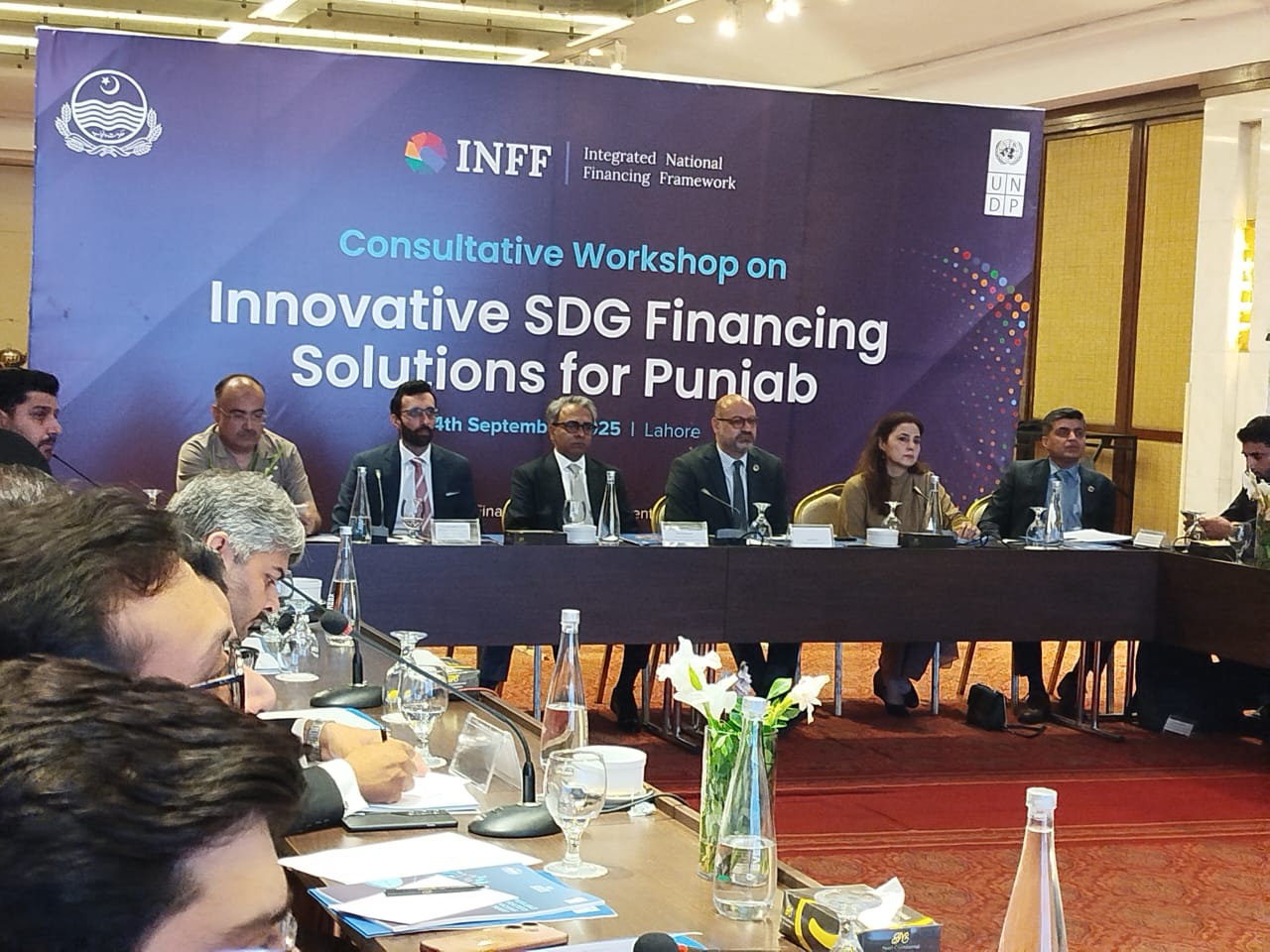
To advance this agenda, the United Nations Development Programme (UNDP) and the Punjab Resource Management and Policy Unit (PRMPU), Government of Punjab, convened a high-level consultative workshop on Innovative SDG Financing Solutions for Punjab to identify financial instruments that can bridge the province’s financing gap and fast-track progress toward the 2030 Agenda.
The workshop marked a major milestone in rolling out Punjab’s Integrated Financing Strategy—the first sub-national Integrated National Financing Framework (INFF) in Pakistan. Developed under the guidance of the Planning and Development Board and Finance Department, with technical support from UNDP, the framework provides a roadmap to align provincial, private, and international financing with Punjab’s development and climate goals.
Dr. Samuel Rizk, UNDP Resident Representative in Pakistan and co-chair of the workshop, emphasised the urgency of mobilising non-traditional financing to support sustainable development. “Pakistan faces narrowing fiscal space, rising debt, and escalating climate risks.
Yet, within these challenges lies opportunity. With global private wealth exceeding US$460 trillion, even a modest redirection can accelerate transformative investments for inclusive and climate-resilient growth. Punjab’s commitment to adopt an Integrated Financing Strategy reflects the foresight needed to deliver real impact.”
Highlighting the Government’s commitment, Mr. Ahmed Rajwana, co-chair and Managing Director of PRMPU, stated: “Punjab contributes the largest share to Pakistan’s economy and carries a unique responsibility to lead on the SDGs.
This workshop represents a shift from planning to implementation, using practical tools to attract private capital, build resilience, and drive sustainable growth. By using climate funds, blended finance, and results-based models, we can ensure Punjab remains a driver of national development.”
The workshop brought together key representatives from the Punjab Finance Department, Environment & Climate Change Department, Provincial Disaster Management Authority, Punjab Public-Private Partnership Authority, Lahore Chamber of Commerce & Industry, State Bank of Pakistan, UK’s Foreign, Commonwealth & Development Office and GIZ, along with academia and research institutions.
Sharing the government’s steps for innovative financing, Mr. Umer Abbas Mela, Additional Secretary Finance, Punjab, added: “The Finance Department is actively working to institutionalise innovative financing within public sector frameworks. Through greater fiscal decentralisation and improved public financial management, we aim to create an enabling environment that attracts private investment and international climate finance. The INFF provides us with the strategic direction and policy alignment needed to make this a reality.”
According to UNDP’s Sustainable Development Report 2025, Pakistan is on track to meet only 19 percent of its SDG targets, while the IMF estimates an additional 16.1 percent of GDP will be needed annually, with climate adaptation alone requiring US$7–14 billion each year. Against this backdrop, Punjab’s adoption of the INFF positions it as a pioneer in sustainable financing, with this workshop helping the Government prioritise actionable tools, access new capital, and build the institutional frameworks needed to serve as a national model for innovative development finance.