


By Asim Shahzad
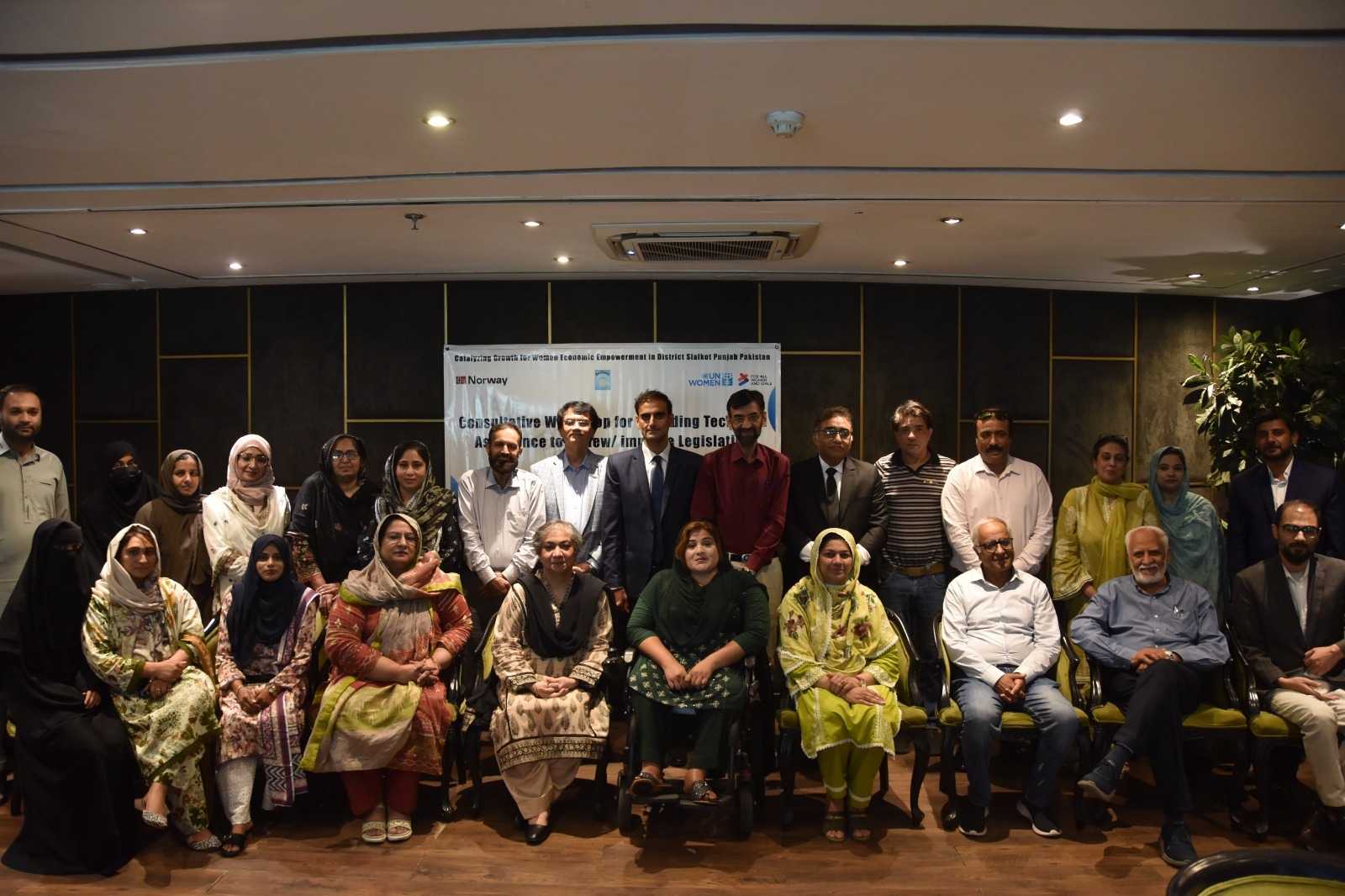
LAHORE: A consultative workshop organized by Baidarie on Friday called for stronger implementation of pro-women legislation, improved labour protections and urgent reforms to empower women workers and other vulnerable groups across Punjab.
Reas also: Rwadari Tehreek Pakistan stages one-day hunger strike
Held under the project Catalyzing Growth for Women Economic Empowerment in District Sialkot (Punjab), Pakistan, with support from UN Women Pakistan, the workshop brought together policymakers, legal experts, labour representatives, civil society members, women workers’ groups, trade unions and media professionals to review and strengthen legislative frameworks aimed at protecting women’s rights.
Participants examined existing federal and provincial laws and policies designed to safeguard women, girls and marginalized communities, while identifying gaps in implementation and opportunities for reform.
The workshop served as a platform for dialogue between government institutions and grassroots stakeholders to advance practical solutions for inclusive and gender-responsive policymaking.
Dr. Javaid Gill delivered a detailed presentation on the Punjab Home-Based Workers Act 2023, outlining its key provisions and discussing major implementation challenges. He stressed that while the legislation marked a significant step forward for labour rights, persistent structural and administrative gaps were preventing women workers from fully benefiting from the law.
He emphasized the need for stronger enforcement, institutional ownership and effective monitoring mechanisms to translate legal protections into meaningful change for home-based workers.
Ms. Hina Noureen highlighted Baidarie’s continued efforts to promote women’s economic empowerment, particularly through interventions supporting women workers in Sialkot. She shared insights into the ongoing project and underscored the importance of linking legal reform with economic inclusion and social protection.
Ms. Umme Laila Azhar addressed the current state of labour law enforcement and called for stronger accountability mechanisms to ensure laws enacted for women workers are properly implemented.
Participants voiced concern over weak enforcement of the Punjab Home-Based Workers Act despite it being in place for three years. They noted that many women working from home continue to face exploitation, low wages, lack of recognition and limited access to social security protections.
Detailed discussions focused on shortcomings in the law and practical measures required to bridge policy gaps.
Stakeholders stressed that home-based workers should enjoy rights equal to those available to other workers, including fair wages, pensions, social security coverage and safer working conditions.
Speakers particularly highlighted the challenges faced by women in informal and home-based sectors, noting that gender inequality, economic vulnerability and limited institutional support continue to restrict their empowerment.
The consultative session also reviewed broader women protection laws related to gender-based violence (GBV), workplace harassment and discrimination.
Participants emphasized that legislation alone was insufficient without stronger implementation systems, better coordination among institutions and greater public awareness.
Calls were made for capacity building of state institutions, gender sensitization of public bodies and improved access to justice for women facing exploitation or violence.
The workshop produced a series of practical recommendations aimed at strengthening implementation of labour and protection laws while promoting inclusive and gender-responsive governance.
Among key proposals discussed were improving enforcement of the Punjab Home-Based Workers Act 2023, expanding social protection for women workers, strengthening institutional coordination and integrating women workers’ voices into policymaking processes.
Participants also underscored the media’s role in raising awareness, shaping public discourse and supporting advocacy for women’s rights.
Speakers said responsible media engagement can help amplify the concerns of marginalized workers and contribute to building momentum for policy reforms.
The event concluded with a shared commitment among stakeholders to continue collaborative efforts for protecting women, home-based workers and vulnerable groups, while working toward a more inclusive and equitable society.
Organizers said the consultative process would contribute to future policy recommendations and advocacy initiatives aimed at improving women’s economic participation and strengthening labour protections in Punjab.
The workshop reaffirmed that meaningful women’s empowerment requires not only progressive laws, but also effective implementation, institutional commitment and sustained collaboration among government, civil society and development partners.