


By Muhammad Mohsin Iqbal
The tragedy of the Sub Continent did not conclude with the lowering of the Union Jack in August 1947; it merely entered a new and turbulent phase. No sooner had Pakistan emerged upon the map of the world than mistrust and hostility clouded its eastern horizon. The first test came almost instantly in the form of the Kashmir conflict of 1947–48, when forces clashed over the princely state of Jammu and Kashmir, and the dispute was carried to the United Nations. The ceasefire line that later became the Line of Control did not extinguish animosity; it institutionalised it.
Read also: Pakistan’s water crisis is not unique — How others fixed theirs
In 1965, full-scale war again erupted between the two neighbours. The plains of Punjab and the valleys of Kashmir bore witness to fierce engagements before the guns fell silent under the Tashkent Declaration. Yet peace proved fragile. In 1971, amidst political turmoil in what was then East Pakistan, war once more broke out. The secession of East Pakistan and the birth of Bangladesh marked the most painful chapter in Pakistan’s history. While internal political errors, miscalculations, and failures of statesmanship undeniably contributed to that catastrophe, it is equally part of the historical record that India intervened militarily in support of the Mukti Bahini, transforming an internal crisis into a decisive international conflict. Thus Pakistan was dismembered, and a wound was carved into its national psyche that time has yet to fully heal.
The decades that followed did not bring repose. The Siachen conflict of 1984 opened yet another theatre of confrontation upon the world’s highest battlefield. In 1999, the Kargil episode rekindled open hostilities in the mountains of Kashmir, reminding both nations that the spectre of war remained ever present. Even in the twenty-first century, skirmishes along the Line of Control and episodes such as the Pulwama-Balakot crisis of 2019 underscored the volatility that persists between two nuclear-armed neighbours.
When conventional warfare failed to bend Pakistan to submission, accusations and counter-accusations of covert destabilisation intensified. Pakistan has long maintained that separatist elements in Balochistan have received external encouragement and material support, pointing to the arrest of Kulbhushan Jadhav in 2016 as evidence of Indian involvement in espionage and sabotage.
Parallel to the theatre of arms has been the subtler but no less consequential arena of water. The Indus basin is the lifeblood of Pakistan’s agriculture and, by extension, its economy. Recognising the potentially explosive nature of river disputes, the two countries, with the good offices of the World Bank, signed the Indus Waters Treaty in 1960. Under this agreement, the three eastern rivers—Ravi, Beas, and Sutlej—were allocated to India, while the three western rivers—Indus, Jhelum, and Chenab—were reserved largely for Pakistan, subject to certain uses by India. For decades, this treaty was hailed as a rare example of cooperation enduring even through war.
Yet controversies have arisen repeatedly over Indian hydroelectric projects on the western rivers. Pakistan has approached neutral experts and the Permanent Court of Arbitration over projects such as Baglihar on the Chenab and Kishanganga on the Neelum-Jhelum system, alleging design features inconsistent with treaty provisions. India has maintained that its projects conform to the letter of the agreement. The legal and technical disputes have reflected not merely engineering disagreements but deep-seated mistrust.
The Shahpur Kandi Dam on the Ravi River represents the latest focal point of anxiety. The Ravi, being one of the eastern rivers allocated to India under the Indus Waters Treaty, has long been subject to India’s right of unrestricted use after meeting certain transitional obligations. Nevertheless, developments that further regulate and utilise its waters inevitably affect downstream flows toward Pakistan, particularly in border areas historically dependent on residual supplies. Reports indicate that the dam’s operationalisation will enable irrigation in India’s Kathua and Samba districts in Jammu and Kashmir, as well as in Punjab. Pakistani observers fear that diminished flows will aggravate water scarcity in already drought-prone regions on their side of the border.
Water, unlike rhetoric, obeys the laws of gravity and geography, not of passion. Pakistan is among the most water-stressed countries in the world, with per capita availability declining sharply since independence due to population growth, climate change, and inadequate storage infrastructure. Any reduction in river inflows intensifies domestic vulnerability.
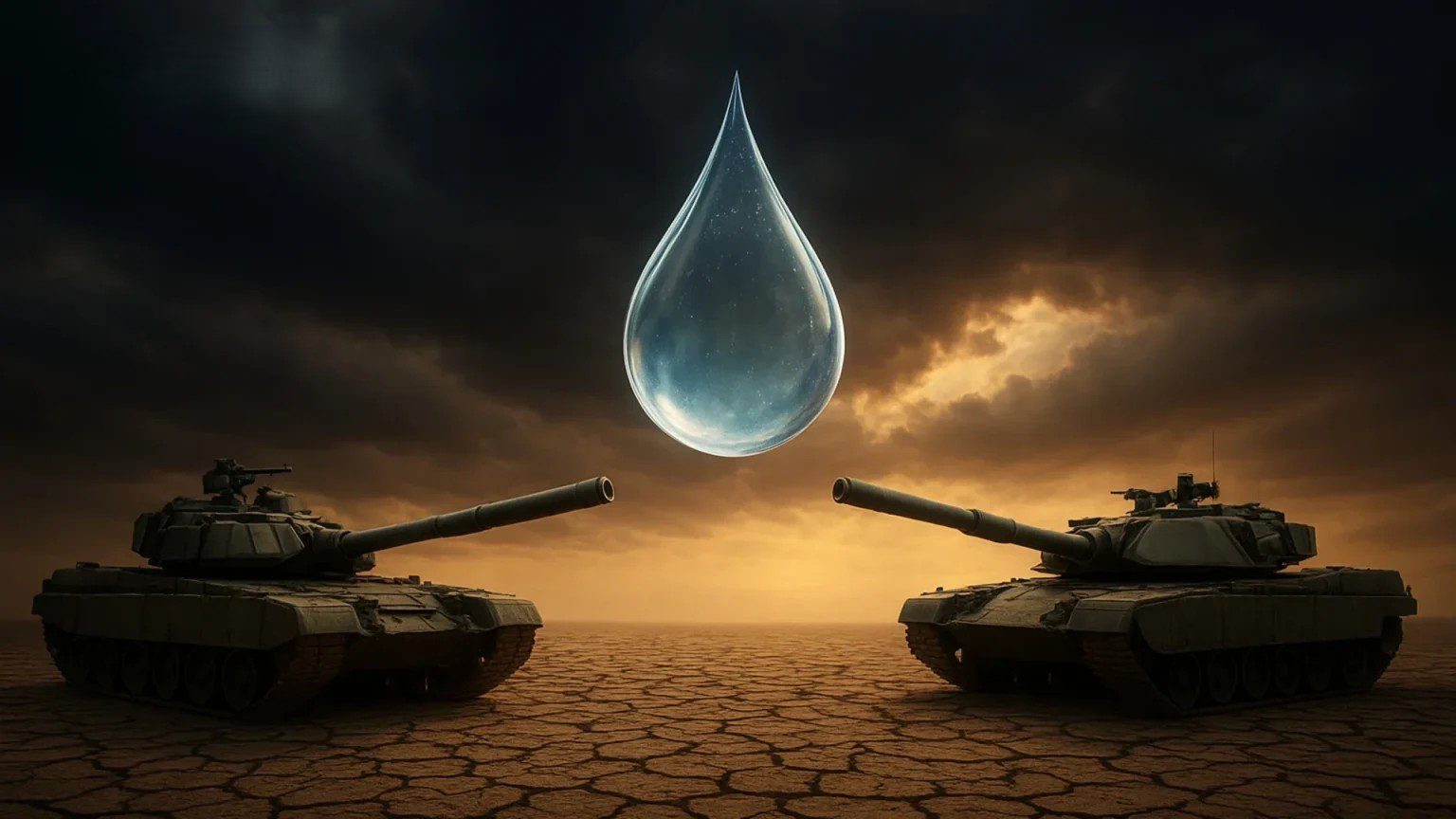
Yet the broader pattern from 1947 to the present reveals a rivalry that has shifted forms without losing intensity. From conventional wars to proxy allegations, from mountain skirmishes to hydraulic engineering, the contest has endured. Water, in this evolving equation, has emerged as a silent but potent instrument of influence. If mistrust continues to dominate relations, every dam will be perceived as a weapon and every canal as a conduit of coercion.
Rivers, by their nature, are symbols of continuity and interdependence. They traverse boundaries without regard for political divisions. If converted into tools of pressure, they imperil not only one nation but the ecological balance of an entire region already vulnerable to climate change. Pakistan must safeguard its rights under international agreements with vigilance and firmness. A befitting response to any perceived aggression lies as much in national discipline and foresight as in diplomatic protest. The chronicles of the past seven decades testify to endurance amidst adversity; the challenge of the future is to transform that endurance into sustainable strength.