


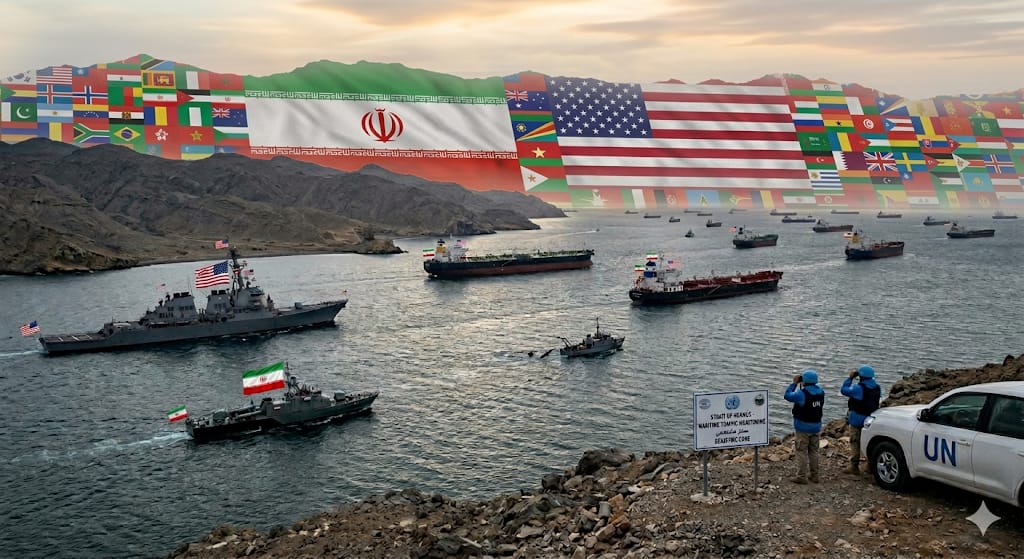
WASHINGTON/ISLAMABAD (Web Desk) — The United States and Iran have agreed on a preliminary framework aimed at ending the ongoing conflict, lifting the US blockade on Iran, and reopening the strategically important Strait of Hormuz, according to announcements by both governments.
US President Donald Trump declared on Sunday that an agreement with Iran had been completed, describing it as a major breakthrough after months of hostilities. The announcement came shortly after Prime Minister Shehbaz Sharif confirmed that intensive negotiations had resulted in a peace agreement between Washington and Tehran.
In a statement shared on social media, Prime Minister Shehbaz said both countries had agreed to an immediate and permanent halt to military operations across all fronts, including Lebanon. He added that an official signing ceremony is scheduled to take place in Switzerland on June 19.
While the framework agreement has eased fears of a prolonged regional conflict and contributed to a decline in global oil prices, several critical issues remain unresolved. Chief among them is the future of Iran’s nuclear programme, which will be addressed in follow-up negotiations.
Sources familiar with the discussions indicated that upcoming talks will focus on Iran’s stockpile of highly enriched uranium and international concerns surrounding Tehran’s nuclear activities. The issue remains particularly sensitive as the United States continues to seek assurances that Iran will not develop nuclear weapons.
The conflict has claimed thousands of lives, primarily in Iran and Lebanon, since military operations began earlier this year. Iran responded to attacks by targeting Israel and Gulf states hosting US military bases, while disruptions in the Strait of Hormuz drove global energy prices higher. The United States, in turn, imposed restrictions on Iranian maritime trade.
The war has also carried significant political consequences in the United States, where rising fuel prices have become a major concern ahead of congressional elections. Trump has faced pressure both from voters frustrated by economic impacts and from members of his own party demanding stricter measures against Iran’s nuclear programme.
Republican Senator Lindsey Graham welcomed the peace framework but stressed that any future nuclear agreement would require congressional review and approval. He said the next phase of negotiations would be closely monitored.
The new agreement follows years of tensions that intensified after Trump withdrew the United States from the 2015 nuclear accord during his first term. Following that withdrawal, Iran significantly expanded its uranium enrichment programme, accumulating large quantities of near weapons-grade material.
Despite progress toward peace, tensions remain evident. An Israeli strike in Lebanon on Sunday drew criticism from both Iran and the United States. Israeli Prime Minister Benjamin Netanyahu has differed with Washington over military operations in Lebanon, while Iran has insisted that a lasting ceasefire there is essential to any broader settlement.
According to Israeli media reports, Trump briefed Netanyahu on the progress of negotiations during a telephone conversation. In a recent interview, Trump described Netanyahu as a difficult partner while arguing that US actions had prevented Iran from acquiring nuclear weapons.
International leaders welcomed the breakthrough. Britain, Germany, France and Italy issued a joint statement expressing readiness to ease sanctions on Iran if Tehran takes verifiable steps to limit its nuclear activities. British Prime Minister Keir Starmer emphasized the need to restore freedom of navigation through the Strait of Hormuz and reiterated that Iran must never obtain a nuclear weapon.
Although the framework agreement marks a significant diplomatic development, the success of the peace process will largely depend on the outcome of upcoming negotiations over Iran’s nuclear programme and regional security arrangements.


