


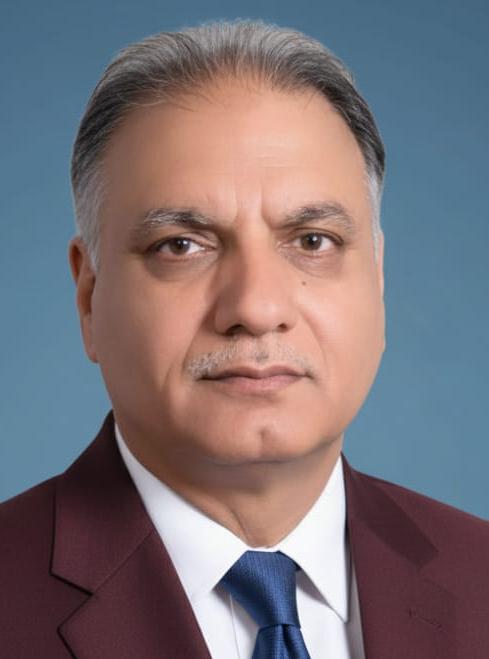
Dr. Alamdar Hussain Malik
The Federal Budget 2026-27, despite official claims of stability and growth, presents a deeply concerning fiscal reality. Rather than reflecting economic transformation or meaningful relief for citizens, it signals continued dependence on borrowing, rising debt servicing pressures, weak structural performance, and limited fiscal space for development. In essence, it is rightly described as a Budget for Debt, Austerity for the People, and Comfort for the State.
The most alarming feature is the allocation of approximately Rs. 8,000 billion, nearly 43 percent of the total federal budget, for debt servicing alone. This reflects Pakistan’s entrenched debt burden. With public debt now exceeding 80 percent of GDP, fiscal space has been severely constrained. Almost half of national resources are being consumed simply to pay interest on past borrowing, leaving minimal room for investment in education, health, infrastructure, agriculture, and employment generation. The economy remains trapped in a structural debt cycle where new borrowing is often required to service old obligations.
Pakistan’s weak revenue capacity further deepens this crisis. The tax-to-GDP ratio remains around 9–11 percent, significantly lower than regional comparators, reflecting a narrow tax base and heavy reliance on indirect taxation. This structural imbalance forces the state to depend on borrowing rather than sustainable revenue generation, perpetuating fiscal instability.
The GDP growth target of 4.2 percent, following an estimated 3.7 percent in the previous year, underscores the fragile economic outlook. Given a population growth rate exceeding 2 percent, such growth is insufficient to absorb new entrants into the labour market. Pakistan requires sustained growth well above current levels to generate employment, reduce poverty, and improve living standards. At present, the economy is managing survival rather than achieving transformation.
Key productive sectors continue to underperform. Agriculture, the backbone of the economy, remains constrained by rising input costs, water scarcity, climate stress, and weak policy support. Export performance remains stagnant, reflecting limited diversification and weak global competitiveness. Foreign Direct Investment continues to fall short due to policy inconsistency, institutional inefficiencies, and an uncertain business environment.
The Federal Board of Revenue (FBR) has once again been assigned ambitious revenue targets. However, without broadening the tax base and reducing leakages, such targets risk increasing pressure on already compliant taxpayers rather than strengthening fiscal capacity. Sustainable revenue generation requires structural reform, not repeated reliance on a narrow tax base.
One fundamental issue stands out: the government must curtail its expenditures across all sectors. Without strict expenditure control, no meaningful relief can reach the people. Fiscal stability cannot be achieved through taxation and borrowing alone. It requires deep cuts in non-development spending, elimination of inefficiencies, restructuring of loss-making public sector enterprises, and reduction of unnecessary administrative and protocol expenditures.
Perhaps the most persistent weakness in Pakistan’s economic planning is the widening gap between promises on paper and realities on the ground. Budget documents are filled with ambitious projections and attractive targets, yet implementation remains weak. For ordinary citizens, these figures rarely translate into tangible improvement. The farmer, the salaried class, the unemployed youth, and small business owners continue to face inflation, unemployment, and declining purchasing power despite repeated policy claims of relief and progress.
The social cost of this economic mismanagement is increasingly visible. Inflationary pressures, high energy costs, and stagnant incomes have significantly eroded household purchasing power. Yet policy responses remain insufficient to reverse these structural pressures.
The budget also reflects a deeper governance crisis. Economic targets are announced annually but frequently missed, while accountability for underperformance remains absent. Without accountability, inefficiency becomes institutionalized, and policy failures are repeatedly recycled without correction.
Another uncomfortable reality is that Pakistan’s economic difficulties cannot be resolved through higher taxes, increased utility tariffs, or additional borrowing alone. At a time when nearly half of the budget is consumed by debt servicing, the state itself must adopt strict fiscal discipline. Wasteful expenditure, excessive official privileges, inefficient institutions, and loss-making public sector enterprises must be urgently addressed. Otherwise, the burden will continue to fall disproportionately on citizens already under severe economic stress.
The most troubling aspect remains the disconnect between policy announcements and ground realities. The Federal Budget 2026-27 may appear balanced in fiscal presentation, but on the ground it offers little relief. The promises of growth, stability, and prosperity remain largely theoretical, while inflation, unemployment, and declining purchasing power define daily life.
Pakistan stands at a decisive economic crossroads. It cannot borrow its way to prosperity, nor can it tax its citizens into sustainable growth. Sustainable recovery requires structural reforms, export expansion, agricultural revival, and above all industrialization as the backbone of economic development. Without industrialization, the economy cannot achieve durable growth or meaningful employment generation. Strong fiscal discipline within the state is equally essential. Without controlling government expenditure and enforcing accountability, the cycle of debt, inflation, and hardship will continue.
In conclusion, the Federal Budget 2026-27 represents yet another missed opportunity for meaningful economic transformation. Unless Pakistan undertakes serious structural reform, moves decisively towards industrialization, ensures fiscal discipline, and enforces accountability at every level, future budgets will remain exercises in managing debt rather than delivering prosperity to its people. Above all, the federal government must curtail its expenditure from all possible avenues. Without curtailing expenditures, sustainable economic stability and meaningful relief for the people will remain impossible.
Dr. Alamdar Hussain Malik
Former Secretary/Registrar,
Pakistan Veterinary Medical Council (PVMC)
Former Financial Adviser, Finance Division
Government of Pakistan


