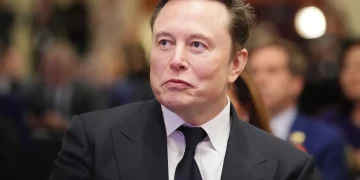




CALIFORNIA (Tech Desk) – Rumors surrounding an artificial intelligence-powered smartphone linked to SpaceX have generated widespread attention across the technology industry after reports suggested the company was exploring a next-generation mobile device. However, the speculation remains unverified after Elon Musk publicly dismissed the claims, stating that no such product has been officially announced.
The discussion began after a report claimed SpaceX had presented an early prototype of an AI-focused smartphone to a limited group of investors and stakeholders. According to the report, the concept centered on integrating artificial intelligence into nearly every aspect of the device rather than relying on conventional smartphone functions.
The reported prototype was described as an ultra-thin handset featuring a minimalist design while placing AI capabilities at the core of the user experience. Unlike traditional smartphones powered by Android or Apple’s iOS, the rumored device was said to operate on a custom-built operating system specifically designed to support advanced AI functions.
Reports also suggested that the device could be equipped with Qualcomm processors alongside artificial intelligence models developed by xAI, Musk’s AI company. The combination was described as an attempt to create a more intelligent smartphone capable of performing complex tasks with greater efficiency and reduced dependence on cloud-based services.
Industry observers speculated that such a device could become the foundation for Musk’s long-discussed “everything app,” combining messaging, digital payments, online shopping, ride-hailing, social networking and various everyday services into a single platform. Although the idea has attracted interest for years, no official product roadmap has been released.
RelatedPosts
Despite growing online discussion, Elon Musk rejected the reports and denied that SpaceX is currently preparing to launch an AI smartphone. Neither SpaceX nor xAI has issued any formal statement confirming product development, manufacturing plans or commercial release timelines.
As a result, analysts caution that the reports should be viewed as speculation rather than confirmation of an upcoming device. No verified technical specifications, pricing details or production schedules have been disclosed by the companies involved.
The rumors nevertheless highlight the increasing competition among technology companies seeking to develop hardware built specifically for artificial intelligence. Instead of relying entirely on software applications, manufacturers are exploring devices capable of processing AI functions directly on the hardware, improving speed, privacy and overall performance.
Experts believe dedicated AI hardware could significantly enhance voice assistants, language translation, image generation and personalized digital services. On-device processing may also reduce dependence on internet connectivity while improving response times and protecting sensitive user data.
Several companies across the technology industry are investing heavily in AI-focused devices, including wearable products and next-generation smartphones. These efforts reflect a broader shift toward integrating generative AI into consumer electronics as users increasingly expect intelligent features in everyday devices.
If SpaceX or xAI eventually enters the smartphone market, it would place the companies in direct competition with major manufacturers such as Apple, Samsung and Google. The market remains highly competitive, with established brands investing billions of dollars annually in research, semiconductor technology and software development.
Developing a successful smartphone would require not only advanced hardware but also a mature software ecosystem, application support, security infrastructure and global distribution channels. These factors present significant challenges for any newcomer attempting to compete in the premium smartphone segment.
Technology analysts note that rumors about future products often emerge well before official announcements, particularly when they involve high-profile companies or influential executives. While some reports eventually prove accurate, others are based on early concepts or industry speculation that never reaches commercial production.
For now, there is no confirmed evidence that SpaceX is building an AI smartphone. Until the company or Elon Musk officially unveils such a project, the reported device remains an unverified claim rather than a confirmed future product.
The discussion nevertheless demonstrates growing public interest in AI-powered hardware and suggests that artificial intelligence will continue shaping the future direction of smartphones and consumer technology in the years ahead.


