


By Our Correspondent
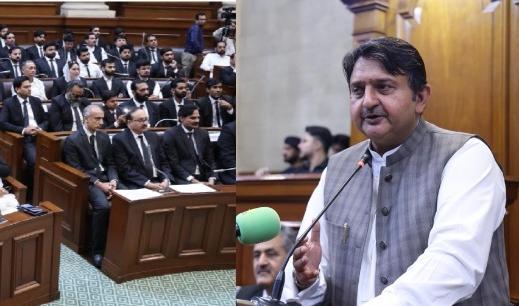
LAHORE: –Speaker Punjab Assembly Malik Muhammad Ahmad Khan has proposed the establishment of a provincial law commission aimed at institutionalising evidence-based legislation, strengthening democratic governance, and improving the quality of laws across Punjab.
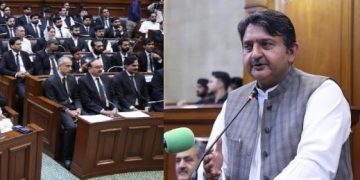
Addressing a high-level consultative session titled “Assembly and Bar” at the historic Old Assembly Hall, the Speaker said modern legislatures must evolve beyond traditional lawmaking practices and become more responsive institutions capable of addressing emerging governance challenges and public policy demands.
The session brought together representatives from the Pakistan Bar Council, Punjab Bar Council, parliamentarians, policymakers, and senior members of the legal community to discuss legislative reforms, judicial efficiency, and stronger institutional coordination between Parliament and the legal fraternity.
Speaker Malik Muhammad Ahmad Khan stressed that sustainable governance depends upon legislation informed by professional expertise, public consultation, and practical realities. He said the legal community possesses extensive institutional knowledge and field experience that should be systematically integrated into the legislative process.
Highlighting the need for an institutional mechanism for legal review and policy evaluation, the Speaker proposed creating a Punjab Law Commission mandated to conduct legislative research, review existing laws, recommend reforms, and provide policy guidance across key sectors, including healthcare, education, local government, urban planning, and public administration.
He further observed that the spirit of the Eighteenth Constitutional Amendment requires stronger provincial institutions and empowered local governments capable of delivering efficient public services through responsive legal and administrative frameworks.
The Speaker reaffirmed the Punjab Assembly’s commitment to improving legislative performance and strengthening parliamentary oversight through Standing Committees, which he said continue to play an increasingly important role in governance reforms, accountability, and policy review.
He also invited Bar Councils and Bar Associations to actively participate in legislative deliberations by submitting professional recommendations and policy proposals through formal parliamentary channels.
Speaking during the session, Pakistan Bar Council Vice Chairman Pir Masood Chishti emphasised the legal profession’s role in advancing justice sector reforms. He stressed the importance of transparency, accountability, and efficiency within the criminal justice system and called for further reforms in investigation and prosecution mechanisms to improve access to justice.
Punjab Bar Council Vice Chairman Khawaja Qaiser Butt highlighted ongoing initiatives focused on improving legal education standards, enhancing professional capacity within the legal profession, and promoting institutional integrity. He welcomed greater engagement between the Punjab Assembly and the legal community, describing it as an important step towards participatory lawmaking.
Parliamentary Secretary for Health Rushda Lodhi proposed establishing a structured mechanism for regular engagement between legislators and legal professionals. She suggested forming a joint consultative forum to facilitate expert legal input on legislative and policy matters.
Participants unanimously agreed that stronger cooperation between Parliament and the legal community remains essential for promoting rule of law, strengthening democratic institutions, and ensuring legislation responds effectively to evolving societal needs.
The session concluded with a shared commitment to enhancing cooperation between the Punjab Assembly and the legal fraternity in pursuit of transparent governance, legislative excellence, and a more accessible and efficient justice system.


