


By Asim Shahzad
LAHORE: Pakistan ranks among the world’s top 10 methane-emitting countries, said Prof. Dr. Sanaullah of the University of Agriculture Faisalabad, stressing the need for mitigation measures in rice production and livestock emissions.
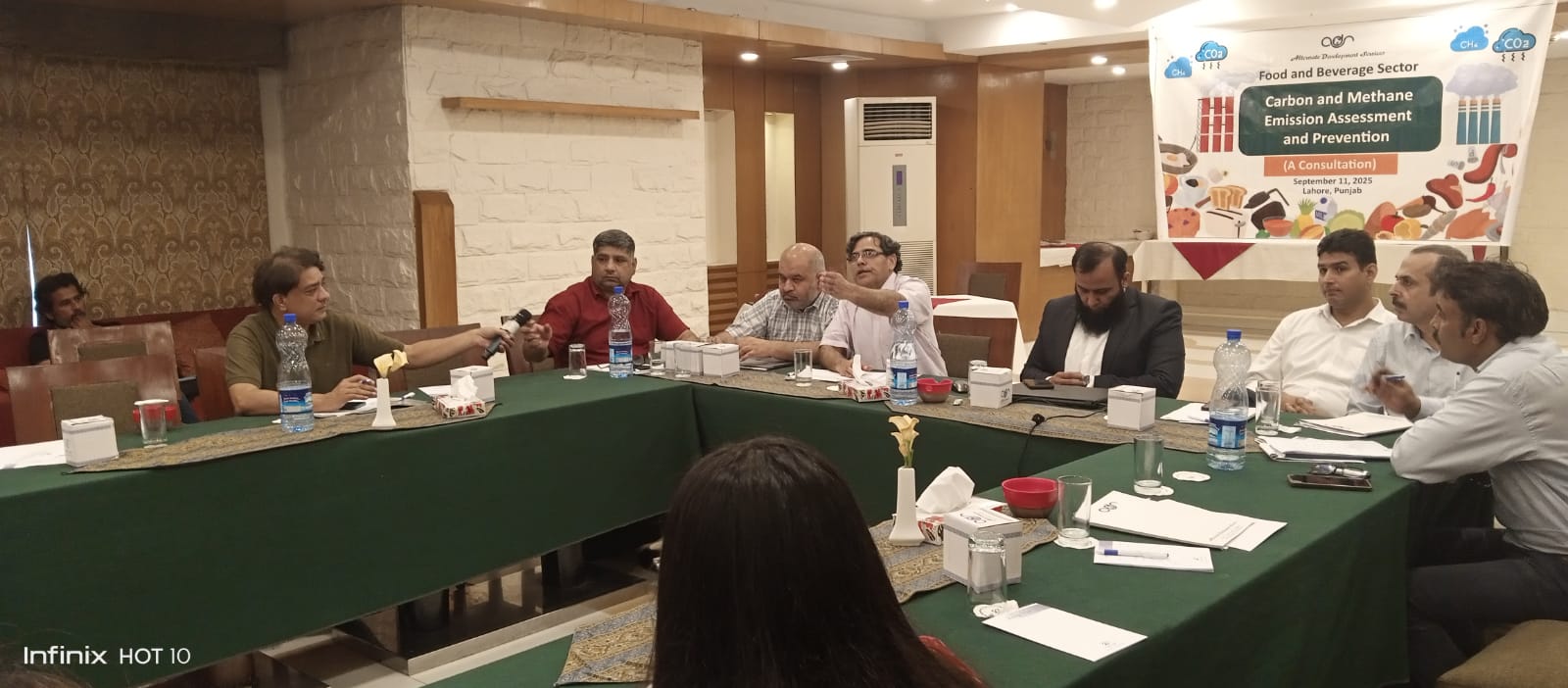
He was speaking at the Food and Beverage Consultation on “Carbon and Methane Emission Assessment and Prevention in the Food and Beverage Sector”, organized by Alternate Development Services (ADS) and Lok Sujag at a local hotel in Lahore. The event gathered experts from academia, industry, media, and civil society to deliberate on the hidden climate costs of the food and beverage sector and explore pathways to decarbonization.
Sustainability expert Muazzam Rehman highlighted that emissions should be calculated at four levels—national, organizational, project, and product. He outlined a framework beginning with emissions audits, followed by target-setting, renewable energy adoption, and transparent sustainability reporting. He stressed that compliance with the Paris Agreement, IPCC, and GHG protocol is essential if Pakistan is to achieve its Net Zero Target by 2050.
Prof. Dr. Sanaullah underlined sustainable practices such as precision farming, renewable energy in food processing, and waste-to-energy models. He said the food industry holds significant potential to reduce emissions through cleaner technologies and carbon-efficient farming.
Dr. Muhammad Farhan, Professor of Sustainable Development at Government College Lahore, called for converting food waste—including grains, cereals, groceries, and fruit—into compost for horticulture and municipal use. He said educating households and restaurants on waste sorting, a practice common in Western countries, is crucial to overcoming waste management challenges.
Journalist Asif Riaz from Lok Sujag shed light on policy gaps in addressing crop residue burning, smog, and inefficient diesel use in food logistics, while Prof. Dr. M. Muhammad Farhan of GCU explored barriers and opportunities for methane reduction in the fast-food sector.
ADS CEO Amjad Nazeer emphasized systemic barriers such as weak regulatory enforcement, dependence on fossil fuels, and lack of emission inventories. He called for stronger industry-policy collaboration, green technology incentives, and climate-smart supply chains to align Pakistan with global decarbonization goals.
The consultation concluded with participants urging the integration of corporate emission targets into Pakistan’s upcoming NDC 3.0 submission to the UNFCCC. Proposals included youth-led advocacy campaigns, business model reforms, and cross-sector alliances to accelerate policy action.
Participants reaffirmed their commitment to promoting greener practices and pressed the government to ensure that the fast-food sector also delivers its share of decarbonization.