


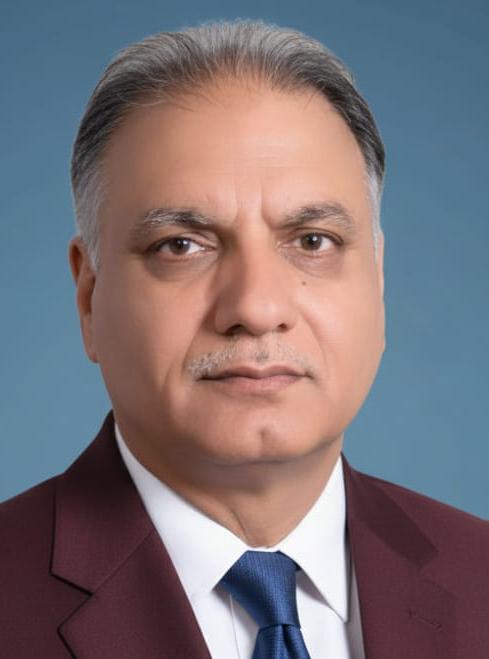
Dr Alamdar Hussain Malik
The National Budget 2026-27 has once again raised a serious question mark over Pakistan’s national priorities. Allocating only Rs 433 per person annually for education clearly demonstrates that education, the most fundamental and decisive sector for national development, has not been given the importance it deserves in our policy-making process. This allocation is not merely insufficient; it represents a serious mockery of the nation’s future because education is the foundation upon which strong economies, developed societies, and sovereign nations are built.
In contrast, Sri Lanka is spending approximately Rs 27,140 per citizen on education, while Bangladesh is spending around Rs 12,500 per citizen. This difference is not merely a matter of financial figures; it reflects a difference in national vision, priorities, and commitment towards the future. It is a deeply disappointing and alarming reality that countries once considered behind Pakistan have now moved ahead of us in human development, education, research, and skills advancement.
When a nation refuses to invest in education, it is actually refusing to invest in its own future. History proves that developed countries built their progress through education, research, innovation, and human resource development. Unfortunately, in Pakistan, education continues to be treated as just another budgetary item rather than the foundation of national development.
Pakistan’s educational crisis is not merely a shortage of funds; it is a crisis of national direction and future planning. Today, nearly 25 million children are out of school. This is not just a statistic; it represents 25 million dreams, talents, and futures deprived of proper educational opportunities. Thousands of government schools lack basic facilities, universities are facing severe financial challenges, research opportunities remain limited, and the younger generation is increasingly unable to compete in the global knowledge economy.
The most concerning reality is that Pakistan is not even investing in education according to internationally recognized standards considered necessary for sustainable development. Successful nations consider human capital their greatest strength, whereas Pakistan’s education sector continues to suffer from inadequate resources. At a time when the world is investing heavily in artificial intelligence, advanced sciences, technology, and research, we are still struggling to fulfil basic educational requirements.
A fundamental question arises: who are the so-called education experts, economic planners, and policymakers who recommended allocating only Rs 433 per capita for education in the National Budget 2026-27? Do they not understand that nations are not built merely through buildings, roads, and showcase projects but through educated, skilled, and enlightened generations?
The people of Pakistan have the right to know who is responsible for continuously neglecting education, the most important national sector. The nation deserves accountability from those policymakers, planners, and experts whose decisions have brought education to a stage where only Rs 433 annually is allocated for the future of each citizen. Those who ignored ground realities, the millions of out-of-school children, the financial crisis of universities, the decline of research, and the challenges faced by youth must answer before the nation.
Do these so-called experts truly believe that a nation can progress with a weak education system? Do they not understand that underinvestment in education directly contributes to poverty, unemployment, economic dependence, and social instability? If they failed to understand this basic reality, then serious questions must be raised about their role in shaping national educational policies and budget priorities.
The time has come to expose the factors, flawed priorities, and failed policies responsible for weakening education. The nation has the right to know who is affecting the future of millions of children, the dreams of young people, and Pakistan’s prospects for development through misguided decisions.
It is also a painful reality that resources often become available for politically motivated projects, non-productive expenditures, and temporary political gains, while investment in education, research, and youth development remains neglected. More concerning is that several schemes and projects are named after political personalities and specific families, appearing to serve political promotion and personal image-building rather than genuine public needs.
If public funds collected through taxpayers’ money are used to promote individuals, families, or political identities, then serious questions must be raised about the true purpose of national resources. The national treasury does not belong to any individual or political group; it exists for public welfare, education, healthcare, research, employment generation, and national development.
State institutions and public projects are not personal property of individuals or families; they are national assets belonging to the entire population. A strong state is recognized not by personalities’ names but by strong institutions, quality education, research, transparent governance, and public service. In a country where education receives only Rs 433 per capita, spending billions on political promotion, symbolic naming, and personal projection reflects a serious contradiction in national priorities.
The government and policymakers must understand a basic reality: nations do not progress merely through orange trains, overhead bridges, roads, highways, and impressive buildings. If those responsible for running state affairs believe that construction projects alone can transform a nation’s destiny, they are making a fundamental mistake. Infrastructure is important, but the real strength of any country lies in educated, skilled, creative, and capable citizens.
Successful nations invested first in their people, strengthened their education systems, promoted research, and developed human capabilities. Buildings, bridges, and roads may provide facilities, but education is the force that enables nations to think, innovate, create, conduct research, and compete globally. Without strong human capital, even the best infrastructure cannot guarantee national progress.
Therefore, Pakistan must urgently redefine its national priorities. The government must understand that real development does not come only from inaugurating construction projects but from creating classrooms, laboratories, research centres, and educated generations. Education is the first pillar of every developed nation, and any state that weakens this pillar weakens its own future.
Education is not merely a social sector; it is a fundamental pillar of national security, economic stability, and state survival. A weak education system results in a weak economy, limited industrial growth, poor research capacity, unemployment, and inability to compete internationally.
This issue is not only related to the Ministry of Education or an annual budget allocation; it concerns state priorities and constitutional responsibilities. Therefore, the attention of Pakistan’s honourable judiciary, particularly the Supreme Court of Pakistan, should also be drawn towards the long-term national consequences of continuously neglecting education.
The difference between Sri Lanka’s Rs 27,140 per capita education spending, Bangladesh’s Rs 12,500, and Pakistan’s Rs 433 is not merely a numerical difference. It represents three different approaches towards national development. One approach considers children and youth as the foundation of future progress, while the other continues to ignore its most valuable asset.
The time has come for the government, parliament, planning institutions, and all relevant stakeholders to reconsider their priorities. Education must no longer be treated as just another budgetary item; it must be recognized as the largest national development project.
If we still fail to make education our highest priority, future generations will ask why, at a time when the world was advancing through knowledge, research, technology, and human development, we chose to invest elsewhere instead of securing the future of our children.
Education remains the greatest force capable of changing the destiny of a nation. The allocation of only Rs 433 per capita in the National Budget 2026-27 forces us to question how seriously we value our coming generations. The time has come to remove education from political slogans and temporary interests and make it a genuine national priority because nations that fail to invest in their schools, universities, and youth ultimately lose their opportunities for progress.


