


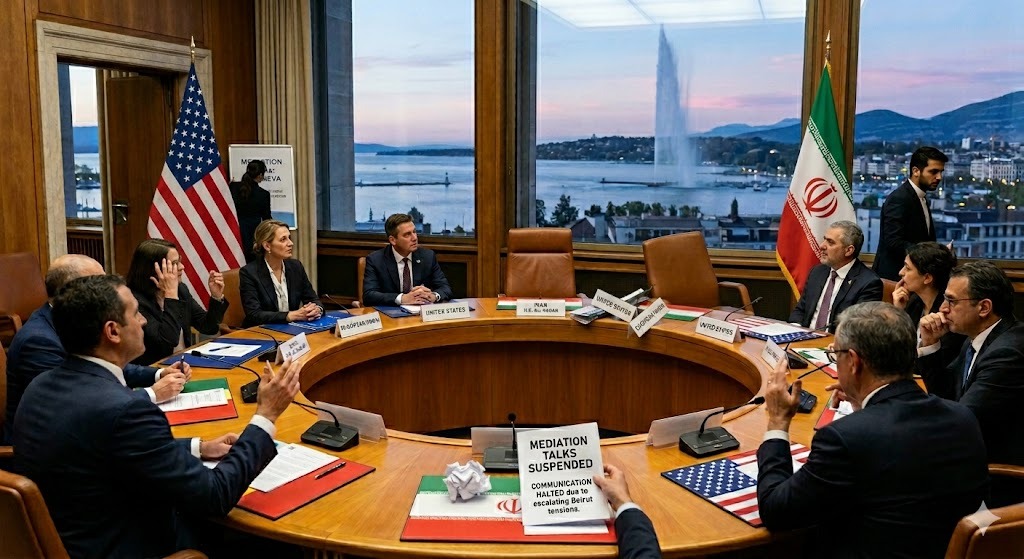
DUBAI (Agencies) – Iran has reportedly stopped communicating with international mediators following escalating tensions linked to the ongoing conflict between Israel and the Iranian-backed Lebanese armed group Hezbollah, according to semi-official Iranian media outlets.
The reports, cited by Fars News Agency and Tasnim News Agency—both widely viewed as close to Iran’s Revolutionary Guard—suggest that Tehran has suspended engagement with mediators after Israel allegedly threatened strikes on Beirut during its military operations against Hezbollah positions in Lebanon.
The move is believed to be part of broader pressure tactics linked to ongoing diplomatic efforts involving a possible ceasefire framework and negotiations connected to regional maritime security, including discussions around the Strait of Hormuz, a critical global oil shipping route.
Iranian officials have not publicly confirmed the suspension of talks. However, a regional mediator quoted anonymously said Iran had ceased communication on Tuesday, insisting that any continuation of negotiations required a halt to hostilities in Lebanon.
The United States and Israel have maintained that the Lebanon conflict remains separate from wider diplomatic discussions involving Iran. Tehran, meanwhile, continues to frame the confrontation as part of a broader regional struggle involving its allied network known as the “axis of resistance,” which includes Hezbollah.
Severe economic pressure inside Iran
Alongside rising geopolitical tensions, Iran is also facing extreme economic strain. According to Iran’s Central Bank data cited in the reports, consumer inflation reached 77.2% in May, marking one of the highest levels in modern Iranian history.
The report also noted that inflation in essential goods and services—including food, transport, medicine, and utilities—rose by more than 113% year-on-year, placing severe pressure on household incomes.
Analysts have described the current inflation levels as the worst since the Second World War era, when Iran experienced economic disruption during foreign occupation and supply shortages.
The Iranian currency, the rial, has also seen a dramatic long-term collapse, trading at over 1.7 million per US dollar, compared to around 32,000 in 2015.
President Masoud Pezeshkian has acknowledged the worsening situation, warning that further price increases are likely and urging the population to accept continued economic hardship amid ongoing geopolitical pressure.
Domestic unrest risks rising
Economic instability has historically triggered public unrest in Iran. Past waves of protests have been linked to rising food and fuel prices, with demonstrations in previous years resulting in casualties, arrests, and widespread political tension.
Analysts warn that continued inflation above critical thresholds could increase the likelihood of renewed social unrest, particularly if basic living costs continue to rise sharply.


