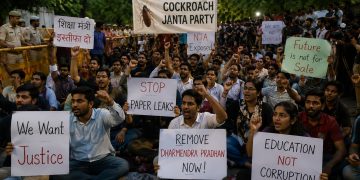



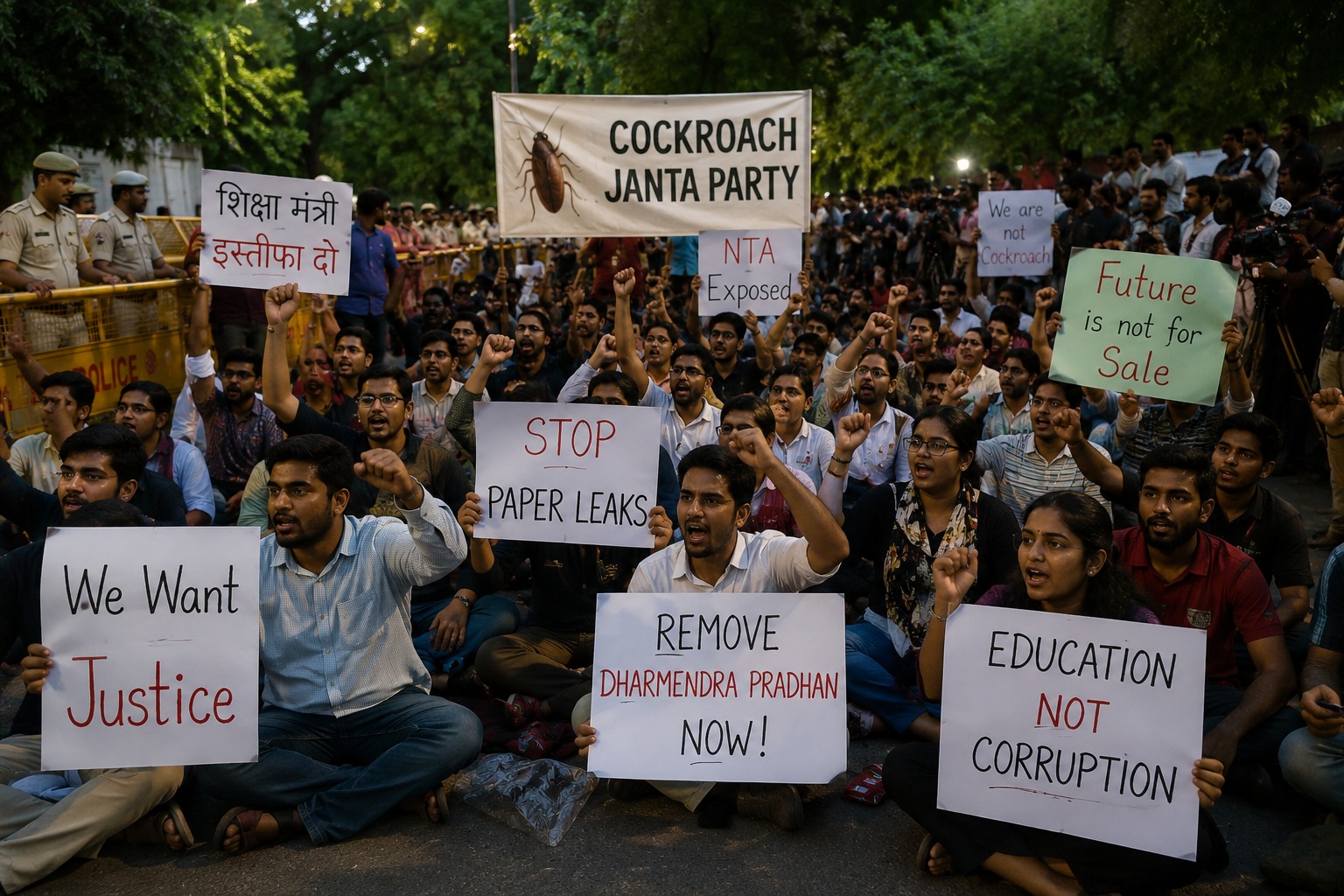
NEW DELHI (Web Desk) – India’s youth-led Cockroach movement continued to gather momentum on Tuesday as hundreds of protesters remained camped in New Delhi, refusing to end demonstrations demanding education reforms and greater government accountability.
The movement, which began as a student-led campaign, has expanded to include professionals, families and civil society members, making it one of the most significant public protest movements in recent years.
Protesters refuse to leave demonstration site
Demonstrators remained at Jantar Mantar, New Delhi’s designated protest venue, despite a heavy police presence following clashes during a march toward Parliament a day earlier.
Protest leaders said they would continue their sit-in until the government addresses their key demands, including reforms to India’s examination system and the resignation of Education Minister Dharmendra Pradhan over alleged examination irregularities.
Movement founder Abhijeet Dipke said protesters would continue peaceful demonstrations until meaningful action is taken.
Opposition backs student movement
The protests received a major political boost after Congress leader Rahul Gandhi and several lawmakers staged a sit-in outside the residence of Prime Minister Narendra Modi in solidarity with the demonstrators.
Police later removed the opposition leaders from the site after authorities said the location was unsuitable for the protest.
The support from opposition parties has further increased national attention on the movement and intensified political debate over education policies and the handling of public demonstrations.
Police action sparks criticism
The latest wave of protests follows clashes between demonstrators and police during a march toward Parliament.
Videos circulating on social media showed confrontations between protesters and security personnel, prompting criticism from rights organisations and political leaders.
Delhi Police said both protesters and security personnel sustained injuries during the unrest.
Human rights organisation Amnesty International criticised the police response, calling for the protection of peaceful assembly and freedom of expression.
Hunger strike fuels movement
The movement gained further public attention after education reform campaigner Sonam Wangchuk began a hunger strike demanding changes to India’s examination system.
Supporters say concerns over alleged examination irregularities and repeated paper leaks have undermined confidence in the country’s education system and affected millions of students.
Movement leaders are also seeking compensation for families of students who allegedly died by suicide following examination-related controversies.
Government outreach fails to ease tensions
Government representatives recently held talks with protest leaders in an effort to reduce tensions, but no agreement was reached.
Protest organisers said they were seeking concrete policy decisions rather than assurances, while authorities have yet to announce any major reforms.
As demonstrations continue, the movement has evolved beyond education issues into a broader debate over accountability, governance and the right to peaceful protest in India.


