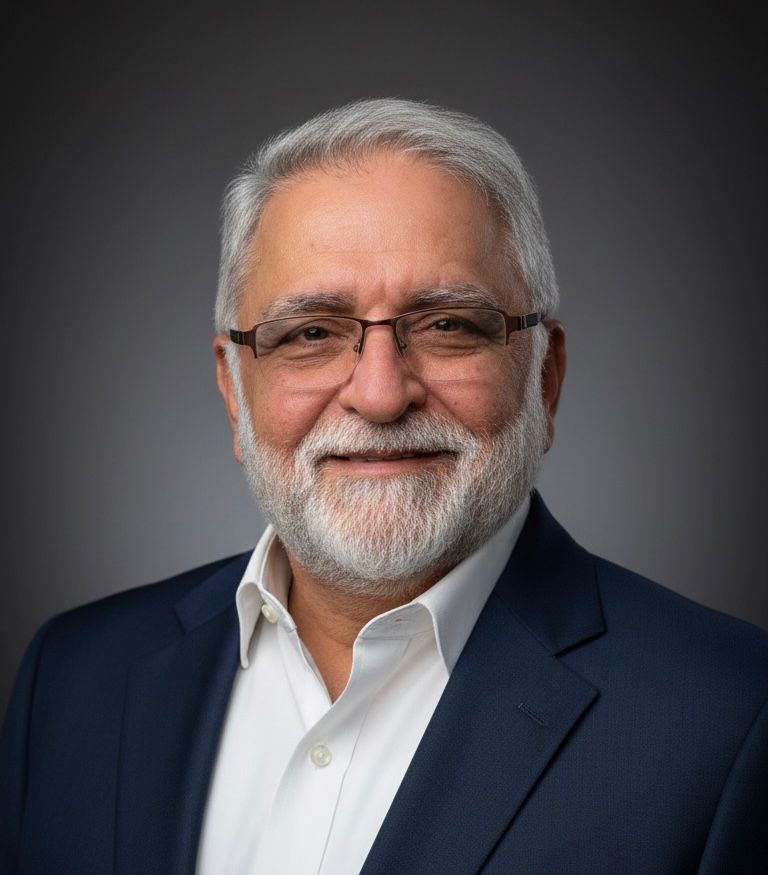



By Muhammad Mohsin Iqbal
Once again, Pakistan finds itself amid speculation over the possible imposition of Governor’s Rule—this time in Khyber Pakhtunkhwa. Names of potential governors are buzzing around drawing rooms and newsrooms, and the debate resurfaces with its usual urgency; when does the Constitution actually warrant putting a province under direct federal control, and what does that move say about the deeper flaws in our political system? Since 1947, every province of Pakistan has experienced Governor’s Rule at least once, and each episode has carried deep political, administrative, and constitutional implications.
Read also: Politics in cricket: Why did Indian team refuse to receive Asia Cup Trophy
The Constitutional basis for such an intervention lies in Article 234 of the Constitution of Pakistan. It empowers the President, acting on the advice of the federal government, to authorise the Governor to assume the executive authority of the province when the provincial machinery can no longer function in accordance with the Constitution.
While the article itself is clear and procedural, the circumstances that trigger its invocation are invariably political, often controversial, and occasionally reflective of deeper tensions between centre and province, party and opposition, or law and disorder.
Sindh, unlike popular perception, has witnessed direct Governor’s Rule on only three occasions. The first was in the early post-independence years when Governor Mian Aminuddin took charge from 1951 to 1953 following the dismissal of Chief Minister Muhammad Ayub Khuhro and the dissolution of the assembly amid instability and corruption allegations. The second came in 1988 under Lt. Gen. (Retd.) Rahimuddin Khan, when severe ethnic violence in Karachi and Hyderabad compelled the dismissal of the provincial government. The third instance occurred in 1998 after the assassination of Hakim Muhammad Saeed, when Lt. Gen. (Retd.) Moinuddin Haider assumed control. By that point reportedly, tensions between the MQM and PML-N had already put a strain on governance, showing just how easily coalition arrangements could crack under pressure.
Balochistan’s experience has been similarly turbulent. Governor’s Rule was first imposed in 1973 under Mir Ghous Bakhsh Bizenjo after the dismissal of the Ataullah Mengal’s government amid accusations of separatist tendencies and breakdown of law and order. It returned in 1975 under Mir Ahmed Yar Khan Baloch and again in 1977 under the same governor, overlapping with political upheaval at the national level. Later, from 1999 to 2002, Syed Muhammad Fazal Agha administered the province under the extended military rule following General Musharraf’s coup. The most recent intervention, under Nawab Zulfiqar Ali Magsi in 2013, came after escalating sectarian violence and the paralysis of the provincial setup. According to political observers, each example reflects not only administrative shortcomings but also the Center’s inability or disinterest in discussing political grievances through democratic channels.
Punjab, the largest and politically most consequential province, has faced Governor’s Rule three times. The first imposition in 1949 came when Premier Liaquat Ali Khan, upon learning that Chief Minister Iftikhar Mamdot had exaggerated his legislative majority, advised the Governor General to remove him. Sir Francis Mudie, and later Abdul Rab Nishtar, administered the province for nearly two years, revealing how fragile the early institutions of parliamentary democracy were. The second intervention came in 1999 after General Musharraf’s military takeover, which cut short Chief Minister Shahbaz Sharif’s tenure and placed Punjab under successive governors (Lt. General (R) Muhammad Safdar and Lt. General (R) Khalid Maqbool) until 2002. The third instance unfolded in 2009 when President Asif Ali Zardari suspended the provincial executive following the Supreme Court’s disqualification of Nawaz Sharif and Shahbaz Sharif. Although the assembly remained intact, full executive authority was vested in Governor Salman Taseer until political compromise restored the PML-N government.
Khyber Pakhtunkhwa—formerly NWFP—has also witnessed three spells of Governor’s Rule. The first, in 1975 under Major General (R) Syed Ghawas, came amid political turbulence during Prime Minister Zulfikar Ali Bhutto’s tenure. The second, in 1994 under Major General (R) Khurshid Ali Khan, corresponded with rising factional clashes and administrative breakdown. The third arrived after the 1999 coup, when Lt. Gen. Muhammad Shafiq (R) and later Lt. Gen. (R) Iftikhar Hussain Shah oversaw the province until 2002. According to the historians, each intervention stemmed from a combination of deteriorating law and order, fragile political alliances, and the centre’s predisposition to assert control during moments of provincial instability.
A review of these episodes reveals a sobering reality; Governor’s Rule in Pakistan has rarely been a purely constitutional measure devoid of political overtones. Rather, it has often emerged as a tool of political recalibration—sometimes justified by genuine administrative crises, at other times employed to settle scores, suspend rivals, or reset power dynamics. It reflects both the vulnerabilities of provincial institutions and the centralising impulses inherent in our federal framework.
The lesson of history is clear; Governor’s Rule may provide temporary administrative relief, but it cannot build stable provincial governance. That requires stronger political parties, greater respect for constitutional boundaries, empowered local institutions, and an ethos of democratic patience. Unless Pakistan internalises these principles, the cycle of intervention and instability will continue to shadow its provincial politics.
Finally, the real test of a federation is not how often it centralises power, but how effectively it protects provincial autonomy while ensuring constitutional order. Pakistan’s journey with Governor’s Rule is a reminder that the Constitution offers remedies, but it is political wisdom that decides whether those remedies heal or further wound the system.