


By Commerce Reporter
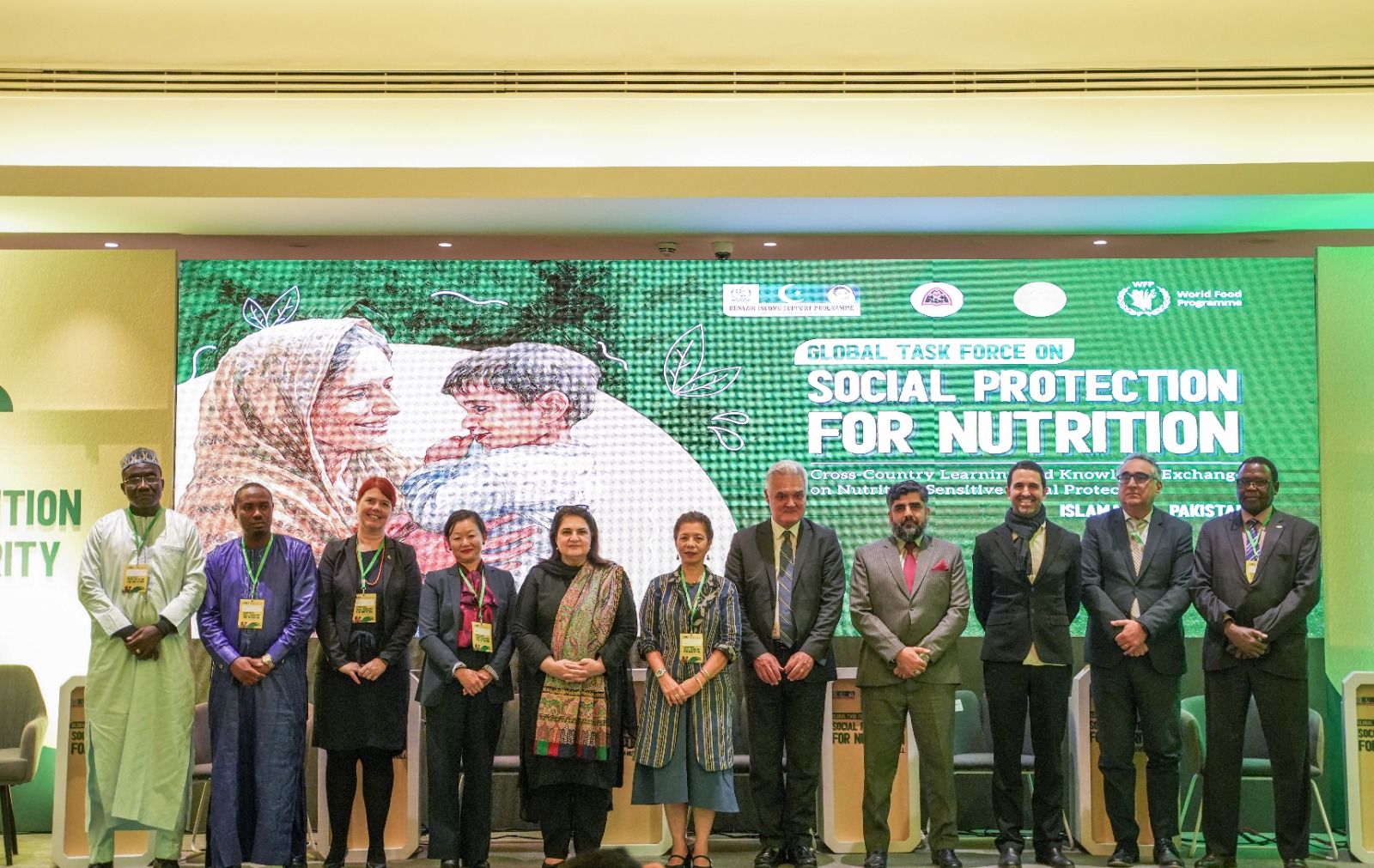
KARACHI: An event highlighted the strong commitment of participating governments and international partners to eradicate hunger and malnutrition, reinforcing collective efforts toward achieving Zero Hunger (SDG 2) and universal social protection (SDG 1: No Poverty, target 1.3).
It also celebrated the Global South’s leadership in advancing nutrition-sensitive social protection measures.
Pakistan showcased its progress through the globally acclaimed Benazir Income Support Programme (BISP). Senator Rubina Khalid noted that BISP is the country’s largest social protection initiative, supporting 10 million families nationwide and benefitting 3.9 million mothers and children through nutrition assistance, healthcare services, and behavior change communication. Programmes such as Benazir Kafaalat, Taleemi Wazaif, Hunarmand, and Benazir Nashonuma have played a key role in reducing child stunting and malnutrition.
The Benazir Nashonuma Programme, launched in 2020 with support from WFP, UNICEF, and WHO, focuses on preventing stunting in children under the age of two and providing essential support to pregnant and breastfeeding women. A recent evaluation by Aga Khan University found that stunting at six months was 20% lower among programme beneficiaries — a major milestone for Pakistan.
Delegates from Bangladesh, Cambodia, Lao PDR, Nepal, Niger, Timor-Leste, and Pakistan exchanged evidence, insights, and innovative strategies for integrating nutrition into social protection frameworks. The dialogue aimed to strengthen global action against malnutrition through practical solutions and collective learning.
H.E. Ceu Brites, Vice Minister of Social Security and Inclusion of Timor-Leste, speaking on behalf of President Jose Ramos-Horta, praised Pakistan for hosting the event and demonstrating strong leadership. The Government of France was also acknowledged for its contribution to the Global Task Force. President Asif Ali Zardari emphasized that integrating nutrition into social protection is a landmark achievement, ensuring that pregnant and lactating women, as well as young children, receive targeted care during the “first thousand days” — a critical window for growth and development.
Read also: Boom-bust cycle threatens Pakistan, SBP governor urges shift to global competitiveness
Overall, the dialogue served as a powerful call to action — urging governments and partners to move from ideas to impactful initiatives, strengthen universal care, and ensure that no family is left behind in the fight against malnutrition.