


By Rana Farooq Ashraf
In the complex theater of international diplomacy, few alliances resonate with the depth, sincerity, and historical significance found in the bond between the Islamic Republic of Pakistan and the United Arab Emirates (UAE). This is not merely a relationship defined by geopolitical convenience or transient economic interests; it is a tapestry woven with the threads of shared faith, mutual respect, and a foundational brotherhood that dates back to the very birth of the Emirates. As the first country to formally recognize the UAE as a sovereign state in 1971, Pakistan did not just establish diplomatic ties; it committed to a lifelong partnership that has since become a cornerstone of regional stability and prosperity.
Read also: Pakistan: New pivot of global politics and ambassador of peace
The genesis of this “eternal” relationship can be traced back to 1968, a pivotal year when the British government decided to withdraw its administration from the Trucial States. In the subsequent years of nation-building, Pakistan stood as a steadfast ally. While the formal constitutional framework of the UAE was solidified in 1971 and border agreements followed in 1974, Pakistan’s recognition of the new state in 1971 was an immediate and unequivocal gesture of solidarity. This early support was championed by the visionary founding father of the UAE, Sheikh Zayed bin Sultan Al Nahyan, who famously regarded Pakistan as his “second home.” His frequent visits and personal affection for the Pakistani people laid a spiritual and emotional foundation that remains unshakable today.
The evolution of this partnership can be viewed through four distinct, transformative phases. During the 1970s, Pakistan played a central role in the institutional maturation of the UAE, providing the expertise necessary to build a modern state apparatus. By the 1980s, the focus shifted toward physical transformation, as a dedicated Pakistani workforce became the backbone of the UAE’s burgeoning infrastructure. The 1990s heralded an era of robust business partnerships, leading into the current post-2010 landscape, which is characterized by high-stakes strategic investments and collaborative ventures in cutting-edge technology and energy.
Nowhere is this collaboration more evident than in the realm of defense and security. Since 1968, the Pakistani military has been instrumental in the training and organization of the Abu Dhabi Defense Forces. It is a point of significant historical pride that the initial Chiefs of Staff of the UAE Air Force were distinguished Pakistani officers. From the army and navy to the police force, Pakistan’s contributions to the UAE’s security architecture provided the necessary stability for the nation’s economic miracle to take root. This security synergy continues to thrive through joint military exercises and a shared vision for a peaceful Middle East and South Asia.
Parallel to defense, the sectors of aviation and finance also bear the hallmark of Pakistani expertise. When the UAE sought to conquer the skies, Pakistan International Airlines (PIA) provided the technical blueprint, operational guidance, and initial fleet requirements that birthed Emirates Airlines. Pakistani pilots and engineers were the mentors of the first generation of Emirati aviators, helping transform a regional carrier into a global titan. Similarly, in the financial sector, Pakistani bankers and financial architects were pivotal in designing the institutional frameworks and banking procedures that helped establish the UAE as a premier global financial hub.
Today, the economic interdependence between the two nations is a vital artery for both. Between 1.5 and 1.8 million Pakistanis currently live and work in the UAE, serving as a human bridge that connects the two cultures. These hardworking individuals contribute significantly to the UAE’s vibrant economy while sending back an estimated $6.5 to $7 billion in annual remittances, providing a crucial lifeline to Pakistan’s foreign exchange reserves. Furthermore, the trade volume—currently hovering between $10 and $11 billion—reflects a sophisticated exchange of goods, ranging from Pakistani textiles and agricultural products to Emirati petroleum and industrial machinery.
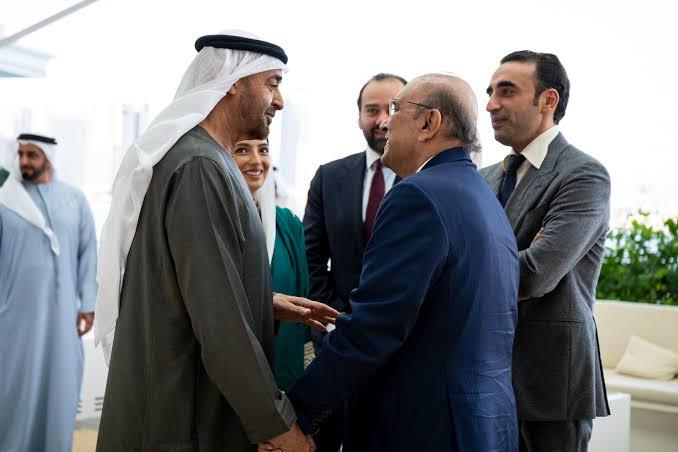
The diplomatic momentum of this relationship has reached new heights in recent years. The official visit of the UAE President, His Highness Sheikh Mohammed bin Zayed Al Nahyan, to Islamabad in December 2024—his first as President—signaled a new era of strategic alignment. This was followed by high-level engagements by Prime Minister Shehbaz Sharif, including his participation in the World Governments Summit in Dubai in February 2025 and his subsequent official visit in June 2025. These interactions have moved beyond traditional diplomacy, focusing instead on multi-billion dollar investment treaties in energy, logistics, and real estate, ensuring that the partnership remains dynamic in a rapidly changing world.
In conclusion, the story of Pakistan and the UAE is one of unwavering loyalty and shared aspirations. From the sands of the Emirates to the mountains of Pakistan, the two nations have proven that their brotherhood is resilient enough to withstand the tests of time and global shifts. As they look toward the future, they do so not just as neighbors or allies, but as architects of a shared destiny, continuing the legacy of Sheikh Zayed with a renewed vigor that promises to benefit generations to come. This is a relationship that was born in sincerity, nurtured through cooperation, and destined for immortality.


