


.TEHRAN (Web Desk) – Iran has accused the United States of deliberately attacking civilians and committing violations of international humanitarian law, as the confrontation between Tehran and Washington entered another dangerous phase marked by threats against energy infrastructure, disrupted shipping through the Strait of Hormuz and rising global oil prices.
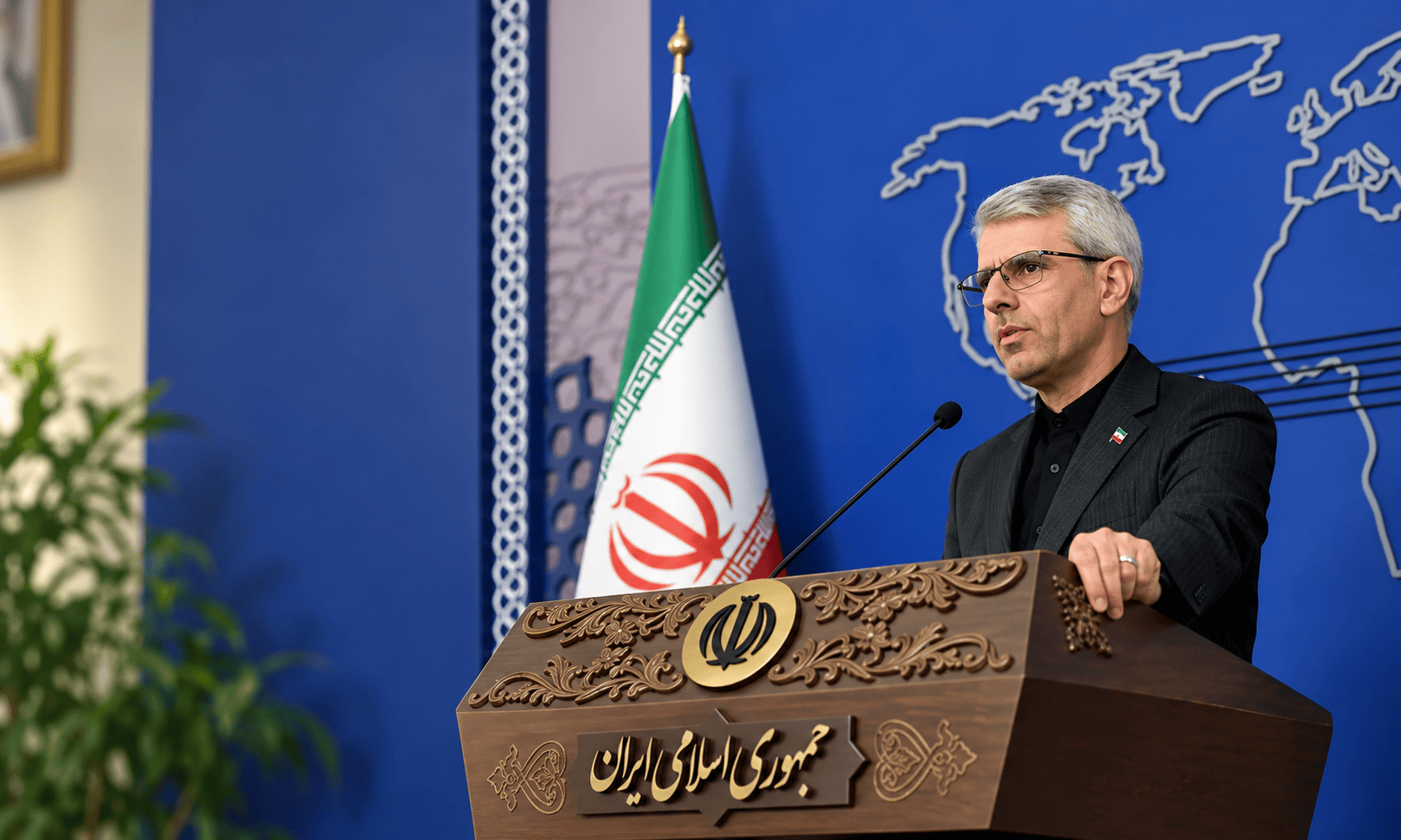
Iranian Foreign Ministry spokesperson Esmaeil Baqaei said on Monday that Washington should be held responsible for what he described as “war crimes” against the Iranian population, rejecting suggestions that civilian casualties from US strikes were merely collateral damage.
At his weekly press briefing, Baqaei accused the United States of repeatedly targeting civilian sites and said Tehran would continue seeking accountability for attacks on Iranian citizens. He cited strikes on a wedding gathering in southern Iran, a school in Minab and a stadium in Lamerd while questioning US assertions about the precision of its weapons.
A Reuters investigation published last week found that evidence from the September 1 strike on a wedding in Kuhestak, in southern Iran, was consistent with a direct hit by a US munition. Four people were killed, including a child, and at least 68 were wounded. US officials have said the incident is being investigated.
Iran invokes right to self-defence
Baqaei also defended Iranian military operations against US targets in the region, arguing that Tehran was exercising its right to self-defence.
He said Iran considered its strikes on US military facilities legal under Article 51 of the United Nations Charter, citing the continuing US naval blockade and what Tehran calls a full-scale economic war.
Iran has separately blamed Washington for the disruption of commercial shipping through the Strait of Hormuz. Baqaei argued that the strategic waterway had remained open until US and Israeli attacks on Iran began on February 28.
He accused Washington of starting the conflict and then attempting to make Iran responsible for its global economic consequences.
The United States disputes Tehran’s account of the conflict and says its military and economic measures are intended to counter Iranian threats and pressure Tehran into changing its policies.
Iran threatens retaliation against US-linked energy assets
The rhetoric intensified further on Monday when Iranian Parliament Speaker Mohammad Baqer Qalibaf warned that additional American attacks on Iranian assets would bring retaliation.
“Strike our assets and you get struck,” Qalibaf said, according to Reuters.
Iran warned that energy infrastructure across the Gulf — including facilities linked to American oil and gas interests — could be vulnerable if Washington continued attacking Iranian assets.
The warning followed a weekend escalation in which US and Iranian forces targeted vessels in and around the Strait of Hormuz.
US Central Command said American forces struck three Iranian oil tankers on Saturday, including one near Kharg Island, Iran’s main oil-export hub. Washington said the action followed Iranian attacks against US naval vessels.
Iran’s Islamic Revolutionary Guard Corps Navy, meanwhile, said it attacked three oil tankers using routes Tehran considered unauthorised through the Strait of Hormuz, as well as three additional vessels it described as linked to the United States.
Some competing battlefield claims by the two sides have not been independently verified.
Hormuz shipping falls sharply
The latest confrontation has had an immediate impact on one of the world’s most strategically important shipping corridors.
Data from analytics firm Kpler showed an average of only 10 commodity vessels a day passed through the Strait of Hormuz during the latest 10-day period — the lowest level since May.
Traffic fell particularly sharply over the weekend, with only two vessels crossing on Saturday and six on Sunday.
The Strait of Hormuz has traditionally carried roughly one-fifth of global oil supplies, making any prolonged disruption a significant risk to energy markets and the wider global economy.
Iranian security official Mohsen Rezaei said Tehran would soon announce a new restricted zone in the Gulf and publish maps for a new shipping corridor through the strait.
Rezaei said Iran would not guarantee unrestricted access to Hormuz while US attacks, threats and what Tehran describes as sabotage continued.
Iran and Oman are also discussing arrangements for temporary safe shipping routes, with Tehran saying negotiations have reached their final stage.
Oil prices climb to six-week high
The military escalation and reduced shipping immediately pushed international crude prices higher.
Brent crude reached as high as $98.06 a barrel on Monday, its strongest level since July 24, before trading around $97.13 later in the session. US West Texas Intermediate climbed as high as $93.29.
The increases underline how the Iran-US confrontation has moved beyond a bilateral military dispute and become a major risk for global energy markets.
Higher oil prices could feed into transportation and production costs internationally, increasing inflationary pressures in countries heavily dependent on imported energy.
UAE seeks alternatives to Hormuz
Concern is also growing among Gulf states.
The United Arab Emirates said Monday it was developing alternative routes for energy exports and trade so its economy would not be “held hostage” by the conflict.
UAE presidential adviser Anwar Gargash said the confrontation had significantly affected Gulf Arab countries and warned that rebuilding trust with Iran following attacks on regional states could take decades.
Saudi Arabia and Britain have meanwhile called for intensified diplomatic efforts to de-escalate regional tensions and safeguard international waterways.
Nuclear tensions add another layer
The military crisis is unfolding alongside renewed pressure over Iran’s nuclear programme.
International Atomic Energy Agency chief Rafael Grossi urged Tehran on Monday to re-engage with the UN nuclear watchdog and allow access to important nuclear facilities.
Western powers are considering action at the IAEA that could refer Iran to the UN Security Council, while Tehran has warned it would respond if a resolution was adopted against it.
The Iranian mission to the United Nations described the proposed action as a “desperate” move.
No immediate path to de-escalation
The developments over the past 24 hours point to an increasingly complex confrontation being fought simultaneously through military operations, oil exports, shipping restrictions, sanctions and diplomatic pressure.
Washington maintains that pressure can force Tehran towards a change in policy or a negotiated settlement. Iran, however, insists that it will respond militarily to attacks while resisting attempts to isolate its economy.
Baqaei’s accusation that civilian casualties are the result of deliberate US attacks adds another contentious issue to a conflict already threatening regional stability.
With tanker traffic through Hormuz falling, oil prices approaching $100 a barrel and both sides warning of further retaliation, there is little immediate indication that the latest escalation is moving towards a durable ceasefire.


