


ISLAMABAD (Web Desk) – Electricity consumers across Pakistan face another substantial financial hit after the National Electric Power Regulatory Authority (NEPRA) approved separate monthly and quarterly tariff adjustments that are expected to impose a combined additional burden of about Rs45.67 billion.
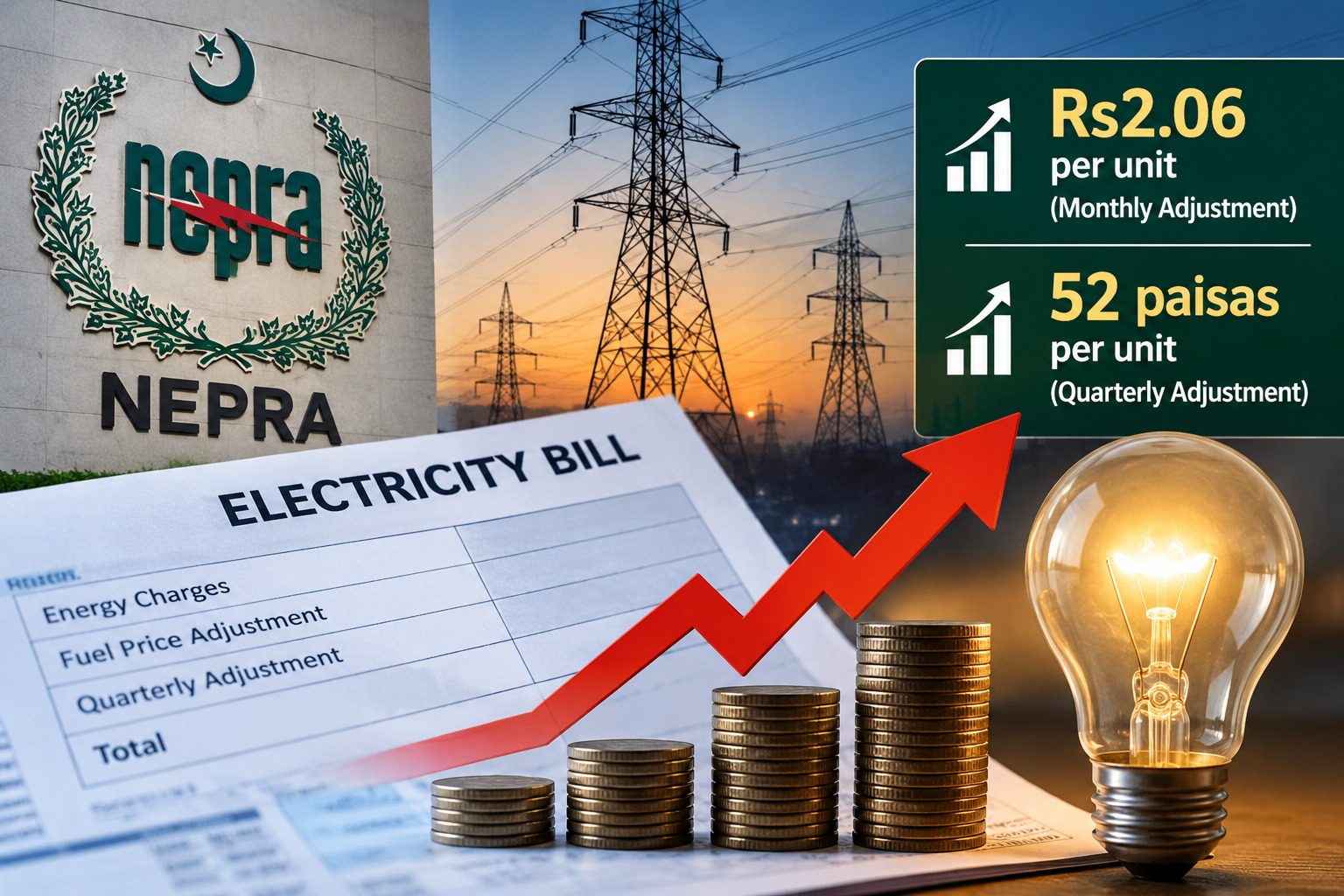
Under the monthly fuel price adjustment, electricity has been made Rs2.06 per unit more expensive, with the increase to be recovered through consumers’ September bills.
The adjustment relates to electricity consumed in July 2026 and is expected to generate approximately Rs33 billion in additional payments from consumers.
The monthly adjustment comes on top of a separate 52-paisa-per-unit quarterly tariff adjustment for the April-June 2026 period.
NEPRA has forwarded its decision on the quarterly adjustment to the federal government. The 52-paisa increase will be applicable during September, October and November 2026.
The quarterly adjustment is estimated to place another Rs12.67 billion burden on electricity consumers.
Unlike some fuel price adjustments, the quarterly adjustment will also apply to K-Electric consumers, bringing Karachi households and businesses within its scope.
Together, the Rs33 billion monthly adjustment and Rs12.67 billion quarterly adjustment amount to an estimated Rs45.67 billion in additional electricity costs, although the two charges cover different periods and are recovered through separate adjustment mechanisms.
September bills face added pressure
The timing means September could prove particularly costly for affected consumers as the monthly fuel adjustment is reflected in bills while recovery of the quarterly adjustment also begins.
The Rs2.06-per-unit monthly increase means that, where the full adjustment applies, every 100 units would translate into Rs206 in additional fuel adjustment charges before applicable taxes and other charges. At 300 units, the arithmetic impact would be Rs618, while 500 units would translate into Rs1,030.
The actual amount payable by an individual consumer can differ depending on the categories and exemptions specified in the applicable tariff notification.
The 52-paisa quarterly adjustment creates an additional layer of cost over the September-November period.
Energy costs add to household pressure
The tariff adjustments come at a time when consumers are already confronting higher costs for fuel and essential commodities.
For businesses, higher electricity costs can also increase operating and production expenses, particularly for energy-intensive industries and smaller enterprises with limited ability to absorb additional costs.
For households, the adjustments mean electricity bills could consume a greater share of monthly income, particularly during periods of relatively high power consumption.
The latest decisions once again put Pakistan’s electricity pricing system in focus, under which changes in generation costs and other power-sector expenses can subsequently be passed on to consumers through monthly and quarterly tariff adjustments.
With Rs45.67 billion in additional recoveries linked to the two latest adjustments, electricity consumers are set to bear another significant increase in energy costs over the coming months.


