



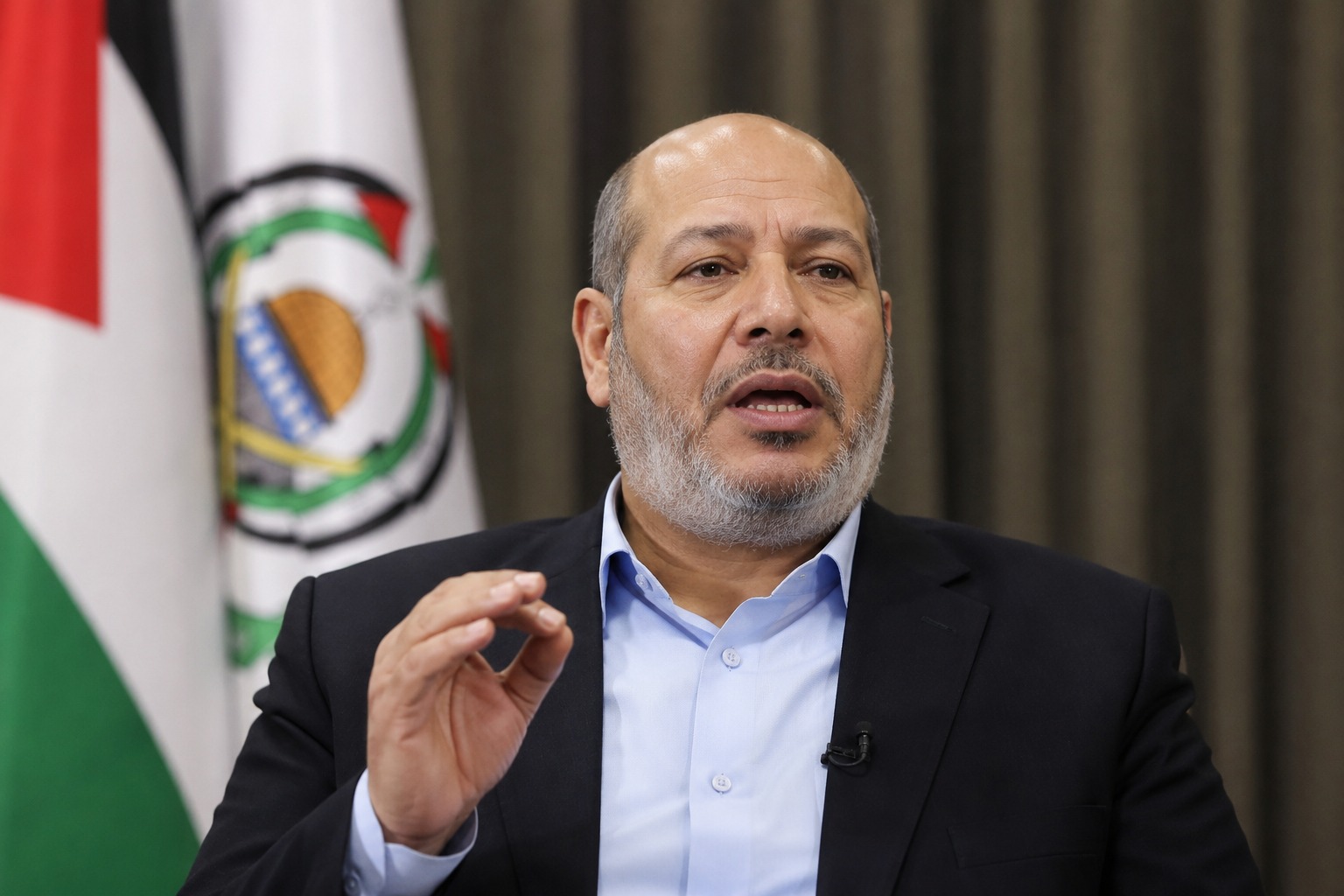
(Web Desk) – Hamas has elected Khalil al-Hayya as the new head of its political bureau, placing one of the movement’s most experienced political figures at the helm during one of the most challenging periods in its history.
The announcement follows an internal leadership vote conducted while the group continues to face military pressure, leadership losses and an evolving political landscape after nearly two years of conflict in Gaza.
Leadership transition during wartime
In a statement, Hamas said al-Hayya’s appointment followed an internal consultative process designed to ensure continuity in the movement’s leadership despite ongoing hostilities.
The organisation described the election as evidence that its governing institutions remain operational despite the conflict and the deaths of several senior leaders.
Al-Hayya succeeds Yahya Sinwar under what Hamas described as a transitional leadership arrangement.
Veteran Hamas figure
Born in Gaza in 1960, Khalil al-Hayya joined the Muslim Brotherhood during the early 1980s and became one of Hamas’s founding members after the movement emerged during the First Intifada in 1987.
He studied Islamic law and later served in several senior political positions within Hamas, gradually becoming one of its most influential decision-makers.
Following Hamas’s victory in the 2006 Palestinian legislative elections, al-Hayya entered parliament and later headed the group’s parliamentary bloc before assuming senior leadership responsibilities in Gaza.
Key role in ceasefire negotiations
Throughout the latest Gaza conflict, al-Hayya led Hamas’s negotiating team during indirect ceasefire and prisoner exchange discussions mediated by regional countries.
Operating largely from Doha, he became one of the movement’s principal diplomatic representatives, maintaining contacts with mediators while overseeing political negotiations alongside Hamas’s broader leadership.
Analysts say his experience in both diplomacy and internal decision-making makes him one of the movement’s most prominent political figures.
Regional relationships expected to continue
Political observers believe al-Hayya is likely to maintain Hamas’s existing regional partnerships, including ties with countries and groups that have supported the organisation in recent years.
During previous diplomatic engagements, he participated in meetings involving regional leaders and represented Hamas in discussions aimed at strengthening political alliances.
His appointment is widely viewed as signalling continuity rather than a significant shift in the movement’s external strategy.
Analysts see continuity in Hamas strategy
Political analysts say the leadership transition suggests Hamas intends to preserve its current political direction while continuing negotiations related to the conflict.
Some experts argue that al-Hayya’s long involvement in negotiations demonstrates a pragmatic approach despite his reputation for firmly defending the group’s political positions.
Others believe the election reflects Hamas’s intention to maintain organisational stability while adapting to changing regional and international dynamics.
Challenges ahead
Al-Hayya assumes leadership as Gaza continues to experience humanitarian hardship, widespread infrastructure damage and uncertainty over future political arrangements.
Beyond military considerations, Hamas faces the task of rebuilding its organisational structure, managing regional relationships and participating in future diplomatic efforts related to ceasefire negotiations and post-war governance.
Analysts note that while the leadership change is significant, the movement’s future direction will also depend on broader regional developments and international diplomatic initiatives.


