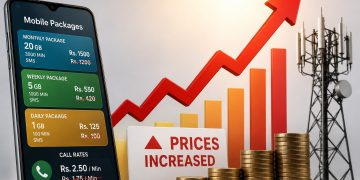




ISLAMABAD (Web Desk) – Millions of Pakistanis are expected to face higher monthly communication expenses after telecom operators increased the rates of Mobile package rates, a move that could further strain household budgets at a time when inflation continues to affect the cost of essential services.
According to the Pakistan Telecommunication Authority (PTA), telecom companies have revised tariffs for a number of prepaid hybrid and data-only packages, with prices of some bundles rising by up to 33%. The regulator has also released updated tariff sheets for 15 hybrid and data-only packages to help consumers compare available offers across different operators.
The revised tariffs show that monthly call and data packages have become up to Rs500 more expensive, while prices of 15-day packages have increased by up to Rs300. Weekly packages have risen by as much as Rs130, whereas three-day, two-day and one-day bundles have also become costlier.
The latest increase is expected to have a direct impact on millions of mobile users, particularly students attending online classes, freelancers working with overseas clients, ride-hailing drivers, delivery riders, small business owners and low-income families who depend on affordable mobile internet for work, education and daily communication.
For many households, mobile connectivity has become an essential expense alongside electricity, gas and fuel. As package prices rise, families may be forced to reduce internet usage, downgrade to smaller bundles or spend a larger share of their monthly income on staying connected.
Businesses that rely on mobile communication could also experience higher operating costs. Small retailers, online sellers and home-based entrepreneurs increasingly use mobile internet for customer orders, digital payments, social media marketing and business communications. Any increase in telecom expenses may ultimately affect their operating margins.
The tariff revisions may also influence Pakistan’s broader digital economy. Affordable internet access has played a key role in supporting e-commerce, remote work, online banking and digital government services. Analysts say sustained increases in connectivity costs could slow digital inclusion, particularly in rural and low-income communities where mobile broadband is often the only available internet option.
To improve transparency, the PTA has updated its consumer awareness platform with the latest tariff sheets, allowing subscribers to compare package prices, validity periods, call minutes and data allowances before selecting a plan. The regulator says the initiative is intended to help users make informed decisions and encourage greater competition among telecom operators.
The authority reiterated that consumer protection and transparency remain key priorities, urging subscribers to review package details carefully before activating or renewing any offer.
While telecom operators periodically revise prices in response to inflation, network expansion and higher operating costs, the latest increase means consumers will need to reassess their mobile spending as communication services become more expensive across the country.


