


By Our Correspondent
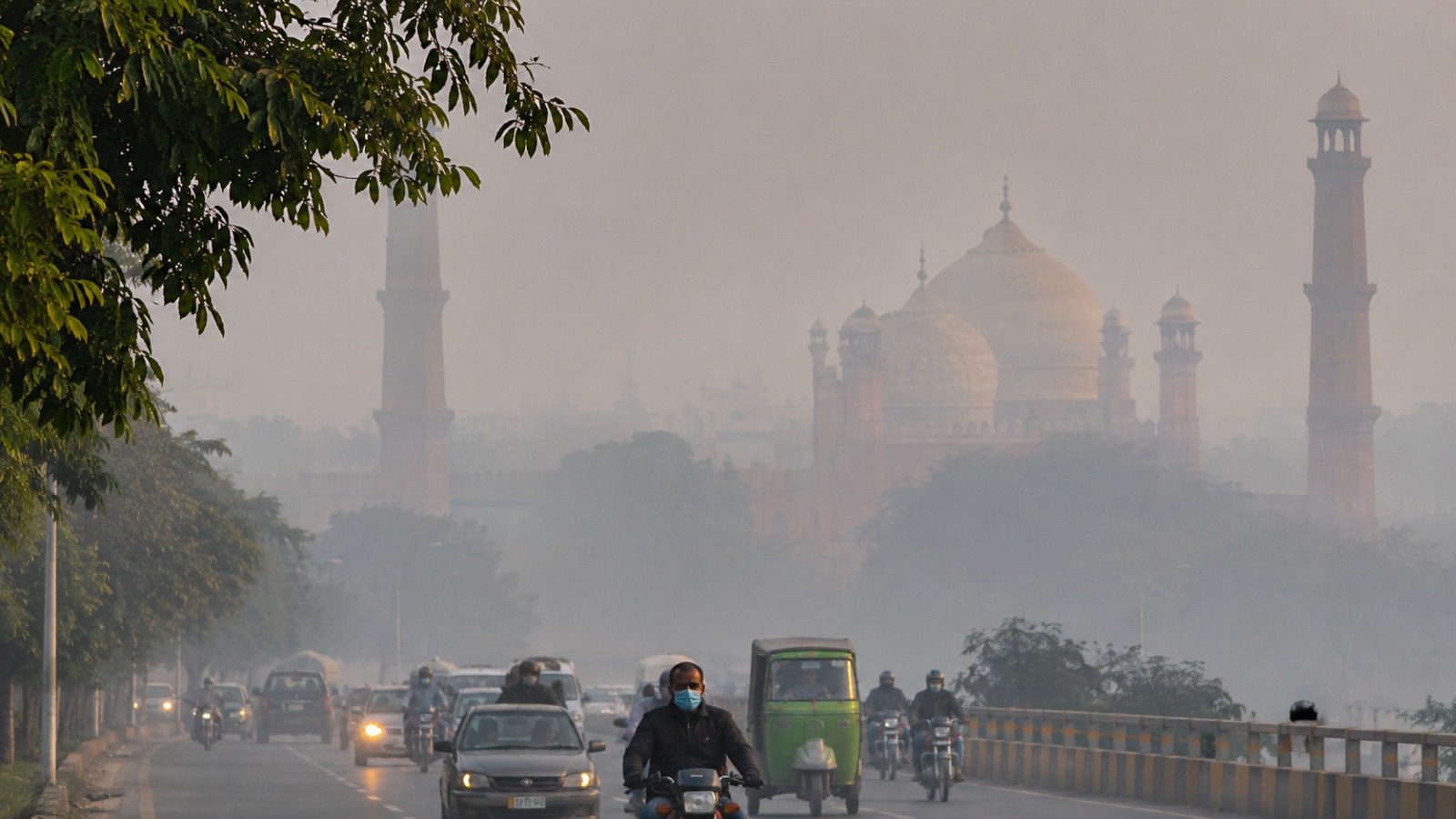
LAHORE: Lahore has once again emerged as the world’s most polluted major city, with its Air Quality Index (AQI) soaring to 339 on Wednesday, while Faisalabad recorded an alarming 686, the highest reading among Pakistani cities, as toxic smog continued to engulf Punjab, according to IQAir.
The IQAir live global ranking for 10am to 11am placed Lahore at the top, followed by Dhaka at 221, Baghdad at 199, Tashkent at 182 and Kolkata at 178. Karachi stood sixth with an AQI of 174.
The situation was even more alarming across Punjab, where several cities recorded pollution levels far exceeding the hazardous threshold.
Faisalabad topped Pakistan’s real-time pollution ranking with an AQI of 686, followed by Gujranwala at 550, Kahna Nau at 516, Multan at 437, Kasur at 371 and Lahore at 339.
Khanewal recorded an AQI of 327, Sargodha 314, Sahiwal 253 and Dera Ghazi Khan 238.
AQI readings above 300 fall in the hazardous category, posing serious health risks, particularly to children, elderly people and those suffering from respiratory and cardiovascular diseases.
EPA deploys senior officers to combat crop fires
Amid the worsening smog crisis, the Punjab Environment Protection Agency (EPA) has stepped up its anti-stubble-burning campaign by deploying senior headquarters officers across different divisions to directly supervise field operations, monitor crop-residue fires and ensure timely action against violations.
EPA Director General Abdullah Nayyer Sheikh said the deployment was aimed at ensuring effective on-ground supervision instead of relying exclusively on routine reports from field formations.
He said the designated officers would verify reported fire incidents, monitor operational performance, identify gaps and ensure immediate responses to detected hotspots.
Under an official order issued on November 13, five directors were assigned to supervise operations in different divisions on November 14 and 15.
Director (P&C) Waseem Ahsan Cheema was assigned Gujrat division, Director (L&E) Mian Ejaz Majeed Sahiwal, Director (MEAs) Anjum Riaz Faisalabad, Director (EMC) EPA Lab Lahore Noor Ahmad Lahore, and Director (EDH) Nazim Ayaz Alam Gujranwala.
The officers were directed to report violations with supporting evidence through designated WhatsApp groups, coordinate with district administrations and relevant departments, and submit field inspection reports to the director general.
Hafizabad emerges as Punjab’s biggest fire hotspot
According to the district-wise monitoring dashboard updated on November 14, the EPA detected 898 fire anomalies across eight districts. Of these, 820 incidents had been attended to and 823 fires extinguished, while 96 anomalies remained pending.
The agency deployed 67 quick response crews (QRCs), reporting an overall response rate of 91.3 per cent.
Hafizabad emerged as the biggest hotspot, accounting for 430 anomalies, nearly 48 per cent of the provincial total. Of these, 381 had been attended to and extinguished, while 49 remained pending. Nine response crews were deployed in the district.
Sheikhupura recorded 172 anomalies, with 154 attended to and extinguished and 18 pending. The district had 22 QRCs and a reported response rate of 89.5 per cent.
Nankana Sahib reported 120 anomalies, of which 95 had been attended to and extinguished, leaving 25 pending. Its response rate stood at 79.2 per cent.
Faisalabad recorded 93 anomalies, with 90 attended to and extinguished and three pending, achieving a response rate of 96.8 per cent.
The dashboard also listed 70 anomalies in Kasur, two in Sargodha and 10 in Sialkot. Gujranwala reported one incident that remained unattended at the time of reporting.
Hafizabad, Sheikhupura and Nankana Sahib collectively accounted for 722 of the 898 detected anomalies, highlighting their significance as major hotspots requiring sustained monitoring.
Motorway surveillance detects 20 fire incidents
Separately, motorway beat vehicle surveillance detected 20 fire anomalies during the latest 24-hour reporting period. Of these, 13 had been attended to, while seven remained pending, resulting in a response rate of 65 per cent.
Six beat vehicles collectively covered 1,770 kilometres against their assigned route length of 598 kilometres.
Beat-1, covering the M-2 section between Ravi Toll Plaza and Pindi Bhattian Interchange, recorded the highest number of anomalies at 12. Five had been attended to, while seven remained pending.
Beat-5, covering the route between Kot Rada Kishan and Depalpur Bypass Road, detected seven anomalies, all of which had been attended to.
Beat-6, covering the M-4 section between Aminpur Interchange in Faisalabad and Pindi Bhattian Interchange, detected one anomaly, which was also attended to.
No anomalies were reported by Beat-2 on the M-11, Beat-3 on the M-2 and Beat-4 on the M-3 during the reporting period.
Environmental inspections expanded
The EPA has also assigned additional environmental monitoring responsibilities to its headquarters-based directors.
Waseem Ahsan Cheema was directed to inspect the Gujranwala Yellow Line Mass Transit Project, while Anjum Riaz was assigned to examine the Faisalabad Mass Transit System (Metro Bus Project) for compliance with environmental regulations.
The agency said district-level fire detection, motorway surveillance and field-based response teams were being coordinated to identify crop-residue fires and ensure their timely extinguishment.
However, with multiple Punjab cities recording hazardous pollution levels, the worsening air quality has underscored the scale of the challenge facing environmental authorities as the province battles another intense smog season.