


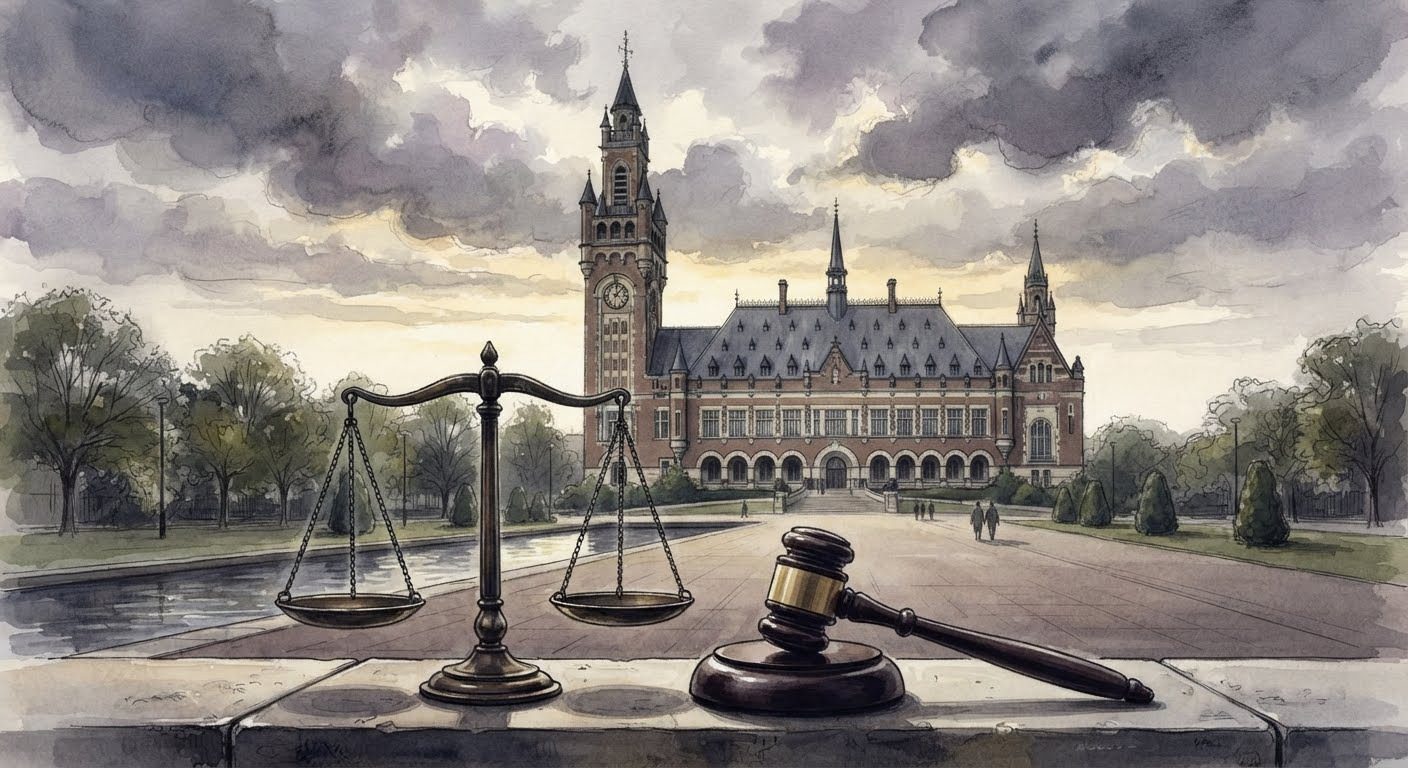
THE HAGUE (Web Desk) — The United Nations’ highest court has ruled that Myanmar committed state-sponsored genocide against its Rohingya Muslim minority during a brutal 2017 military crackdown.
In a landmark judgment delivered on Thursday, a 15-judge panel at the International Court of Justice (ICJ) found that Myanmar’s security forces carried out mass killings, widespread sexual violence, and extreme brutality against children with the specific intent to destroy a substantial part of the Rohingya population in Northern Rakhine State.
The verdict concludes a seven-year legal battle initiated by Gambia in 2019. It marks the first time the ICJ has ever held a sovereign state directly responsible for genocide, and only the fourth time since the Holocaust that any international tribunal has ruled that the strict legal threshold for genocide was met—following previous rulings concerning Rwanda, Srebrenica in Bosnia, and Cambodia’s Khmer Rouge.
Key Findings of the Cour
Reading the final decision, ICJ President Yuji Iwasawa ) stated that the military’s actions went far beyond legitimate security operations. The panel highlighted several critical findings:
• Intent to Destroy: The judges determined that the only reasonable conclusion to draw from the military’s “clearance operations” was an intent to destroy the protected group.
• Systematic Atrocities: The court confirmed that Myanmar’s armed forces executed men and boys en masse, subjected Rohingya women to widespread rape, burned hundreds of villages to the ground, and attacked civilians as they fled.
• Incitement: The military actively spread hate speech targeting the Rohingya community.
The offensive drove more than 700,000 Rohingya refugees out of Buddhist-majority Myanmar, primarily into neighboring Bangladesh. Myanmar’s government, which has consistently denied the allegations and claimed its forces were responding to militant attacks, did not immediately comment on the ruling.
UN top court rules Myanmar Committed state-sponsored genocide against Rohingya
While ICJ rulings are legally binding and cannot be appealed, the court lacks direct enforcement mechanisms to compel compliance. Nevertheless, the panel ordered Myanmar to take concrete restorative measures:
• Facilitate the “safe and dignified return” of displaced Rohingya to their homes.
• Ensure the reunification of separated families.
• Provide financial compensation to the victims, with the exact amount to be determined at a later stage.
Legal analysts note that the ruling will carry significant weight beyond Myanmar. As the court’s first major interpretation of the 1948 Genocide Convention in over a decade, the judgment is expected to heavily influence other pending international cases—most notably South Africa’s 2023 case accusing Israel of genocide in Gaza. Unlike the International Criminal Court, which prosecutes individuals, the ICJ settles legal disputes strictly between nations.