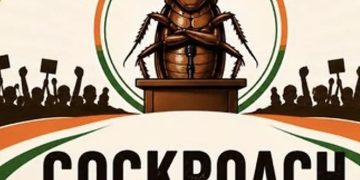




NEW DELHI (Web Desk) – A federal minister assured representatives of India’s youth-led Cockroach Janta Party (CJP) movement on Monday that the government would review their charter of demands, as thousands of young demonstrators marched toward Parliament despite police attempts to disperse them using tear gas and cane charges.
The months-old movement and its high-profile “Sansad Chalo” march represent one of the largest public challenges facing Prime Minister Narendra Modi in his third term. Having amassed millions of supporters across digital platforms since its launch, the movement has rapidly expanded its footprint offline, drawing widespread backing from opposition leaders and civil society groups.
Tensions escalated significantly over the weekend after Delhi Police forcibly transferred hunger-striking climate activist Sonam Wangchuk to Safdarjung Hospital. Wangchuk, who had been fasting at Jantar Mantar in solidarity with the youth movement, entered his 21st day of hunger strike before being removed. The police action galvanised protesters, who assembled overnight in central Delhi to demand the immediate resignation of Union Education Minister Dharmendra Pradhan following widespread leaks in national entrance examination papers.
Movement leaders point to the paper leaks during the national medical entrance exam as evidence of systemic corruption. The irregularities forced over two million students to retake the test and tragically led to several student suicides. In response, thousands gathered at Jantar Mantar on the opening day of Parliament’s monsoon session, waving national flags and chanting slogans demanding the resignations of both Education Minister Dharmendra Pradhan and Prime Minister Narendra Modi.
Security was deployed across the capital, with police and paramilitary personnel erecting heavy barricades on major thoroughfares leading to central Delhi. Despite police assertions that the situation was being managed professionally, witnesses reported officers using cane charges and firing tear gas near Parliament after some protesters attempted to breach security lines. Similar solidarity demonstrations erupted nationwide, including in Mumbai, Bangalore, Goa, and across Gujarat, where police detained numerous demonstrators.
Following verbal discussions on Monday, Union Health Minister J.P. Nadda met with a delegation of CJP representatives, including movement spokespersons Ashutosh Ranka and Saurav Das. The CJP delegation formally submitted a memorandum outlining three core demands: the immediate release of Sonam Wangchuk, the resignation of Education Minister Dharmendra Pradhan, and a compensation package of 10 million rupees ($104,000) for the families of each student who died by suicide following the exam leaks.
Addressing the development on social media, Minister Nadda confirmed receiving the petition, stating that he urged the protesters to end their sit-in to help restore public order. Meanwhile, CJP founder Abhijeet Dipke, who briefly undertook a hunger strike following Wangchuk’s hospitalisation, called off his fast at Wangchuk’s request as official channels for dialogue opened.
From his hospital bed, Wangchuk stated he would maintain his fast until youth leaders were permitted to meet parliamentarians or lawmakers visited him directly to offer firm assurances regarding accountability in the education sector. As Parliament opened its session amid heated debates over the crackdown, CJP organizers maintained that peaceful demonstrations would continue until concrete government action is taken.


