


By Our Correspondent
LAHORE: Just two days after the devastating collapse of a tuition centre roof that claimed the lives of 14 children, another roof collapse in Lahore has left one child dead and four others injured, raising fresh concerns over construction safety and building standards in the provincial capital.
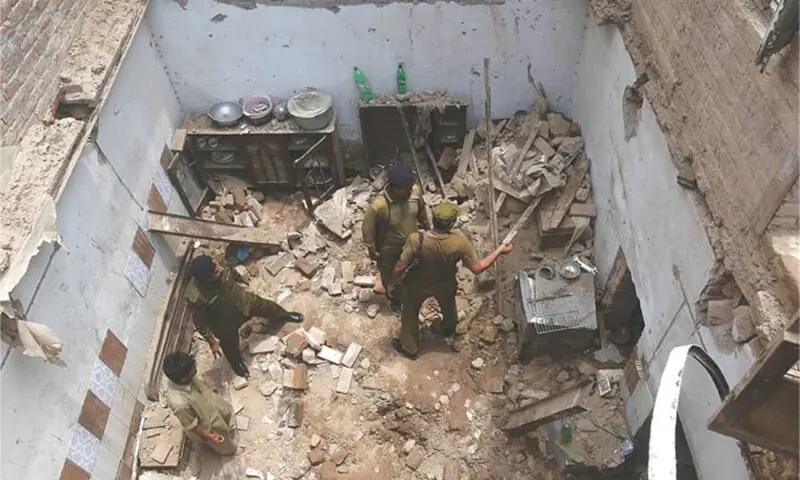
According to Rescue 1122, the latest incident occurred on Thursday in the Baghbanpura area when the roof of the third floor of an under-construction house suddenly caved in.
Emergency responders said the collapse killed a child believed to be between eight and ten years old. Four injured people were rescued from the debris and shifted to Services Hospital after receiving first aid at the scene.
Rescue officials also confirmed that another individual was believed to be trapped beneath the rubble as search and rescue operations continued.
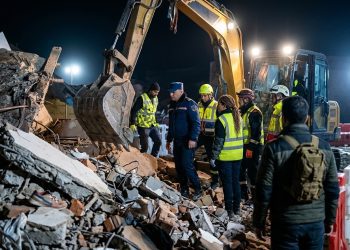
Seven Rescue 1122 emergency vehicles and around 25 rescue personnel were deployed to the site to remove debris and search for survivors. Heavy machinery and specialised rescue equipment were also being used to ensure no one remained trapped under the collapsed structure.
Authorities have not yet disclosed the exact cause of the collapse. Officials said investigations would determine whether poor construction practices, weak structural design, or other factors contributed to the incident.
The latest tragedy comes only two days after one of Lahore’s deadliest building collapse incidents in recent years.
On Tuesday, the roof of a tuition centre in Kahna collapsed while approximately 30 children were attending classes. Rescue teams rushed to the scene and pulled children from the rubble during a lengthy operation.
Hospital authorities confirmed that at least 14 children lost their lives, while several others sustained injuries. Five children remained under treatment after the incident, with some reported to be in critical condition.
According to Rescue 1122, the tuition centre’s roof was supported by T-R girders, which suddenly gave way. The exact reason behind the structural failure has not yet been officially established, and investigations remain underway.
The Kahna tragedy prompted widespread grief across Punjab, with hundreds of mourners attending funeral prayers for the young victims. Most of the deceased children were between four and twelve years old.
The occurrence of another roof collapse within just 48 hours has intensified concerns about the enforcement of building regulations, especially at under-construction sites and older buildings across Lahore.
Structural collapses continue to occur in different parts of Pakistan, often due to inadequate engineering supervision, substandard construction materials, ageing infrastructure, illegal alterations, and weak enforcement of building codes.
Experts have repeatedly called for stricter inspections during construction, improved compliance with engineering standards, and stronger action against contractors found violating safety regulations.
Urban planners also stress that rapid urban expansion and unauthorized construction have increased risks in densely populated cities, making routine structural audits essential to prevent similar tragedies.
Following the recent incidents, citizens have urged the authorities to conduct comprehensive inspections of educational institutions, residential buildings, and under-construction projects to identify unsafe structures before further loss of life occurs.
Rescue officials have advised the public to avoid entering damaged buildings after heavy rainfall or visible structural damage and to immediately report unsafe structures to local authorities.
Investigations into both the Baghbanpura and Kahna incidents are expected to determine responsibility and whether negligence played a role in the deadly collapses. Authorities are also expected to review compliance with existing building regulations and recommend measures aimed at preventing future disasters.
The latest incident has once again highlighted the urgent need for improved construction oversight and stricter enforcement of safety standards to protect lives in Pakistan’s rapidly growing urban centres.