By Our Correspondent
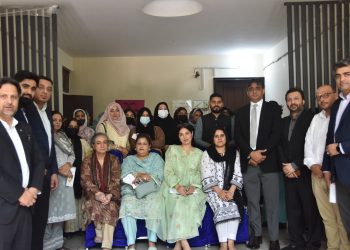
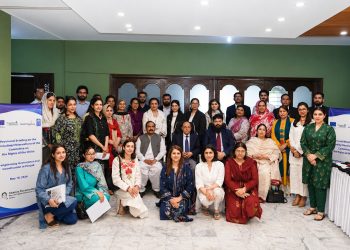
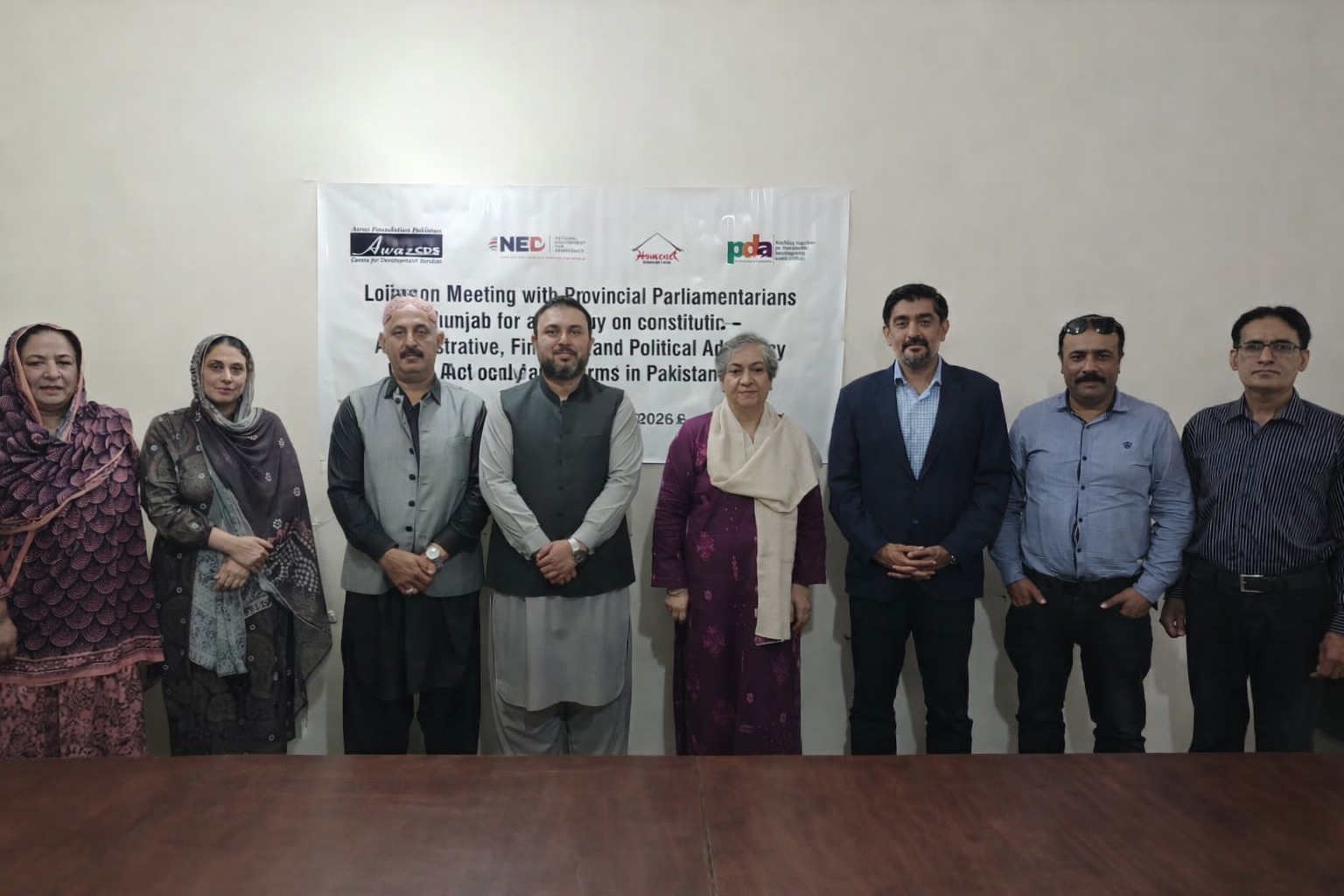
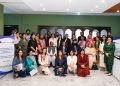
LAHORE: Calling for urgent and inclusive reforms in Punjab’s local governance system, HomeNet Pakistan convened a lobbying meeting at its Lahore office to engage parliamentarians on the pressing gaps in the province’s local government framework and the need for timely political action.
Read also: HomeNet Pakistan observes International Home-Based Workers Day 2025
The meeting brought together members of the Provincial Assembly of Punjab, particularly those associated with the Standing Committee on Local Government, to deliberate on the structural, policy, and implementation challenges that continue to delay an effective and representative local government system in the province.
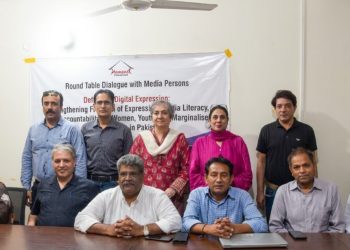
Among the notable participants were members of the Local Government Caucus, including Mr. Muhammad Ahmad Khan Laghari, Mr. Qasim Ali Malik, and Mr. Abdul Aziz Khan Dreshak. Representatives from civil society and the media also attended the meeting, which was led by Ms. Ume Laila Azhar, Executive Director, HomeNet Pakistan.
RelatedPosts


Speakers underscored that a functional local government system is essential for strengthening democracy, improving public service delivery, and ensuring that citizens’ voices are reflected in local decision-making. The discussion highlighted key concerns around governance gaps, weak implementation mechanisms, and the prolonged absence of empowered local bodies in Punjab.
A major focus of the discussion was the importance of ensuring that local government reforms are not only politically viable but also inclusive and gender-responsive. Speaking on the occasion, Ms. Ume Laila Azhar stressed that local governance must create meaningful space for women, home-based workers, and marginalized communities, whose voices are often excluded from mainstream political and development processes.
She emphasized that women’s representation in local government is not merely symbolic, but essential for responsive governance, particularly in areas such as community services, social protection, local development, and access to public resources. She further noted that strengthening local government institutions can play a transformative role in advancing women’s political participation, economic inclusion, and leadership at the grassroots level.
Participants also shared that the government appears committed to restoring the local government system in Punjab; however, the process would require wider political consensus, including support from the opposition. It was noted that once political endorsement is secured, the process of delimitation and demarcation of constituencies for local government elections may take approximately three months to complete.
The meeting concluded with a shared understanding that the revival of local government in Punjab must move beyond procedural commitments and translate into a practical, democratic, and inclusive governance structure that responds to the needs of ordinary citizens.
HomeNet Pakistan reaffirmed its commitment to advocating for democratic governance reforms and to working with parliamentarians, civil society, and the media to promote a strong, inclusive, and accountable local government system in Punjab.