


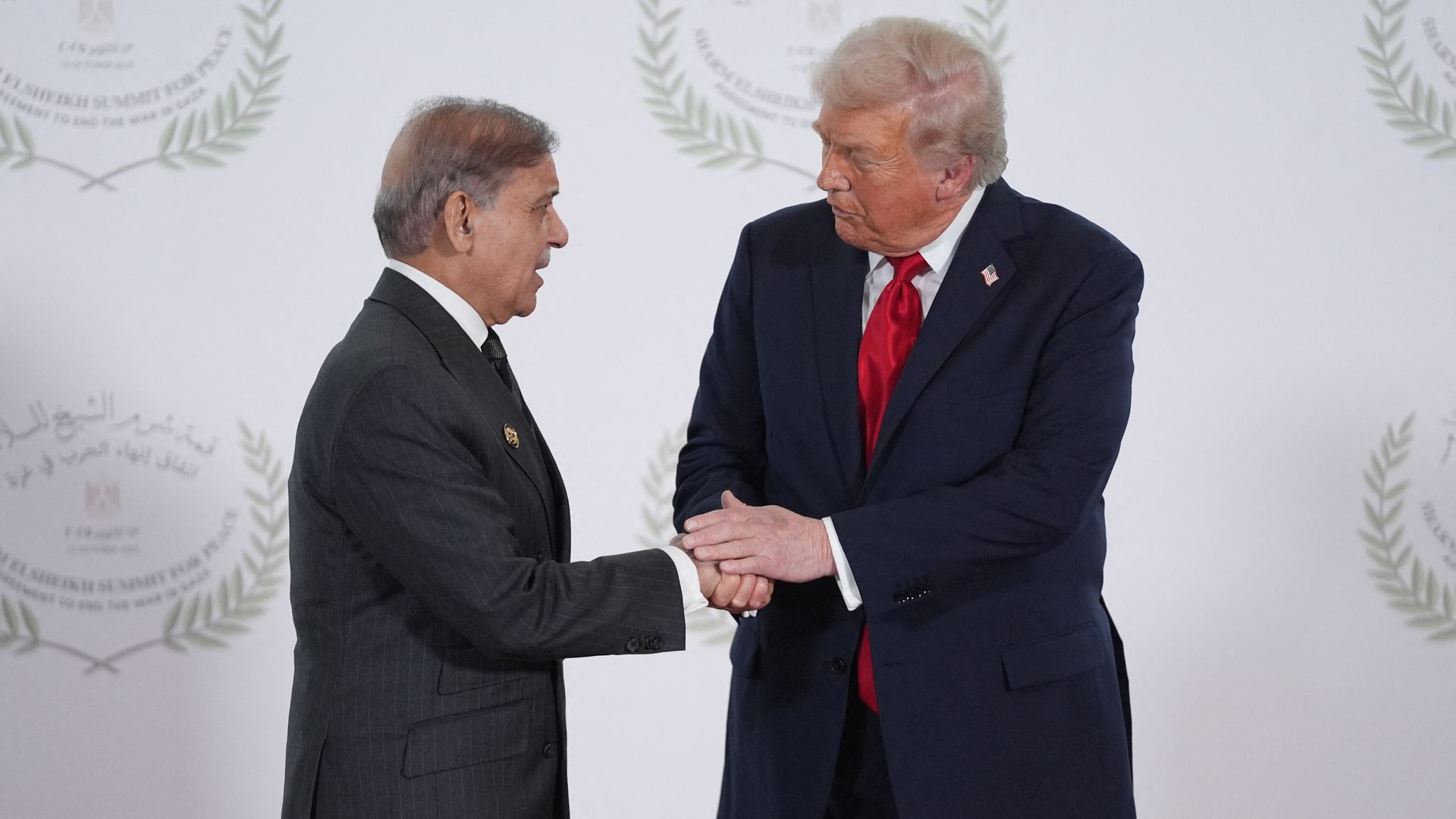
ISLAMABAD (News Desk) April 08 — Pakistan on Wednesday announced that the Islamic Republic of Iran and the United States, along with their allies, had agreed to an immediate ceasefire, including in Lebanon, and invited their delegations to Islamabad on April 10 for negotiations aimed at a lasting resolution.
Read also: Pakistan urges two-week ceasefire between US and Iran to enable peace talks
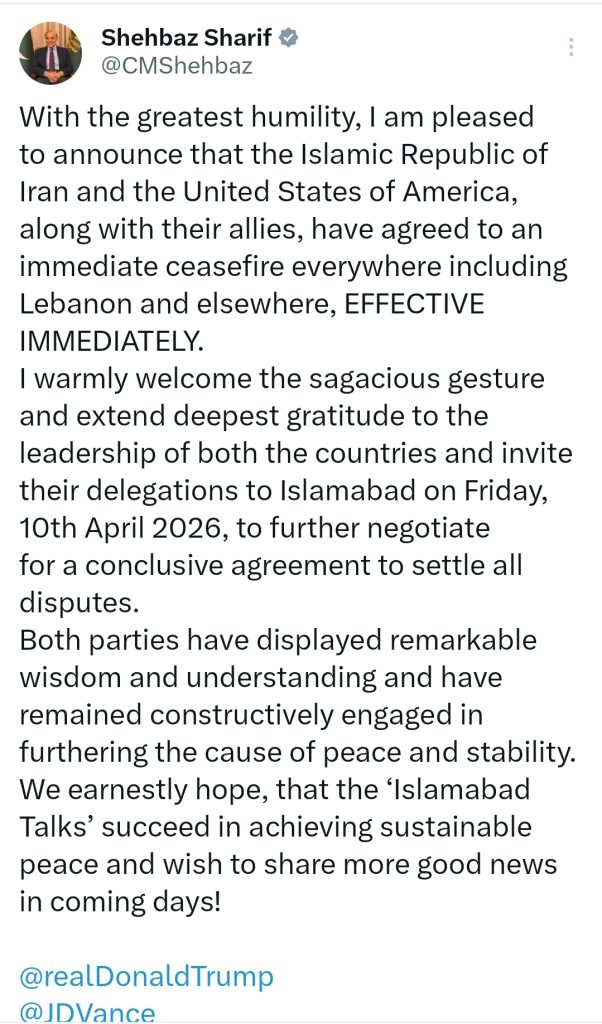
Prime Minister Shehbaz Sharif shared the development in an early-morning post on X, welcoming the move and expressing “deepest gratitude” to the leadership of both countries. He praised both sides for demonstrating “remarkable wisdom and understanding” and said they remained constructively engaged in promoting peace and stability.
Sharif, who played a mediating role, voiced optimism that the upcoming ‘Islamabad Talks’ would pave the way for a sustainable settlement and further positive developments in the coming days.
However, the White House offered a more cautious stance. Press Secretary Karoline Leavitt stated that while discussions on in-person talks were ongoing, no final agreement had been confirmed by the US administration.
Meanwhile, a White House official indicated that Israel had agreed to the ceasefire arrangement involving Washington and Tehran.
The diplomatic breakthrough followed Pakistan’s request for de-escalation. US President Donald Trump said he would suspend military action against Iran for two weeks, provided Tehran ensured the full reopening of the strategic Strait of Hormuz.
Iran responded that it would halt its defensive operations if attacks ceased and confirmed that safe passage through the strait would be allowed for the same period under its supervision.
The announcement came shortly before the expiry of Trump’s deadline for Iran to comply, after earlier threats of severe military action escalated tensions. Pakistan’s intervention, including Sharif’s appeal to extend the deadline, helped create space for diplomacy.
The conflict, which began with US and Israeli strikes on Iran in late February, has raised global concerns. Political leaders and citizens in the United States expressed relief following news of the provisional ceasefire, though reactions remained mixed.
Democratic leaders, including Chuck Schumer and Hakeem Jeffries, strongly criticised Trump’s approach, calling it reckless and demanding congressional action to end the conflict. Some even called for his removal from office.
Others, including Republican lawmakers such as Lindsey Graham and Rick Scott, welcomed the pause in hostilities, describing it as a strategic move toward accountability and diplomacy.
Pakistan has positioned itself as a key facilitator in easing tensions between Tehran and Washington, with the upcoming Islamabad talks seen as a crucial step toward a comprehensive peace agreement.


