


By Mian Abuzar Shah, President LCCI
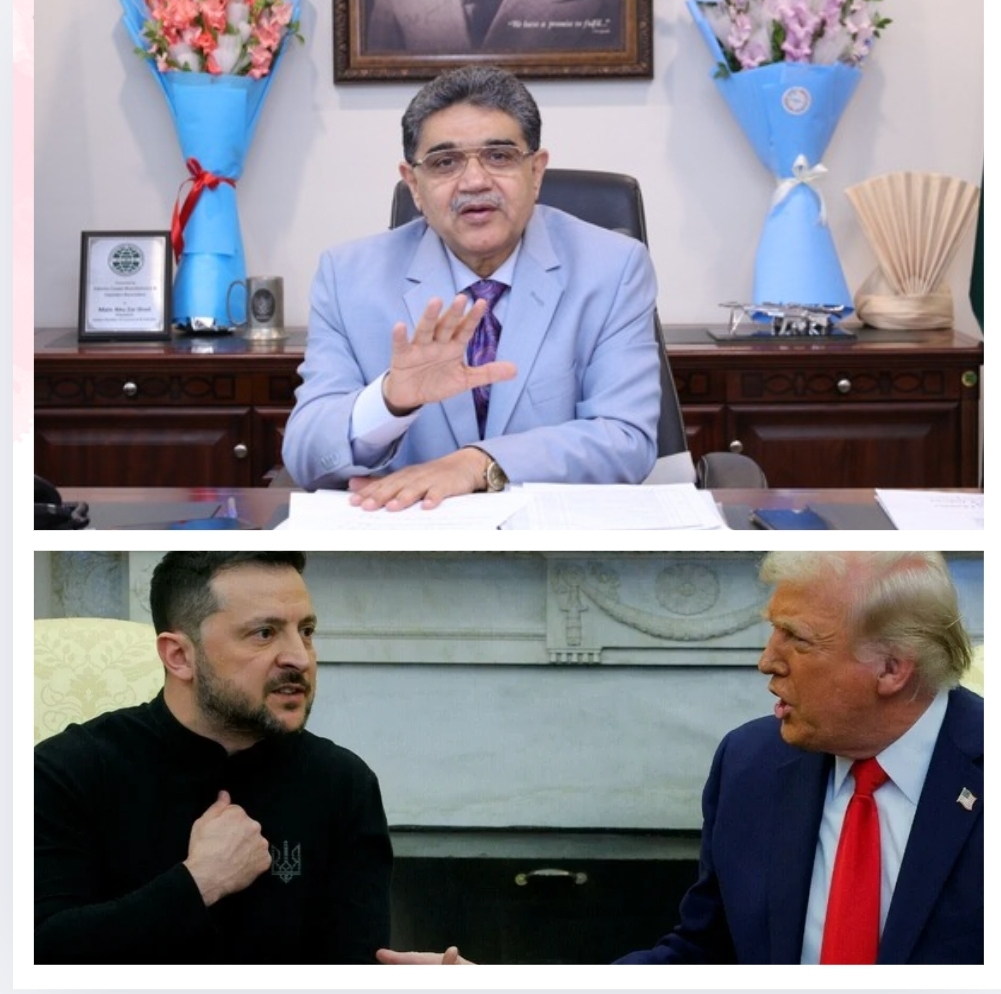
The recent exchange of sharp words between US President Donald Trump and Ukrainian President Volodymyr Zelensky has reignited geopolitical tensions, with significant consequences not only for Eastern Europe but for global trade, energy markets, and diplomatic relations. The friction between these two leaders comes at a critical juncture when the world is already facing economic volatility and escalating regional conflicts. These tensions are set to shape global policy decisions, energy security, and international alliances in the months ahead.
The war in Ukraine has been a major point of contention in global politics, and the latest exchange between Trump and Zelensky signals a shift in the US approach to Kyiv. Trump’s vocal skepticism regarding continued US financial and military support for Ukraine has rattled the Ukrainian leadership. He has repeatedly indicated that a re-evaluation of aid to Ukraine is necessary, questioning whether American interests are best served by prolonged involvement in the conflict.
Read also: SIFC appreciates LCCI’s efforts in promoting business-friendly environment
Zelensky, on the other hand, has been forcefully advocating for sustained support, arguing that backing Ukraine is essential for countering Russian aggression and maintaining stability in Europe. The public nature of their disagreement has sent shockwaves through diplomatic circles, with European allies closely monitoring the situation. The European Union (EU) and NATO members, who have invested significant resources in Ukraine’s defense, are particularly concerned about the possibility of a reduction in US support under Trump’s leadership.
One of the immediate consequences of this discord is the uncertainty it creates in energy markets. The global supply chain, already fragile due to conflicts in Ukraine and the Middle East, is now facing new disruptions. A recent example of how geopolitics influences global energy flows is the reported denial of oil supply to Norway, allegedly due to shifting allegiances and energy policy recalibrations. Such moves indicate a broader pattern where energy resources are being weaponized in global politics, leading to disruptions that could affect supply chains worldwide.
If US support for Ukraine diminishes, it may embolden Russia to tighten its grip on energy exports, particularly in Europe. This could lead to increased energy costs globally, affecting economies that rely heavily on imported oil and gas. Countries in South Asia, including Pakistan, are particularly vulnerable to these fluctuations.
For Pakistan, this scenario holds both challenges and opportunities. The rising instability in global energy markets may lead to increased fuel prices, putting additional pressure on Pakistan’s already strained economy. Given that Pakistan is heavily dependent on imported fuel, any further escalation in global oil prices could exacerbate inflation, slow down industrial growth, and increase the cost of living for ordinary citizens.
At the same time, the evolving geopolitical landscape presents opportunities for Pakistan to strengthen its alliances and explore alternative economic and energy partnerships. The country must act swiftly to safeguard its economic interests amid the shifting global order.
To navigate these evolving geopolitical dynamics, Pakistan must adopt a proactive strategy that aligns with its economic and strategic interests. Here are some key areas where Pakistan should focus:
Diversifying Energy Sources: Given the volatility in global energy markets, Pakistan should expedite efforts to secure alternative energy sources, including increasing trade with Middle Eastern oil producers and expanding investment in renewable energy projects. Additionally, enhancing the domestic energy infrastructure, including hydro, wind, and solar power, can help reduce dependence on imported fuels.
Strengthening Regional Alliances: With shifting global power dynamics, Pakistan should enhance diplomatic engagement with China, Russia, and Gulf nations to ensure economic stability. Strengthening ties with Russia, in particular, could open doors for energy cooperation and trade diversification. Additionally, fostering deeper economic relations with Central Asian states could provide Pakistan with access to new energy corridors.
Maintaining a Balanced Foreign Policy: While Pakistan has historically maintained strong ties with the US, it must ensure that its foreign policy remains balanced, avoiding unnecessary entanglements in the ongoing US-Ukraine-Russia dispute. A pragmatic approach will allow Pakistan to benefit from multiple economic and strategic partnerships without alienating key allies.
Expanding Trade Partnerships: The uncertainty in Western markets necessitates a stronger focus on trade diversification. Pakistan should explore new markets in Africa, Southeast Asia, and Latin America to reduce reliance on Western economies. Strengthening trade relations with the Association of Southeast Asian Nations (ASEAN) and Gulf Cooperation Council (GCC) countries can open new avenues for economic growth.
Energy Security Agreements: Pakistan should actively negotiate long-term energy security agreements with friendly nations. Engaging in discussions with oil-producing nations such as Saudi Arabia, the UAE, and Qatar to secure stable energy supplies at competitive prices can help mitigate risks arising from global market fluctuations.
Enhancing Domestic Industrial Growth: The government must incentivize local industries to reduce dependency on imports by promoting manufacturing and local production. Encouraging investment in industrial zones, facilitating ease of doing business, and ensuring policy consistency will contribute to economic resilience in the face of global uncertainties.
Navigating the Russia-West Divide: As tensions between Russia and the West persist, Pakistan must carefully balance its position. Developing a neutral yet cooperative approach—engaging in diplomacy while securing beneficial trade deals—can help Pakistan avoid being caught in geopolitical crossfires.
Conclusion: The Trump-Zelensky tensions and the broader geopolitical shifts they represent will have far-reaching implications on global stability. For Pakistan, the situation presents both risks and opportunities. By diversifying energy sources, strengthening regional alliances, maintaining a balanced foreign policy, expanding trade partnerships, and securing long-term energy agreements, Pakistan can mitigate risks and position itself as a resilient player in the evolving global order.
At a time when global politics is undergoing rapid transformation, strategic decision-making will be key to ensuring Pakistan’s economic stability and growth. The world is changing rapidly, and nations that respond with vision and adaptability will be best positioned for long-term prosperity. Pakistan must rise to the challenge, leveraging its geographical advantage and economic potential to secure a prosperous future amid global uncertainties.