


By Asim Shehzad
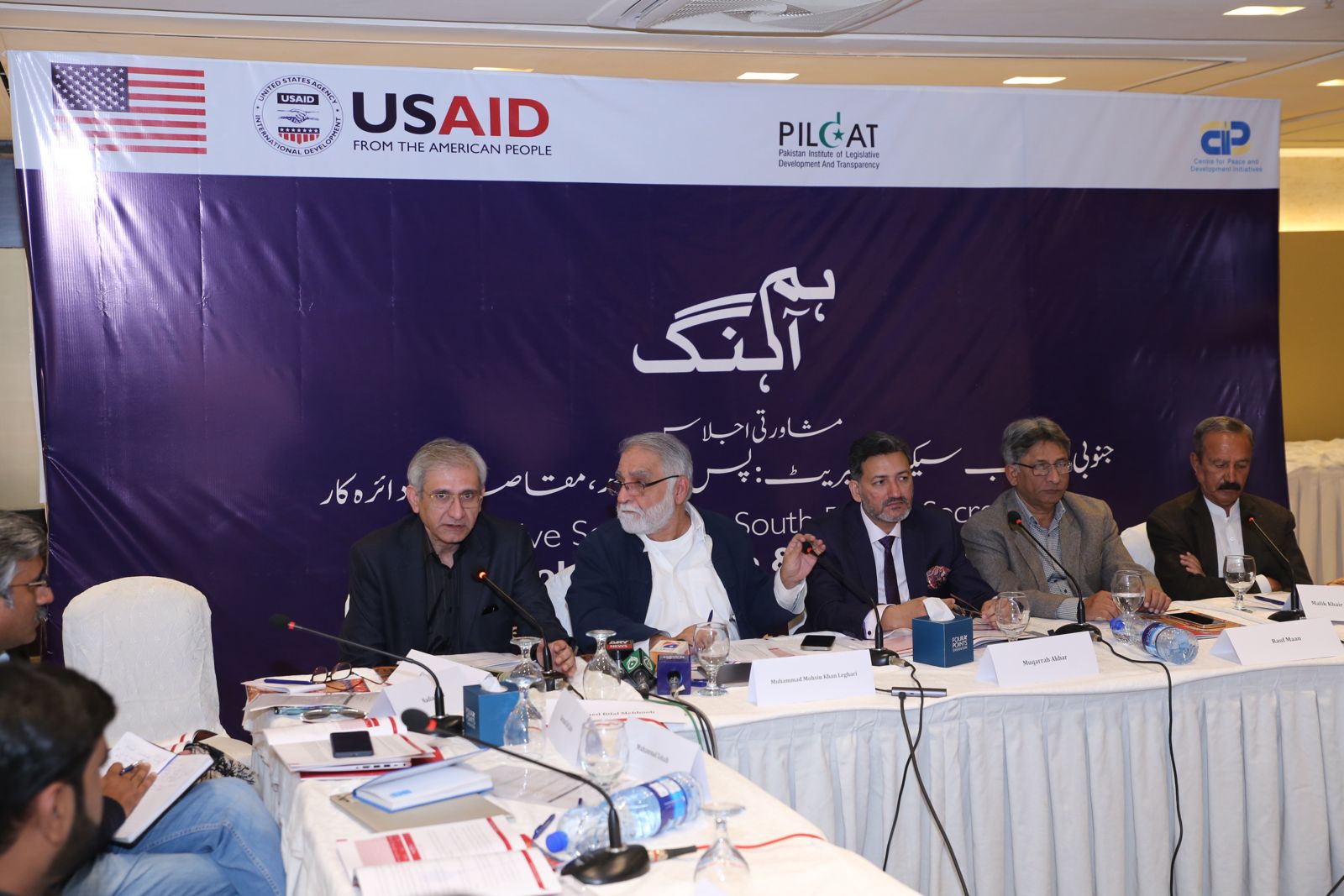
LAHORE: A Consultative Session on the Role, Mandate, and Functions of the South Punjab Secretariat (SPS) was held under the USAID-funded Hum Ahang Program, facilitated by PILDAT. The session served as a platform for legislators, civil society representatives, academia and media to discuss how the SPS can address governance challenges in South Punjab. Former Senator and Finance Minister Punjab Mohsin Leghari said that, “The South Punjab secretariat must be empowered by addressing staff shortages and ensuring adequate allocation and utilization of resources, as highlighted in the briefing paper”. Addressing CSO representatives, he added, “It is imperative for you to actively engage with your legislators and demand accountability, ensuring they work towards strengthening the Secretariat’s functionality.” Relatedly, several MPAs present at the session underscored the need to leverage political pathways for the emboldening of the SPS, preferably via a dedicated parliamentary caucus to highlight South Punjab’s issues. Participants debated the Secretariat’s achievements since its establishment in 2020, including increased school enrollment and groundbreaking initiatives like the launch of a transgender school by the Education Department.
Stakeholders provided actionable recommendations, including empowering SPS officials, addressing staff shortages, and enhancing citizen engagement. Malik Muhammad Budh remarked, “Awareness initiatives can be undertaken despite financial restrictions. Significant departments like Auqaf, PDMA, and Social Welfare must be devolved to enhance service delivery.” Other participants were in agreement, claiming that these avenues could serve to address longstanding socioeconomic grievances and curtail the spread of violent extremism in the region. Rauf Maan, Journalist addressed the MPAs present: “Empowering the South Punjab Secretariat requires unwavering political will. Without genuine intent, amendments alone cannot alleviate the grievances of South Punjab’s people. Political parties must engage in dialogue to build consensus, enabling the Secretariat to function effectively and address the region’s challenges.” The discussants highlighted gaps in the current frameworks and practices related to the SPS and shared constructive solutions to address these issues. Specifically, several civil society representatives and MPAs noted routine obstructions in the functioning of the SPS via the appointment of Additional Secretaries that are answerable to the Lahore Secretariat. Additionally, they brought to attention the fact that fiscal decentralization had not taken place – with current development budgets of the South standing at less than 20% despite ring-fencing of 35%. MPA Usama Leghari highlighted that SMART (specific, measurable, achievable, realistic, time bound) goals ought to be adopted by the SPS in order to ensure a structured and clearly defined set of activities, goals, outcomes, and overarching impact for the citizens of South Punjab. They emphasized the need for collaboration between government institutions, civil society, and the media to overcome governance challenges effectively. Funds, they claimed, have already been dedicated to the establishment of the Secretariat building(s) including government residences and this expenditure ought not to be wasted by further impediments to its functioning.
A total of 69 participants attend the session including eight members of the provincial assembly.