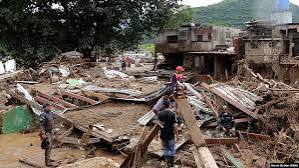



CARACAS (Web Desk) – A severe humanitarian emergency is rapidly unfolding across northern Venezuela, prompting urgent warnings from international relief organizations just days after the government secured $346 million in emergency funding from the International Monetary Fund (IMF). While the capital city of Caracas begins its structural evaluations, the coastal state of La Guaira remains paralyzed by the catastrophic destruction left behind by the June 24 twin earthquakes. Local officials now fear that a secondary crisis—driven by disease and exposure—could eclipse the initial disaster if logistical bottlenecks are not cleared immediately.
The twin 7.2 and 7.5 magnitude shocks shattered the coastline, flattening critical infrastructure and leaving a finalized death toll of 5,069 citizens. Though hospitals have successfully discharged the vast majority of the 16,740 injured individuals, the medical system is buckled under a new wave of patients. These new admissions are coming directly from the makeshift displacement camps that have blanketed the hillsides of La Guaira.
According to regional non-governmental organizations, more than 20,000 homeless survivors are trapped in hyper-congested settlements. The camps entirely lack centralized running water, electricity, or organized blackwater sanitation networks. Aid workers on the ground report a worrying spike in acute respiratory infections and waterborne vector illnesses, including early signs of a dysentery outbreak among infants and elderly populations.
Medical volunteers note that the upcoming rainy season threatens to wash away the flimsy plastic sheeting currently serving as shelter for thousands of families. “We survived the earth tearing itself apart, but now we are watching our children get sick from the water we are forced to drink,” said Maria Casalta, a displaced resident of MaiquetÃa, a city near the quake’s epicenter. “The money from abroad needs to turn into pipes, medicine, and solid roofs today, not next month.”
The slow delivery of physical aid stands in stark contrast to the rapid geopolitical shifts that allowed the capital influx. Following the dramatic geopolitical realignment in January—which saw the removal of Nicolas Maduro by a United States military incursion—the interim government led by Delcy Rodriguez reestablished long-frozen ties with global financial institutions. The $346 million drawn on Friday represents the first time in seven years that Venezuela has successfully accessed its reserved Special Drawing Rights (SDRs) at the IMF, which total roughly $5.1 billion.
However, translating these digital millions into raw construction materials is proving to be a logistical nightmare. La Guaira’s primary transit corridors, which connect the coastal ports to Caracas through a series of mountain tunnels and bridges, suffered extensive fissures during the 40-second seismic convulsion. Heavy machinery tasked with rebuilding water filtration plants and delivering emergency medical modules is frequently caught in massive gridlock along the crumbling highway passes.
National Assembly chief Jorge Rodriguez stated that specialized military engineering units have been deployed alongside private contractors to construct temporary bypass roads. The legislative body has pledged that a significant portion of the IMF funds will be directly channeled into constructing modular, semi-permanent housing units to dismantle the crowded camps before the seasonal rains intensify.
Concurrently, independent human rights monitors have publicly urged the Rodriguez administration to establish an open, transparent auditing process for the newly released funds. They emphasize that international oversight is paramount to guarantee that emergency capital reaches the devastated coastal zones rather than being swallowed by bureaucratic inefficiency. With thousands of lives still hanging in the balance, the clock is ticking for Venezuela to convert its sudden economic breakthrough into physical salvation on the ground.


