


By Asim Shahzad
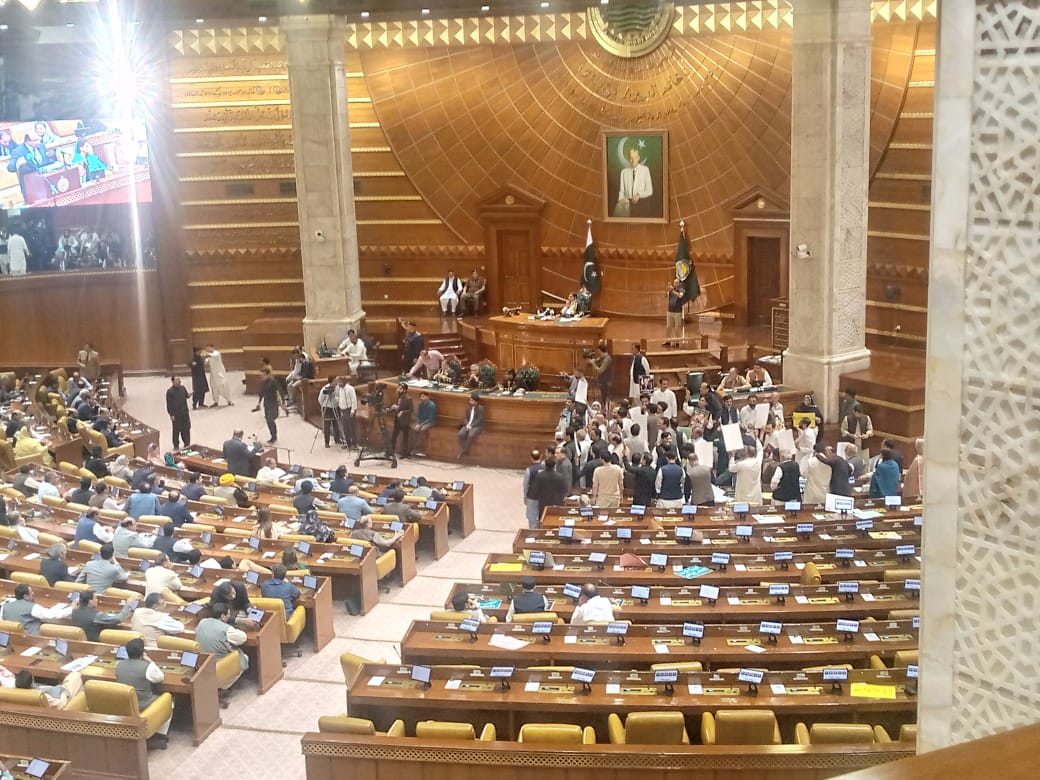
LAHORE: The Punjab Assembly on Tuesday decided to reconsider the Punjab Control of Habitual Offenders Bill 2026, following objections raised by lawmakers, civil society and social media users, with Speaker Malik Muhammad Ahmed Khan announcing that the proposed legislation would be sent back for review.
The decision came during a session of the provincial assembly that began after a delay of more than two hours.
Addressing the House, Speaker Malik Muhammad Ahmed Khan said Punjab Chief Minister Maryam Nawaz had directed the government to revisit the bill in light of concerns expressed by various stakeholders.
He informed lawmakers that the bill would be returned to the Punjab Law Department, which would subsequently refer it back to the provincial cabinet for further deliberations.
“The necessary amendments will be made, after which the bill will be presented before the Assembly again,” the Speaker said.
The Punjab Control of Habitual Offenders Bill 2026 remained the central focus of the day’s proceedings, with members discussing the need to ensure that any new legislation adequately addresses legal and public concerns before being enacted.
Assembly discusses Kahna tuition centre tragedy
Towards the end of the session, lawmakers also expressed grief over the collapse of a tuition academy roof in Lahore’s Kahna area, which claimed the lives of several children and left others injured.
Speaker Malik Muhammad Ahmed Khan conveyed his deep sorrow over the incident and urged the Punjab chief minister to ensure comprehensive assistance for the affected families.
Government member Rana Muhammad Arshad told the House that Chief Minister Maryam Nawaz had taken immediate notice of the tragedy and directed provincial ministers to visit the site and oversee relief efforts.
Meanwhile, MPA Amjad Ali Javed called for strict action against those responsible for the collapse and urged the government to approve his pending bill seeking mandatory registration and regulation of private tuition centres.
He argued that proper oversight of private educational facilities was essential to prevent similar incidents in the future.
Resolutions and legislation
During the session, the Assembly also adopted several resolutions focusing on public welfare and institutional reforms.
The House approved resolutions aimed at promoting water conservation, eliminating drug use in educational institutions and transforming the Punjab Assembly into a fully digital legislature.
Lawmakers also introduced two private university bills, while another bill relating to the establishment of a new private university was tabled for consideration.
After completing the scheduled agenda, the session, chaired by the Panel of Chairpersons member Raja Shaukat Bhatti, was adjourned for an indefinite period.


