• Latest
  • All
  • Pakistan
How oil failures and weak governance plunged Venezuela into crisis

Pakistan urged to reject US-led peace frameworks that undermine sovereignty, public ownership

January 27, 2026
Customs claims progress as LCCI warns of rising costs and system flaws

Customs claims progress as LCCI warns of rising costs and system flaws

April 18, 2026
ADVERTISEMENT
‘Let businesses breathe’: LCCI urges end to load-shedding, PERA crackdown businesses

‘Let businesses breathe’: LCCI urges end to load-shedding, PERA crackdown businesses

April 18, 2026
New policy aims to unlock women’s economic power, SMEDA tells journalists

New policy aims to unlock women’s economic power, SMEDA tells journalists

April 18, 2026
Youth mental health takes centre stage at anti-drug campaign seminar

Youth mental health takes centre stage at anti-drug campaign seminar

April 18, 2026
US, Iran advance talks in Islamabad as expert teams exchange draft texts

Iran refutes US claim over nuclear material transfer

April 18, 2026
Hormuz Strait reopened for trade after ceasefire, says Iran’s Foreign Minister Abbas Araqchi

Hormuz Strait reopened for trade after ceasefire, says Iran’s Foreign Minister Abbas Araqchi

April 17, 2026 - Updated on April 18, 2026
Historic visit to Tehran reflects strategic signaling and echoes past diplomacy

Historic visit to Tehran reflects strategic signaling and echoes past diplomacy

April 17, 2026
Pope Leo XIV calls for peace, condemns ‘tyrants’

Pope Leo XIV calls for peace, condemns ‘tyrants’

April 16, 2026
Gas pipeline explosion kills eight in Haripur industrial estate

Gas pipeline explosion kills eight in Haripur industrial estate

April 16, 2026 - Updated on April 18, 2026
Cargo, courier businesses urge Punjab government to review early closure decision

Cargo, courier businesses urge Punjab government to review early closure decision

April 16, 2026
10-day ceasefire agreement between Israel and Lebanon announced

10-day ceasefire agreement between Israel and Lebanon announced

April 16, 2026
LCCI, NPO stress productivity, technology upgrade to boost industrial competitiveness in Pakistan

LCCI, NPO stress productivity, technology upgrade to boost industrial competitiveness in Pakistan

April 16, 2026
ADVERTISEMENT
Your text
Plugin Install : Cart Detail need WooCommerce plugin to be installed.
Saturday, April 18, 2026
The Tribune
  • Login
  • Home
  • Top News
  • World
    • Interview
  • Pakistan
    • Politics
    • Crime
  • Iran-US-Israel war
  • Epaper
  • Opinion
  • Sports
    • Cricket
  • Business
    • Business
    • Science
      • Weird
        • News Analysis
      • FBR & Customs
  • Entertainment
  • History in focus
    • Tech
    • Event News
    • Event Reporting
    • NGOs
  • Health
  • Fake News
No Result
View All Result
  • Home
  • Top News
  • World
    • Interview
  • Pakistan
    • Politics
    • Crime
  • Iran-US-Israel war
  • Epaper
  • Opinion
  • Sports
    • Cricket
  • Business
    • Business
    • Science
      • Weird
        • News Analysis
      • FBR & Customs
  • Entertainment
  • History in focus
    • Tech
    • Event News
    • Event Reporting
    • NGOs
  • Health
  • Fake News
No Result
View All Result
The Tribune
No Result
View All Result
  • Home
  • Top News
  • World
  • Pakistan
  • Iran-US-Israel war
  • Epaper
  • Opinion
  • Sports
  • Business
  • Entertainment
  • History in focus

Pakistan urged to reject US-led peace frameworks that undermine sovereignty, public ownership

The Tribune International by The Tribune International
3 months ago
in Opinion
0 0
A A
0
0
SHARES
0
VIEWS
Share on FacebookShare on Twitter

Dr Alamdar Hussain Malik


PAKISTAN ’s recent decision to align with yet another United States–initiated peace framework demands a clear and uncompromising reassessment. The US-led formula, as reflected in similar initiatives across conflict-prone regions, follows a standardized policy template: calibrated engagement with selected political and non-state actors; conditional security cooperation tied to counter-terrorism performance indicators; pressure for regional de-escalation aligned with American strategic priorities; and economic or diplomatic facilitation linked to compliance with externally defined benchmarks.

Read also: Pakistan’s poverty crisis: A nation on the edge

ADVERTISEMENT

A key component of this framework is the Peace Board, launched under US guidance to address the ongoing conflict and humanitarian crisis in Gaza. The Board’s stated objectives include supporting a lasting ceasefire, coordinating humanitarian assistance and reconstruction, and facilitating political and diplomatic dialogue among participating states. Pakistan, alongside Saudi Arabia, Türkiye, Egypt, Jordan, Qatar, the UAE, Bahrain, Morocco, Argentina, Armenia, Azerbaijan, Bulgaria, Hungary, Kazakhstan, Kosovo, Paraguay, Uzbekistan, and Mongolia, has signed or agreed to participate.

To the utmost surprise—and deeper concern—the Peace Board established for Gaza includes not a single representative from Gaza itself, nor any formally mandated voice of the Palestinian people. A mechanism claiming to negotiate ceasefire, humanitarian relief, and post-conflict reconstruction for an occupied and besieged population proceeds without the participation or consent of those most directly affected. Peace discussed about a people, but not with them, is not peace-making; it is managerial diplomacy. Such exclusion fundamentally undermines the Board’s legitimacy and reinforces the perception that the initiative is designed to manage geopolitical optics rather than deliver justice, accountability, or durable peace on the ground.

These concerns are further compounded by the absence of genuine multilateral balance. Of the five permanent members of the United Nations Security Council—China, France, Russia, the United Kingdom, and the United States—only the United States is participating in the Peace Board. The exclusion of the other permanent members raises serious questions about representativeness, neutrality, and institutional credibility. A peace mechanism dominated by a single power, particularly one with a direct strategic stake in the conflict, risks being viewed less as an impartial forum for conflict resolution and more as an extension of unilateral foreign policy objectives.
Importantly, these deficiencies have not escaped international scrutiny. International media has highlighted the paradox of a Gaza-focused peace mechanism operating without representation from Gaza or the Palestinian people, while being driven largely by a single external power. Global commentary has questioned whether the initiative advances genuine conflict resolution or merely repackages geopolitical positioning as peacemaking. Such scrutiny reinforces concerns that the Board risks serving diplomatic optics rather than addressing political realities and humanitarian imperatives on the ground.

For Pakistan, the implications are neither theoretical nor new. Decades of participation in externally guided peace and security arrangements have produced mixed outcomes, often generating domestic political polarization, strategic ambiguity, and growing public skepticism. The moment has arrived for Pakistan to say no more to externally designed peace formulas that insufficiently reflect its democratic processes, constitutional authority, and national priorities.

Historically, Pakistan’s engagement with US-led peace and security initiatives has been shaped less by sovereign choice than by compulsion. From Cold War alliances to the post-9/11 security architecture, peace frameworks have repeatedly arrived bundled with military cooperation, economic inducements, and implicit expectations. While framed as partnerships, these arrangements have constrained strategic autonomy and narrowed policy space. The current initiative follows the same familiar pattern—new language, old dependencies.

Domestically, the political consequences are immediate and divisive. Governments justify alignment with Washington as pragmatic diplomacy, citing economic stress, diplomatic isolation, and the need to maintain global relevance. Opposition parties, however, view such moves as capitulation, arguing that decisions of profound national consequence are being shaped outside parliament and beyond public consent. This persistent divide weakens democratic norms and reinforces the perception that foreign policy is negotiated abroad and defended at home.

US-initiated peace frameworks inevitably intersect with Pakistan’s security doctrine, counter-terrorism commitments, and regional posture. While civilian leadership highlights diplomatic visibility and economic facilitation, security institutions assess such arrangements through the lens of sovereignty, strategic depth, and internal stability. Any mismatch between political assurances and security realities quietly reshapes institutional relationships, often reducing transparency and civilian oversight.
Public skepticism is no longer peripheral—it is central. Years of conflict, foreign interventions, and unmet promises have produced a deeply critical public consciousness. Many Pakistanis now question whether externally sponsored peace initiatives genuinely aim to resolve conflict or merely manage it in accordance with global power interests. When agreements are concluded without parliamentary debate, public disclosure, or national consensus, mistrust deepens and democratic legitimacy erodes.

This is not an argument for isolationism. Pakistan cannot disengage from major global powers, nor can it ignore economic vulnerabilities or regional instability. Engagement remains necessary in an interconnected world.

However, engagement without ownership becomes submission. Cooperation must be grounded in clearly defined national objectives, institutional balance, and democratic consent—not reactive diplomacy driven by external pressure.
Peace, if it is to mean anything, must be owned—not imported, negotiated behind closed doors, or packaged as a diplomatic favor. No more peace frameworks that bypass parliament and sideline elected institutions from meaningful participation.

No more commitments hidden from public scrutiny, justified only after the fact as “strategic necessity.” No more policies that prioritize external approval over constitutional authority, internal stability, and the long-term national interest.
True peace cannot be outsourced or imposed through diplomatic templates designed elsewhere. It must emerge from political maturity, accountable institutions, and an independent foreign policy that engages the world from a position of confidence rather than compulsion. Pakistan must build its peace architecture internally—rooted in constitutional authority, democratic legitimacy, and public ownership. Without this foundation, every externally driven peace initiative will remain fragile, reversible, and vulnerable to elite capture and foreign pressure.

No more compromises that sacrifice Pakistan’s sovereignty. No more imported solutions that ignore the people they claim to serve. No more foreign-driven frameworks masquerading as peace. For Pakistan, real peace begins at home—through transparency, accountability, and national ownership.

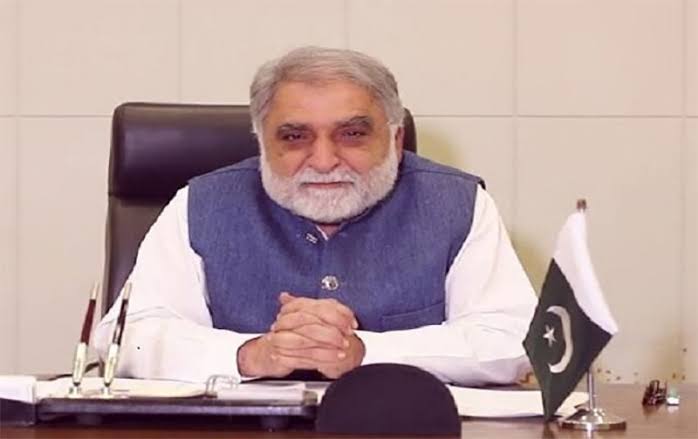
Dr Alamdar Hussain Malik
Advisor
Veterinary Sciences
University of Veterinary and Animal Sciences, Swat
Former
Financial Adviser
Finance Division
Government of Pakistan
Tags: Democratic Governanceforeign policyGazaInternational RelationsNational OwnershipPakistanPeace InitiativessovereigntytransparencyUS Peace Framework
ShareShareTweetShareSendSendShare

Get real time update about this post categories directly on your device, subscribe now.

Unsubscribe
ADVERTISEMENT

Related Posts

Historic visit to Tehran reflects strategic signaling and echoes past diplomacy
Opinion

Historic visit to Tehran reflects strategic signaling and echoes past diplomacy

April 17, 2026
Electricity crisis threatens Pakistan’s economy, industry and livelihoods
Opinion

Electricity crisis threatens Pakistan’s economy, industry and livelihoods

April 15, 2026
Faith, strategy and Pakistan’s evolving military role in the Muslim world
Opinion

Faith, strategy and Pakistan’s evolving military role in the Muslim world

April 15, 2026
Islamabad emerges as global diplomatic hub in high-stakes US–Iran Talks
Opinion

A step towards peace: Iran–US talks in Islamabad

April 13, 2026
Islamabad emerges as global diplomatic hub in high-stakes US–Iran Talks
Opinion

Islamabad emerges as global diplomatic hub in high-stakes US–Iran Talks

April 11, 2026
Architects of a shared destiny: The enduring Pakistan–UAE strategic partnership
Opinion

Architects of a shared destiny: The enduring Pakistan–UAE strategic partnership

April 10, 2026
  • Trending
  • Comments
  • Latest
Pioneers Businessmen Group hosts grand iftar dinner in honour of Chairman Ali Hussam Asghar

Pioneers Businessmen Group hosts grand iftar dinner in honour of Chairman Ali Hussam Asghar

March 17, 2026 - Updated on March 21, 2026
Upgradation work at Badshahi Mosque to be completed after Eid: Dr Ehsan Bhutta

Upgradation work at Badshahi Mosque to be completed after Eid: Dr Ehsan Bhutta

March 18, 2026 - Updated on March 19, 2026
Business leaders attend Iftar dinner held in honour of Ali Hussam Asghar in Lahore

Business leaders attend Iftar dinner held in honour of Ali Hussam Asghar in Lahore

March 16, 2026 - Updated on March 18, 2026
Eid ul Fitr amid global conflict: A call for unity and humanitarian leadership in the Muslim World

Eid ul Fitr amid global conflict: A call for unity and humanitarian leadership in the Muslim World

March 18, 2026
Unrest in Iran kills at least 2,000 activists say

Unrest in Iran kills at least 2,000 activists say

4
High-alert security arrangements ensured across city during Eid-ul-Adha

CCPO Kamyana reviews police performance, orders crackdown on gambling and better security for Chinese nationals

2
CM Maryam launches PERA to curb hoarding, land grabbing across Punjab

CM Maryam launches PERA to curb hoarding, land grabbing across Punjab

2
CM Maryam Nawaz Sharif to start latest SRT Train in Lahore

CM Maryam Nawaz Sharif to start latest SRT Train in Lahore

2
Customs claims progress as LCCI warns of rising costs and system flaws

Customs claims progress as LCCI warns of rising costs and system flaws

April 18, 2026
‘Let businesses breathe’: LCCI urges end to load-shedding, PERA crackdown businesses

‘Let businesses breathe’: LCCI urges end to load-shedding, PERA crackdown businesses

April 18, 2026
New policy aims to unlock women’s economic power, SMEDA tells journalists

New policy aims to unlock women’s economic power, SMEDA tells journalists

April 18, 2026
Youth mental health takes centre stage at anti-drug campaign seminar

Youth mental health takes centre stage at anti-drug campaign seminar

April 18, 2026
April 2026
MTWTFSS
 12345
6789101112
13141516171819
20212223242526
27282930 
« Mar    
ADVERTISEMENT

Browse by Category

  • Apps
  • Business
  • Business
  • Cricket
  • Crime
  • Entertainment
  • Epaper
  • Event News
  • Event Reporting
  • Fake News
  • Fashion
  • FBR & Customs
  • Food
  • Gadget
  • Gaming
  • Health
  • History in focus
  • Interview
  • Iran-US-Israel war
  • Mobile
  • Movie
  • Music
  • News Analysis
  • NGOs
  • Opinion
  • Pakistan
  • Politics
  • Politics
  • Review
  • Science
  • Science
  • Sports
  • Startup
  • Tech
  • Top News
  • Travel
  • Weird
  • World
  • #21289 (no title)
  • About Us
  • Blog
  • Cart
  • Checkout
  • Contact Us
  • Disclaimer
  • My account
  • Privacy Policy
  • Shop
  • Terms and Conditions
  • 📰 Advertise With Us

© 2026 The Tribune International. All rights reserved. | Powered by JNews
Disclaimer: The Tribune International is an independent platform and is not affiliated with any other organisation.
Reach us: Thetribuneintl@gmail.com

Welcome Back!

Sign In with Facebook
Sign In with Google
Sign In with Linked In
OR

Login to your account below

Forgotten Password?

Retrieve your password

Please enter your username or email address to reset your password.

Log In
Translate »

Add New Playlist

No Result
View All Result
  • Home
  • Top News
  • World
    • Interview
  • Pakistan
    • Politics
    • Crime
  • Iran-US-Israel war
  • Epaper
  • Opinion
  • Sports
    • Cricket
  • Business
    • Business
    • Science
      • Weird
      • FBR & Customs
  • Entertainment
  • History in focus
    • Tech
    • Event News
    • Event Reporting
    • NGOs

© 2026 The Tribune International. All rights reserved. | Powered by JNews
Disclaimer: The Tribune International is an independent platform and is not affiliated with any other organisation.
Reach us: Thetribuneintl@gmail.com