


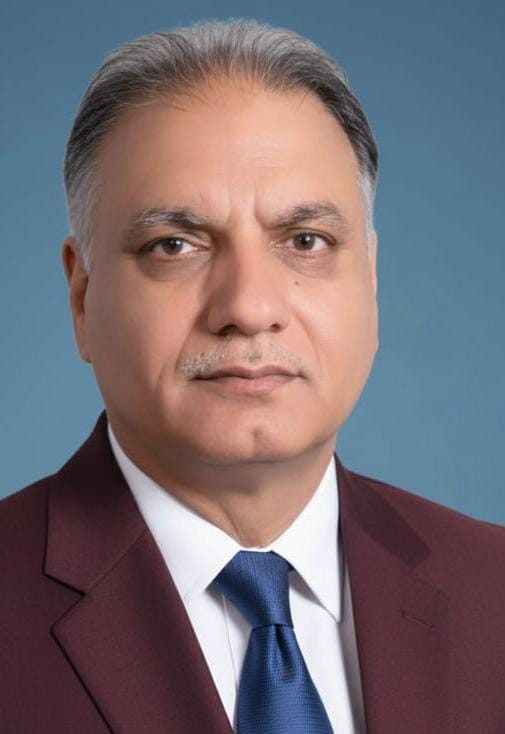
Dr Alamdar Hussain Malik
Pakistan’s economic situation is becoming increasingly alarming. The country is trapped in a cycle of external borrowing, mounting debt obligations and an ever-growing burden on its national resources. Borrowing is not necessarily a sign of economic weakness; countries borrow to finance development, expand infrastructure and strengthen productive capacity. However, when borrowing becomes a permanent requirement for meeting existing financial obligations rather than generating economic growth, it reflects a serious failure of economic management.
Read also: Behind the numbers: Why the government paid Rs2 trillion extra on old loans this year
According to the annual report of the Ministry of Economic Affairs, Pakistan paid US$14.44 billion towards external debt servicing during the financial year 2025–26. Of this amount, US$11.20 billion went towards principal repayments, while US$3.24 billion was paid in interest alone. By the end of June 2026, Pakistan’s external public debt had reached US$98.07 billion. During the same financial year, the country also received US$16.16 billion in foreign financial assistance.
These figures should serve as a wake-up call for the government, Parliament and every institution responsible for managing the national economy. Paying US$3.24 billion in interest alone is an enormous financial burden for a country struggling with inflation, unemployment, inadequate public services and limited development resources.
The most disturbing aspect is the apparent contradiction between debt repayments and continued dependence on foreign financial assistance. Pakistan paid US$14.44 billion towards external debt obligations but received US$16.16 billion in foreign financial assistance during the same period. Although these figures represent different financial flows and should not automatically be treated as a direct one-to-one comparison, they raise a fundamental question: is Pakistan moving towards financial independence, or merely maintaining its economic survival through continued external support?
For decades, successive governments have relied on borrowing without establishing a sustainable economic model capable of generating sufficient domestic resources. Governments have changed, finance ministers have changed and economic policies have been repeatedly revised, yet the fundamental weaknesses remain unresolved. Political leadership continues to blame its predecessors, while the public is left to bear the consequences of ineffective governance and inconsistent economic policies.
The central issue is not simply how much Pakistan owes, but what the country has achieved through the money it has borrowed. Where are the industries that should have strengthened exports? Where is the agricultural transformation that could have increased productivity and reduced dependence on imported food and agricultural inputs? Where are the major investments that should have generated employment, improved energy security and expanded the country’s productive capacity?
If billions of dollars have been borrowed over the years, the government must explain why Pakistan continues to face such serious structural economic weaknesses. Every major loan should be linked to measurable development outcomes, and the institutions responsible for its utilisation must be held accountable.
Unfortunately, the problem extends beyond borrowing. Excessive government expenditure, administrative extravagance, weak institutional performance, corruption, poor financial discipline and misplaced national priorities have further weakened the economy. Ordinary citizens are being subjected to increasing taxation, rising electricity and gas prices and persistent inflation, while meaningful expenditure reforms within the government machinery remain insufficient.
It is unacceptable that the burden of economic adjustment should fall disproportionately on salaried employees, small businesses, farmers and industrialists. A genuine austerity policy must begin within the government itself. Unnecessary official privileges, excessive administrative expenditure, inefficient public-sector organisations and non-essential government spending must be brought under strict control. The political leadership cannot continue demanding sacrifices from the public while avoiding meaningful reforms within its own administrative and financial structures.
Equally concerning is the performance of institutions responsible for financial oversight, audit and accountability. Their responsibility should not be limited to identifying irregularities after public money has already been wasted. They must ensure that financial resources are used efficiently, development projects deliver their intended results and those responsible for financial mismanagement face consequences. Accountability without corrective action is little more than an administrative formality.
Pakistan needs a fundamental change in its economic direction. The country cannot achieve sustainable recovery through repeated IMF programmes, emergency financial assistance from friendly countries or the continuous negotiation of new loans. External assistance may provide temporary relief, but it cannot substitute for a productive national economy.
The government must prioritise export-led growth, industrial revival, modern agriculture, energy-sector reforms, investment in human capital and the development of competitive domestic industries. Taxation must be broadened through documentation of the economy rather than placing an ever-increasing burden on those already paying taxes. Public-sector expenditure must be rationalised, and loss-making institutions must undergo serious structural reforms.
Most importantly, Pakistan needs a long-term national economic strategy that remains consistent beyond changes in political governments. Clear five-year and ten-year targets should be established for exports, industrial growth, revenue generation, employment and debt reduction. Each ministry and relevant public institution must be assigned measurable responsibilities, with regular performance assessments made available to Parliament and the public.
The payment of US$3.24 billion in interest should not be viewed merely as another entry in a government financial statement. It represents resources that could otherwise have been invested in universities, hospitals, schools, research institutions, infrastructure and employment opportunities. For a developing country with enormous unmet social and economic needs, such an opportunity cost is simply too high.
Pakistan is not short of economic potential, human talent or natural resources. What it desperately needs is competent leadership, institutional integrity, financial discipline and a willingness to make difficult but necessary decisions. The country cannot continue to finance its present through the borrowing of its future.
The fundamental question is no longer how much more Pakistan can borrow, but how long the nation can afford to continue this economic model.
Future generations should not be forced to pay indefinitely for the financial mismanagement and policy failures of successive governments. The time has come for the country’s political leadership and responsible institutions to demonstrate that national economic recovery is a genuine priority rather than another political slogan.
The author is Advisor Academics University of Veterinary and Animal Sciences, Swat and former Financial Advisor Finance Division, Government of Pakistan