


Muhammad Mohsin Iqbal
There is a familiar weakness in the human character; we are often more comfortable responding to danger than preparing for it. We wait for the storm before repairing the roof, for the illness before changing our habits, and for the crisis before asking why we were not prepared. Nations, however, cannot afford to live by such habits. The measure of a responsible society is not how vigorously it responds to a disaster, but how wisely it prepares to prevent one.
Pakistan’s recurring struggle with dengue is a painful illustration of this failure of foresight.
We are not unfamiliar with dengue. It has visited our cities repeatedly, filled our hospitals, disrupted families and claimed lives. We know its season, its breeding habits and the environmental conditions that allow it to flourish. We know what needs to be done. We have action plans, surveillance systems, health advisories, standard operating procedures and years of experience. Yet, almost every year, we seem to rediscover the disease as though it were an unexpected visitor.
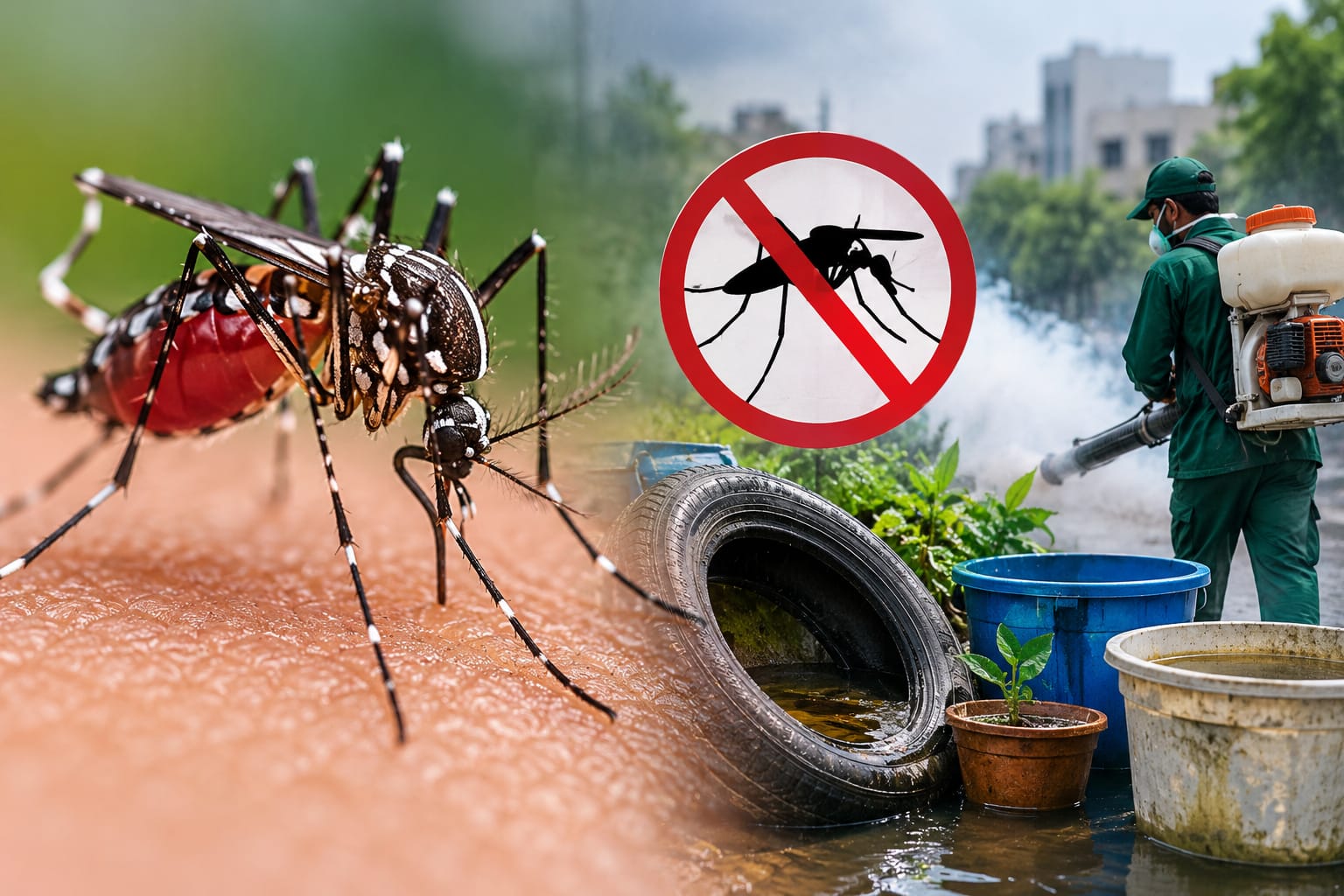
Dengue transmission may occur throughout the year, but its threat normally intensifies after the monsoon, particularly from September to November and sometimes into early December. The rains of July and August leave behind the very environment in which the Aedes mosquito thrives; stagnant water in discarded tyres, flowerpots, coolers, containers, refrigerator trays and neglected corners of homes and streets. Warm temperatures, high humidity and residual rainfall provide the mosquito with an ideal breeding ground.
None of this is a secret. Weather and health authorities routinely issue warnings before the high-risk period. The real question, therefore, is not whether Pakistan knows about dengue. It is why knowledge so often fails to become timely action.
Our greatest weakness is the culture of reaction. When cases are few, dengue receives little attention. When the numbers begin to rise, meetings are convened. When hospitals become crowded, campaigns begin. When television screens show patients and worried families, fogging machines appear on the streets. By then, however, the mosquito has already completed much of its work.
Fogging may have a place in outbreak control, but it cannot become a substitute for prevention. A cloud of insecticide cannot repair a broken drainage system. It cannot remove the discarded tyre lying behind a house or empty the water accumulated in a neglected container. Nor can it replace the daily vigilance of households and communities.
Pakistan has demonstrated that dengue can be controlled when institutions work together with determination. Yet one of our persistent national problems is that institutional memory often disappears with the passing of the crisis. Once winter arrives and mosquito activity declines, the urgency fades. Teams are reduced, campaigns lose momentum and attention turns elsewhere. The next monsoon then finds us preparing once again for a problem we should have been preparing for all along.
The responsibility, however, does not rest with government alone.
The state must provide leadership, surveillance, sanitation, drainage, waste management and hospital preparedness. But no government can inspect every household every morning. Dengue prevention begins at the doorstep. An uncovered water container may be insignificant to the eye but sufficient for mosquitoes to multiply. A flowerpot, a cooler, an abandoned tyre or a blocked drain can become a small factory of disease.
This is why public participation is not an optional addition to dengue control; it is its foundation.
Families must keep their surroundings clean and dry, cover water containers, remove objects that collect rainwater and cooperate with health and municipal teams. Personal protection also matters; appropriate clothing, mosquito repellents, screens and nets can reduce exposure, particularly because Aedes mosquitoes are active mainly during daylight hours.
But public responsibility must be matched by institutional responsibility. Citizens cannot be asked to eliminate breeding sites while municipalities tolerate overflowing waste and stagnant drains. Health departments cannot be expected to carry the entire burden of a problem rooted partly in urban planning, sanitation, water management and environmental neglect.
This is where Pakistan’s dengue policy needs a fundamental change. We need to stop treating dengue as a seasonal emergency and begin treating it as a permanent public-health challenge.
Preparedness should start before the monsoon, not after the first wave of cases. District administrations should have clearly defined responsibilities, reliable data and measurable targets. Larval surveillance and elimination of breeding sites should receive greater attention than highly visible emergency operations. Weather warnings should trigger pre-agreed preventive measures rather than merely generate another advisory. Hospitals should prepare before their wards fill. Local governments should regard drainage and waste management not simply as municipal duties but as essential components of disease prevention.
Climate variability and rapid urbanisation have made the challenge more serious. Expanding cities, inadequate drainage, unmanaged waste and changing weather patterns are creating new opportunities for mosquito-borne diseases. But these realities should compel us to improve our systems, not surrender to them.
There is also a deeper lesson here. Pakistan suffers from what might be called collective crisis amnesia. We remember tragedy while it is before our eyes and forget its lessons when the immediate danger disappears. A wiser nation does the opposite. It remembers yesterday’s suffering while preparing for tomorrow’s danger.
We have neither the luxury nor the excuse to remain unprepared regarding dengue prevention. We know the enemy, we know its season and we know how to confront it.
What is required now is not another emergency slogan, another committee or another round of belated fogging. What Pakistan needs is continuity, discipline and the political will to act before the crisis becomes visible.
The real success will not be measured by how efficiently we treat dengue patients after an outbreak. It will be measured by how many patients never become patients at all.
That is the test of preparedness. And that is the lesson we must finally learn.