


By Our Correspondent
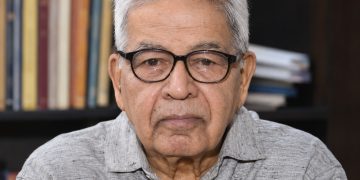
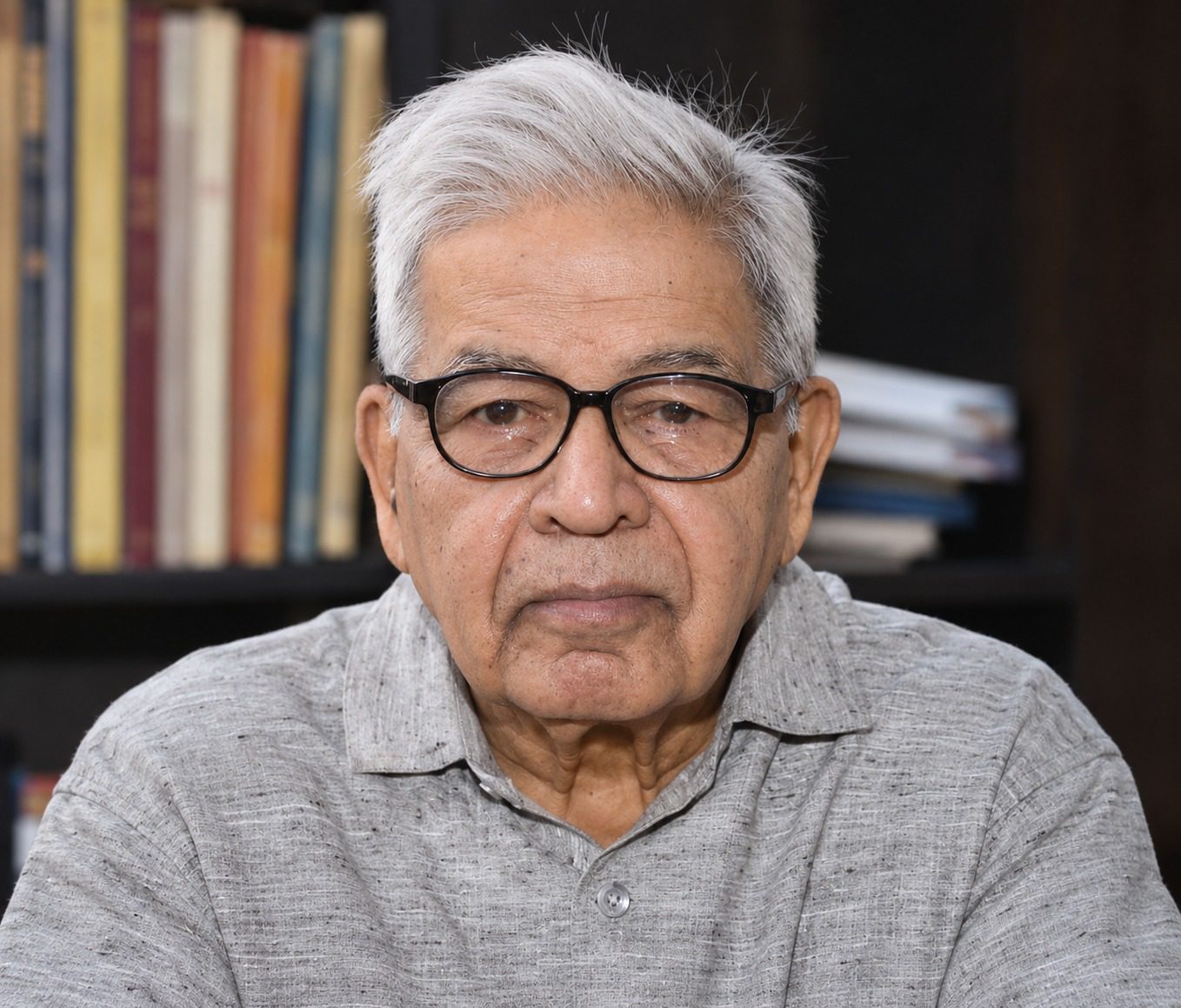
LAHORE: Veteran journalist and human rights activist Husain Naqi died in Lahore early Sunday after suffering a cardiac arrest, bringing an end to a career spanning more than seven decades.
Naqi, a former editor of *The News* and a longtime associate of the Human Rights Commission of Pakistan (HRCP), suffered a heart attack around 6pm on Saturday and was taken to a private hospital, where he died at approximately 5am on Sunday.
HRCP official Muhammad Ilyas told Dawn that Naqi had attended a book launch ceremony at the organisation’s office on Saturday, just hours before his health deteriorated. He is survived by three sons.
His funeral prayers were held before he was laid to rest in Model Town Extension, Lahore.
His death prompted an outpouring of condolences from political leaders, journalists and human rights activists, who paid tribute to his lifelong struggle for democracy, freedom of expression and fundamental rights.
President Asif Ali Zardari expressed deep sorrow over Naqi’s death and extended condolences to his bereaved family.
In a statement issued by the Presidency, the president paid tribute to Naqi’s contributions to journalism, freedom of expression and human rights, saying his role in promoting democratic values would always be remembered.
The HRCP also expressed profound grief, describing Naqi as one of Pakistan’s strongest voices for human rights and democracy.
“Over a career spanning more than 70 years, from student leader to newspaper editor to treasurer of HRCP, neither multiple incarcerations nor vindictive acts by the authorities ever weakened his resolve to speak truth to power,” the commission said.
It added that Naqi had served the organisation in different capacities for three decades and remained an active council member until his death.
PPP Senator Sherry Rehman described Naqi as an iconic journalist and rights campaigner, saying his passing marked the end of an era.
In a post on X, she recalled that several young journalists had learnt from him and joined rallies under his leadership during difficult periods of dictatorship.
She said Naqi consistently defended the right to dissent while advocating respect and democratic values.
PTI Secretary General Salman Akram Raja also expressed grief, recalling his decades-long association with the veteran journalist.
He said Naqi, along with prominent rights advocates I.A. Rehman, Asma Jahangir and Amin Mughal, belonged to a generation that championed human dignity and raised the voices of disadvantaged communities.
Journalist Absa Komal said Naqi had devoted his life to freedom of speech and continued to demonstrate the same commitment when she met him at a conference in Karachi a few months ago.
Journalist Raza Rumi also paid tribute to him, describing his death as a significant loss.
A lifetime of activism and journalism
Born in Lucknow, India, before the 1947 Partition, Naqi was raised in a well-educated family. In his autobiography, *Mujh Se Jo Ho Saka*, he suggested that he might have been born a year before his officially recorded birth year of 1936.
He began his activism during his school years and later emerged as a prominent student leader in Karachi after moving there in the 1950s.
As a member of the executive committee of the National Students Federation (NSF), he participated in protests against the 1956 attack on Egypt by Israel, Britain and France during the Suez Canal crisis.
He also served as president of Karachi University’s student union, where he advocated better educational facilities, improved transport for female students and timely examinations.
Naqi was a strong supporter of student unions, arguing that their absence had contributed to the deterioration of campus life and reduced opportunities for students to engage in constructive activities.
After moving to Lahore, he pursued a career in journalism, working with several publications and eventually serving as bureau chief of the Pakistan Press International (PPI).
He later left the position after refusing to accept a false report concerning the alleged desecration of the Holy Quran.
Throughout his career, he contributed to several newspapers and publications, including Viewpoint, Holiday, Outlook, Frontier Post and Daily Star.
He also campaigned for the preservation and promotion of the Punjabi language and founded Sajjan, regarded as the first daily newspaper published in Punjabi in Pakistan.
His outspoken journalism and activism led to imprisonment on multiple occasions, but he remained committed to challenging authoritarianism and defending democratic freedoms.
Naqi’s death marks the loss of a veteran journalist whose decades-long struggle for press freedom, human rights and democratic values left a lasting imprint on Pakistan’s public life.