


By Rana Farooq Ashraf
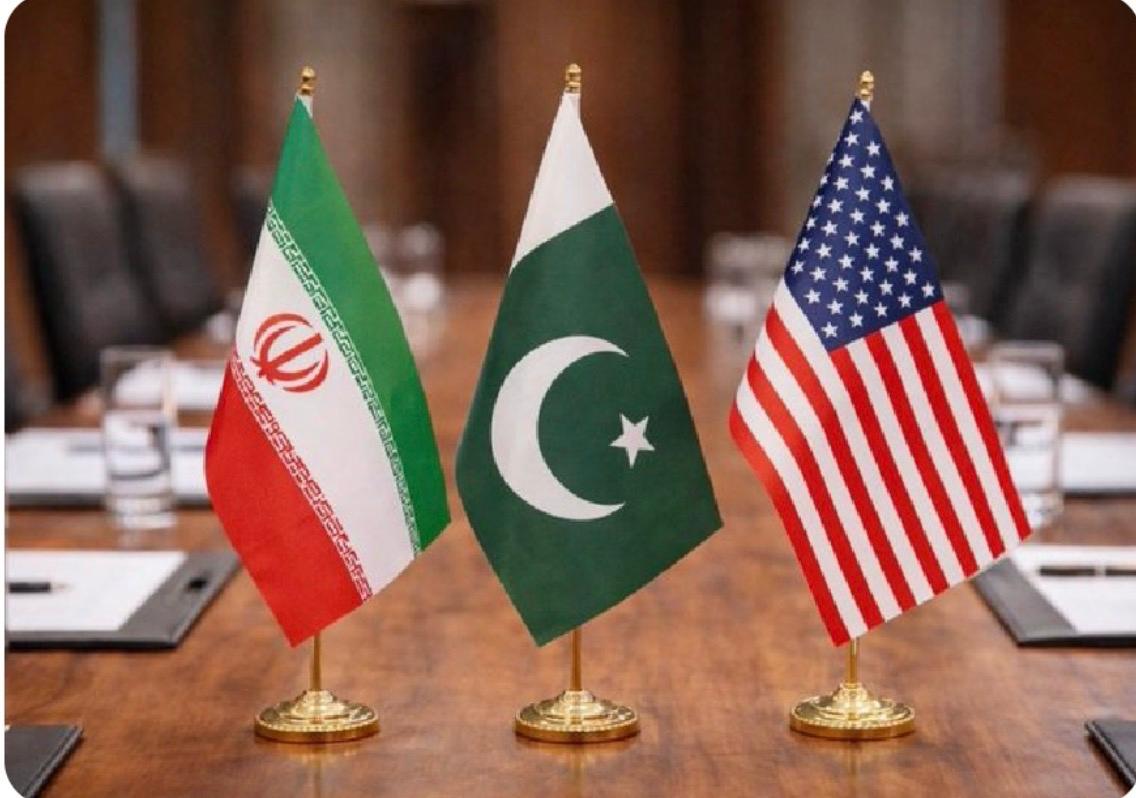
The world stood at the precipice of an abyss. As the drums of war echoed across the Persian Gulf and the shadow of a third global conflict loomed over the Middle East, humanity held its breath. The tension between the United States and the Islamic Republic of Iran had reached a boiling point where a single spark could have ignited a conflagration that no border could contain. Yet, in this hour of darkness, a decisive intervention emerged from a nation often underestimated but strategically indispensable. Pakistan stepped forward, not just as a neighbor, but as the architect of a historic ceasefire that has reshaped the global diplomatic landscape.
Read also: ISPR: The personification of national resolve and strategic defiance
This diplomatic masterstroke, aptly titled “Operation Bunyan al-Marsus” (The Solid Structure), has proven to the world the truth of the Divine decree: “Wa Tu’izzu Man Tashau”—And You honor whom You will. Today, the international community witnesses the rise of a Pakistan that is no longer a mere spectator but a pivotal mediator in the corridors of power.
The breakthrough did not happen by chance. It was the result of a seamless synergy between Pakistan’s civilian and military leadership. The tireless efforts of Prime Minister Shehbaz Sharif and Field Marshal Asim Munir have set a new precedent in “Strategic Diplomacy.” While the world watched in fear, these two leaders engaged in high-stakes communication with both Washington and Tehran, leveraging Pakistan’s unique position as a bridge between the West and the Muslim world.
The acknowledgment of this role came from the highest possible level. Former U.S. President Donald J. Trump, in a historic statement, candidly admitted that his decision to halt a “destructive force” intended for Iran was a direct response to the requests made by the Pakistani leadership. Trump noted:”Based on conversations with Prime Minister Shehbaz Sharif and Field Marshal Asim Munir of Pakistan, and wherein they requested that I hold off the destructive force… I agree to suspend the bombing and attack of Iran for a period of two weeks.”
This is a watershed moment in history. For a superpower to publicly credit a Pakistani General and a Prime Minister for de-escalating a massive military strike is a testament to the weight Pakistan now carries on the global stage.
The response from Tehran was equally profound. The Islamic Republic of Iran, through its Foreign Minister Seyed Abbas Araghchi, expressed deep appreciation for their “Pakistani brothers.” The Iranian leadership acknowledged that the 10-point proposal facilitated by Pakistan provided a “workable basis” for negotiation. The immediate fruit of this mediation—the safe and immediate opening of the Strait of Hormuz—has secured the global energy supply chain, saving the world economy from a catastrophic shock. By coordinating between the powerful armed forces of Iran and the strategic requirements of the international community, Pakistan has ensured that the “Jugular Vein” of global trade remains open.
Perhaps the most significant shift in the global narrative is how the world now views Field Marshal Asim Munir. He is being recognized not just as a military commander, but as a visionary statesman. His ability to navigate the complex nuances of Middle Eastern politics, maintain a “shoulder-to-shoulder” stance with Saudi Arabia and Crown Prince Mohammed bin Salman, and simultaneously engage with the White House has earned him unprecedented respect. International observers now see Pakistan’s military leadership as a stabilizing force in a volatile region. The title of “Field Marshal” reflects the immense authority and the successful execution of a grand strategy that saved millions from the horrors of war. The world now understands that when Pakistan speaks, it speaks with the authority of a nation that possesses both the will for peace and the might for defense.
While the world celebrates this ceasefire, the atmosphere in New Delhi is one of profound anxiety and “Saf-e-Maatam” (rows of mourning). For years, the Modi government invested heavily in a narrative designed to isolate Pakistan. However, this recent success has shattered that propaganda. The contrast is stark: while India remained a silent and irrelevant spectator under Prime Minister Modi, Pakistan emerged as the savior of global peace. This sentiment is being echoed even within India. Prominent Indian voices have taken to social media to express their disillusionment with their own government’s isolation. As one Indian citizen, Anushi Tiwari, lamented:
“Today, as an Indian, I feel deep pain that my country has fallen far behind Pakistan. Today, Pakistan and Asim Munir are being recognized across the world. The Modi Government has isolated India.”
Another Indian observer, Tejasswi Prakash, went further to thank Pakistan for “saving the world, including India, from World War 3,” highlighting the failure of Modi’s “warmongering and weak diplomacy.”
Pakistan’s future role is now clearly defined: it is the pivotal state of the 21st century. The international status of the country has been elevated to a point where no major regional decision can be made without Islamabad’s input. Pakistan’s success in “Operation Bunyan al-Marsus” has shown that it is a “Solid Structure” that can withstand external pressures while providing a foundation for others to build peace upon. As we look toward the future, Pakistan stands tall, respected by allies and feared by adversaries who sought its isolation. The leadership of Prime Minister Sharif and the strategic brilliance of Field Marshal Asim Munir have ushered in an era where Pakistan is synonymous with “Global Stability.”
The current situation is a perfect reflection of the prophetic vision of the Poet of the East, Allama Iqbal. His words, written decades ago, seem to have been composed precisely for this moment in Pakistan’s journey, as a “dimly lit star” becomes the guiding light for the entire world.
As Allama Iqbal so aptly put it:
Kashti-e-Haq ka zamane in sahara tu hai
Asr-e-nau raat hai, dhundla sa sitara tu hai
“In this world, you are the support for the Ark of Truth;
The new age is a dark night, and you are its guiding, though distant, star.”


[…] Read also: Operation Bunyan al-Marsus: Pakistan’s role in US-Iran ceasefire gains global attention […]