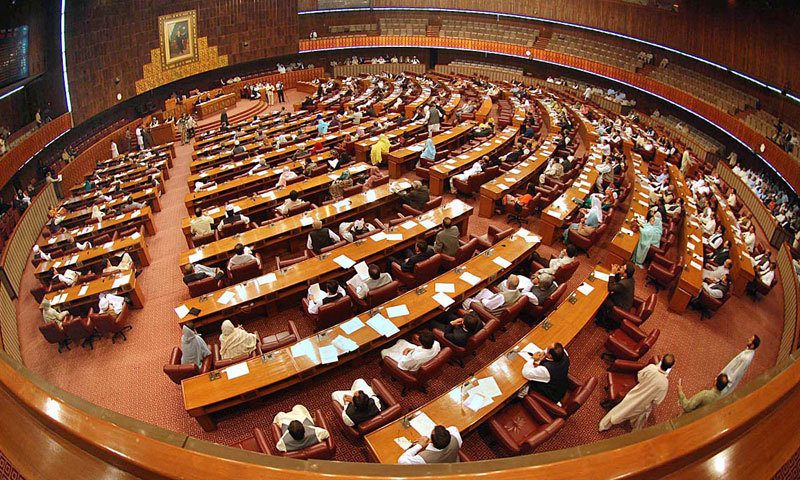



ISLAMABAD (Web Desk) – The National Assembly on Wednesday passed the Elections (Amendment) Bill, 2026, introducing changes that allow parliamentarians to seek temporary confidentiality of their asset and liability statements on security grounds.
Read also: Rana Sanaullah says PTI leaders open to talks, Imran Khan still opposes dialogue
Under the existing law, members of the National Assembly, Senate, and provincial assemblies are required to submit annual statements of their assets and liabilities, including those of their spouses and dependent children, to the Election Commission of Pakistan (ECP) by December 31 each year. These declarations are then published in the official gazette for public access.
The newly passed amendment proposes a change to Section 138 of the Elections Act, granting the Speaker of the National Assembly or the Chairman of the Senate the authority to prevent public disclosure of a member’s asset details for up to one year. This restriction can be applied if the lawmaker submits a written request and the presiding officer determines that publication would pose a serious threat to the life or safety of the member or their family.
Despite the restriction on public access, the bill requires that a complete and accurate statement of assets and liabilities must still be submitted confidentially to the ECP.
According to the statement of objectives and reasons, the amendment seeks to strike a balance between public accountability and the protection of individual rights. It acknowledges the importance of transparency in strengthening public trust and good governance, while also recognizing that unrestricted disclosure may compromise the personal security and privacy of elected representatives and their families.
In addition to the asset disclosure provision, the National Assembly approved amendments to nine other clauses of the Elections Act. These changes primarily reflect updates in legal terminology following the 27th Constitutional Amendment.
One notable change replaces references to the “Supreme Court” with the “Federal Constitutional Court” in relevant sections of the law, reflecting the establishment of the new court under the recent constitutional amendment.
The bill will now be sent to the Senate for approval and will require the President’s assent before it can be enacted into law.
Tags: Pakistan politics, National Assembly, Elections Amendment Bill 2026, asset declaration, Election Commission of Pakistan, transparency, public accountability, Federal Constitutional Court, legislative reforms