


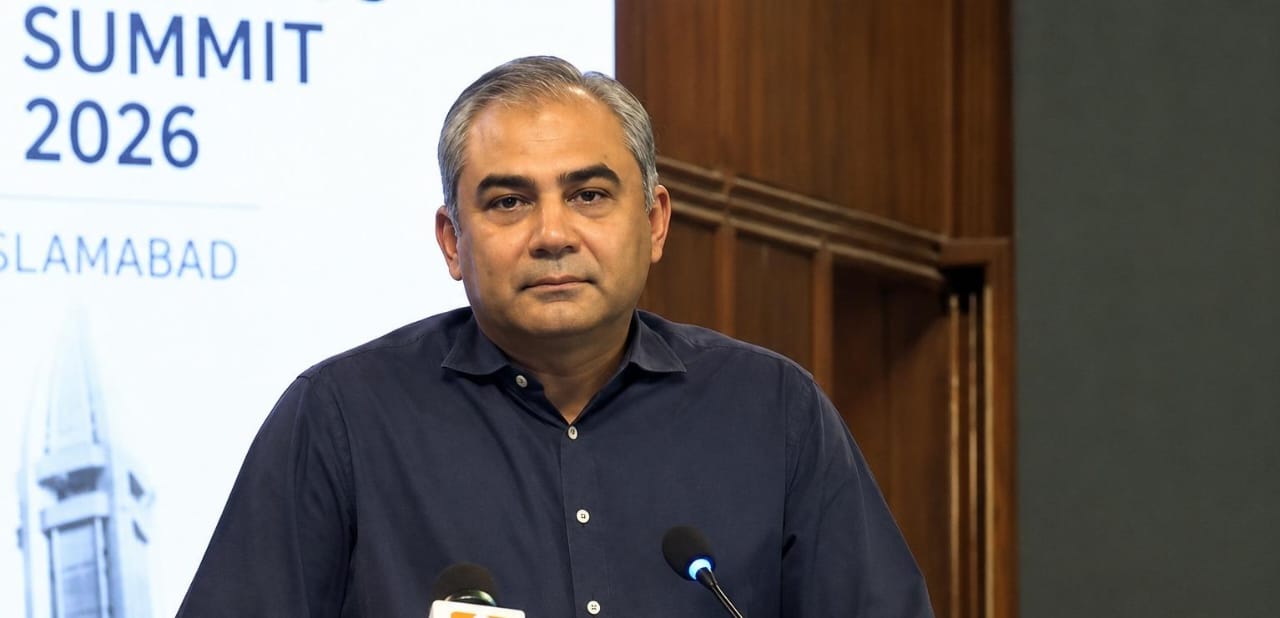
ISLAMABAD (Web Desk) – Declaring that Pakistan’s decades-old governance system had “collapsed”, Federal Interior Minister Mohsin Naqvi on Thursday called for sweeping structural reforms, endorsed the creation of new administrative units and stressed that Pakistan’s youth were seeking merit-based opportunities rather than government handouts.
Addressing the Economic Summit 2026 in Islamabad, Naqvi endorsed Dunya Group Chairman Mian Amer Mahmood’s proposal for creating new administrative units, saying meaningful governance reforms were essential to bring decision-making closer to the people and improve public service delivery.
“The system we are living in has collapsed,” Naqvi said, warning that unless Pakistan reformed its governance structure, the country would continue facing the same administrative and economic challenges for years to come.
Using a striking metaphor to emphasise the urgency of reform, the minister remarked, “If even cockroaches unite, they can turn everything upside down. We must correct the system before the cockroaches unite.” He said the state’s responsibility was to address people’s legitimate aspirations before frustration and discontent deepened.
Turning to Pakistan’s youth, Naqvi said young people were not demanding subsidies, laptops or cash assistance. Instead, they wanted a transparent system where employment and opportunities were awarded strictly on merit.
RelatedPosts
“Our youth are asking for one thing only—jobs on merit,” he said. “They are not asking for Rs2,000 or Rs4,000. Given the right opportunities, they have the ability to earn $2,000 to $4,000 a month on their own.”
He argued that Pakistan’s young population possessed immense talent but continued to face barriers created by outdated governance structures, weak institutions and limited opportunities.
Naqvi said Pakistan had continued with essentially the same administrative framework for more than seven decades despite significant changes in population, urbanisation and economic realities.
“I believe in democracy, but democracies across the world function under different governance models,” he said, adding that Pakistan should not hesitate to reform its own administrative system in line with modern requirements.
Referring to proposals presented during the summit, the interior minister said powers should be devolved to the grassroots level, whether through new provinces, administrative units or another constitutional arrangement that improves governance and public access to services.
He said citizens should not have to travel long distances for routine administrative matters or access to justice, arguing that smaller administrative units could strengthen accountability, improve service delivery and encourage the emergence of capable local leadership.
Naqvi also urged political parties to move beyond partisan politics and initiate a serious national dialogue on constitutional and administrative reforms.
Addressing the business community, he encouraged entrepreneurs and industrialists to play a greater role in advocating governance reforms instead of limiting their engagement to election financing.
“Business leaders understand Pakistan’s economic challenges better than many others,” he said. “They should collectively push for reforms that improve governance, create a better investment climate and strengthen state institutions.”
Highlighting the country’s fiscal challenges, Naqvi observed that every federal budget begins with discussions on deficits and borrowing, describing the pattern as evidence of deeper structural weaknesses rather than temporary financial problems.
He warned that governments would remain occupied with crisis management unless the underlying governance model was fundamentally reformed.
Drawing a comparison with regional developments, Naqvi said countries such as India had reorganised their administrative structures over time to respond to changing governance needs, while Pakistan had largely retained the same provincial framework since independence.
Calling for broad-based consultation, he proposed a national dialogue involving Parliament, political parties, the business community, academia, the legal fraternity, the media and civil society to examine both the benefits and challenges of creating new administrative units.
Concluding his address, Naqvi pledged to support all stakeholders working to strengthen governance and welcomed proposals from representatives of Khyber Pakhtunkhwa and Balochistan on improving law and order, saying the federal government was ready to work with them on practical solutions.


