



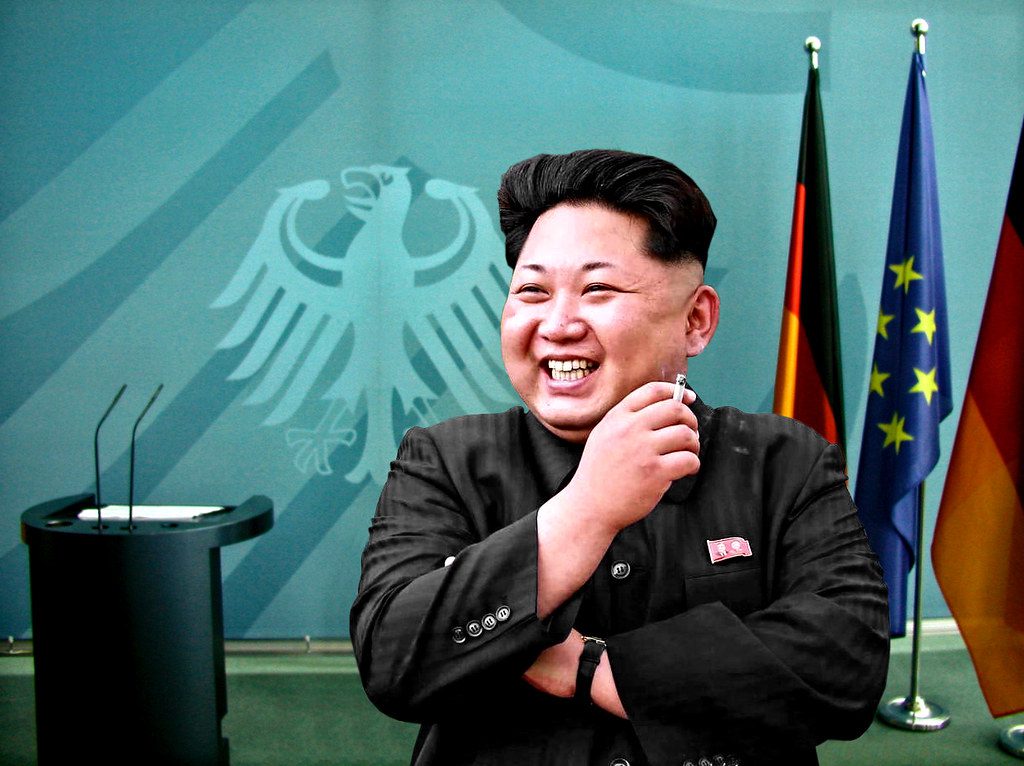
SEOUL (Web Desk) – North Korean leader Kim Jong Un’s reported visit to China through the newly opened New Yalu River Bridge has highlighted renewed efforts by Pyongyang and Beijing to strengthen economic cooperation, improve cross-border trade and reinforce diplomatic engagement amid changing regional security dynamics.
Read more: Kim Jong Un showcases daughter ju ae on first major foreign trip, fuels succession speculation
According to South Korean government officials, Kim arrived in the Chinese border city of Dandong on Saturday, where Chinese Premier Li Qiang reportedly met him. The visit comes ahead of the anniversary of China’s entry into the 1950–1953 Korean War, a conflict that cemented the two countries’ longstanding political and military relationship.
South Korean officials indicated that Kim was expected to return to North Korea after the visit. There was no immediate confirmation that he would travel to Beijing for further meetings, while China’s foreign ministry had not publicly commented on the reported visit.
The journey comes at a significant moment for bilateral relations following the opening of the New Yalu River Bridge, a major infrastructure project designed to improve transportation and commercial links between the neighbouring countries.
New bridge offers boost to bilateral trade
The approximately three-kilometre bridge, which connects North Korea with China across the Yalu River, opened this month after years of delays. Its inauguration is expected to ease transportation bottlenecks and provide additional capacity for the movement of goods between the two countries.
China remains North Korea’s principal economic partner and a major source of essential supplies. Improved border infrastructure could facilitate the movement of industrial equipment, raw materials and energy products required to support North Korea’s economy.
Analysts believe the bridge could also help businesses on both sides improve logistics, reduce transportation constraints and expand commercial exchanges after years of disruption caused by the COVID-19 pandemic and strained bilateral relations.
Lu Chao, an expert on China-North Korea relations at the Liaoning Academy of Social Sciences, said the bridge’s opening had removed a major obstacle to trade logistics and could contribute to further growth in bilateral commerce.
Kim’s decision to use the crossing for his reported visit is also being viewed as a symbolic indication of renewed confidence in economic engagement between Beijing and Pyongyang.
Diplomatic relations gain momentum
The visit follows a period of increased high-level contact between the two countries. Kim last visited China in September 2025, when he attended celebrations marking the 80th anniversary of victory over Japan and held talks with Chinese President Xi Jinping.
Xi subsequently visited North Korea in June, further demonstrating the importance both governments attach to maintaining close relations.
China has historically served as North Korea’s most important economic and diplomatic backer, providing a crucial channel for trade and international engagement. Beijing also played a central role in supporting Pyongyang during the Korean War.
However, North Korea has expanded its strategic relationship with Russia since Moscow launched its full-scale invasion of Ukraine in 2022. Analysts have suggested that closer cooperation with Moscow has given Pyongyang additional diplomatic and economic options, potentially reducing its dependence on Beijing.
Against this backdrop, renewed engagement with China could help North Korea maintain a balance between its major partners while securing access to trade routes and supplies needed for domestic development.
Regional security and international implications
Kim’s reported visit also comes amid uncertainty surrounding North Korea’s relations with the United States and South Korea.
US President Donald Trump has expressed interest in restarting dialogue with Kim, but officials in Washington and Seoul have reportedly become less optimistic about the possibility of a meeting before the end of the year.
China’s upcoming Asia-Pacific Economic Cooperation summit in Shenzhen, which Trump is expected to attend, could provide a wider diplomatic backdrop for discussions involving regional economic and security concerns. However, there is no confirmed indication that Kim’s reported visit is connected to a potential meeting with the US president.
For Beijing, stronger economic ties with Pyongyang could reinforce its influence on the Korean Peninsula while supporting regional stability. For North Korea, improved infrastructure and sustained diplomatic engagement could help ease economic constraints and diversify its external partnerships.
The opening of the New Yalu River Bridge therefore represents more than an infrastructure development. It offers both countries an opportunity to revitalise commercial links and demonstrate a willingness to deepen cooperation.
Whether the renewed engagement produces a substantial increase in trade will depend on the implementation of cross-border arrangements, economic conditions and the broader international environment.
While the reported visit does not itself establish any new bilateral agreements, it underscores the continuing importance of China-North Korea relations at a time of shifting alliances and heightened geopolitical uncertainty in East Asia.