


Dr Alamdar Hussain Malik
The world is witnessing one of the most dangerous geopolitical crises of the decade. The confrontation involving Iran, the United States, and Israel has escalated sharply, with Iran’s strategic cities, nuclear facilities, and military installations under sustained pressure. The conflict threatens to disrupt global energy supplies, unsettle fragile regional alliances, and reshape the balance of power in the Middle East. It has already triggered spikes in oil prices, caused volatility in global stock markets, and prompted urgent consultations among world capitals. Yet, despite shared religious identity and cultural ties, very few Muslim-majority countries have offered Iran tangible support. Understanding this gap requires examining the complex strategic, economic, and political realities that now dominate international relations.
Read also: Pakistan after assassination Ayatollah Ali Khamenei: A strategic crossroad
The United States’ campaign in Iran is more than a military operation; it represents a profound challenge to regional autonomy and a test of global influence. Tehran’s missile strikes, asymmetric warfare capabilities, and sophisticated network of regional proxies have long been central to its ability to project power beyond its borders. For neighboring states, the stakes are existential. Any escalation could spill over borders, exacerbate sectarian tensions, destabilize fragile economies, and force countries into high-stakes strategic decisions. In such a volatile context, many Muslim-majority governments have chosen caution, diplomacy, and strategic patience over emotional or religious solidarity, weighing the consequences of a miscalculation that could escalate into a wider regional war.
Economic interdependence and globalization heavily influence state behavior. Gulf and South Asian countries rely on trade, foreign investment, and defense partnerships with the United States and other Western powers. Open alignment with Iran could invite sanctions, disrupt energy trade, and undermine domestic development plans. Countries such as Saudi Arabia, United Arab Emirates, and Pakistan face a delicate balancing act: they must secure their own national interests, maintain internal stability, and preserve economic growth while avoiding entanglement in a conflict that could engulf the region. For instance, Pakistan’s energy dependence on Gulf imports, coupled with fragile foreign reserves, limits its capacity to openly take sides without endangering its own economic security.
Historical rivalries, ideological differences, further shape government responses. Iran’s political system, regional ambitions,
East generate suspicion among other Muslim-majority states. The Gulf monarchies, for example, have historically viewed Iran’s influence as a strategic threat, particularly in Yemen, Bahrain, and eastern Saudi Arabia. While some diplomatic engagement has reduced tensions, underlying mistrust remains. Likewise, in South and Central Asia, countries weigh the long-term implications of a strengthened or weakened Iran on border security, energy corridors, and regional alliances. The reality is that religion and cultural affinity often take a back seat to strategic and political considerations in modern statecraft.
Fear of escalation is another decisive factor. The Middle East remains one of the most unstable regions globally, where one misstep could trigger widespread conflict. Any full-scale confrontation risks disrupting oil exports, threatening vital shipping lanes such as the Strait of Hormuz, and creating refugee flows that would strain neighboring states. Even states sympathetic to Iran’s plight calculate that direct involvement could provoke retaliatory attacks, drag them into prolonged military campaigns, and destabilize their own domestic order. Governments, therefore, often prefer containment, diplomatic engagement, and calculated neutrality over confrontation, despite domestic public opinion that may strongly favor Iran.
Public sentiment often diverges sharply from official policy. Across Muslim-majority societies, citizens express moral opposition to attacks on Iran and demand solidarity. Yet governments act based on national survival, weighing economic stability, security, and long-term diplomatic leverage. The absence of overt support for Iran should not be interpreted as tacit approval of foreign aggression. Instead, it reflects calculated decision-making in a world where political survival often outweighs ideological or symbolic alignment.
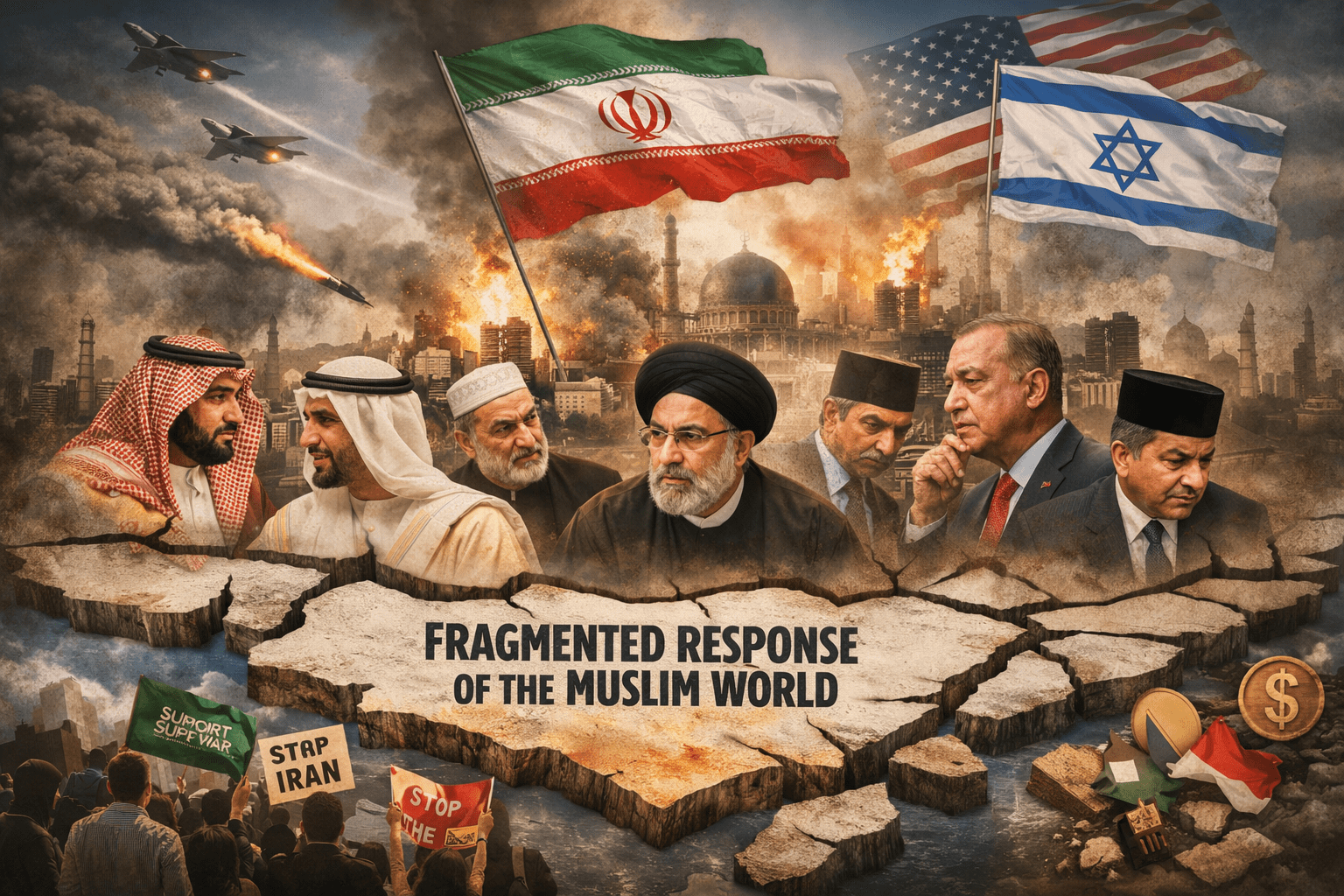
The crisis underscores a sobering reality: the Muslim world is fragmented, and political unity is increasingly elusive. While international organizations offer platforms for dialogue, they lack the authority or capacity to enforce collective military, economic, or diplomatic action. Each state navigates the conflict according to its own vulnerabilities, economic dependencies, and long-term strategic priorities. Competing needs of security, development, and regional influence make a unified response to Iran’s crisis unlikely. This fragmentation also leaves smaller or strategically weaker states exposed to the pressures of great powers, forcing them into high-stakes calculations with no guaranteed outcomes. Furthermore, this lack of coordination risks prolonging regional instability, emboldening non-state actors, and increasing the influence of external powers in local conflicts.
The ongoing confrontation demonstrates that geopolitics, rather than religious solidarity, dictates state behavior in times of crisis. For Muslim-majority countries, the lesson is clear: moral or symbolic alignment must often be weighed against the hard realities of national survival. The conflict in Iran highlights the urgent need for regional dialogue mechanisms, cooperative security frameworks, and economic resilience strategies to navigate crises without becoming arenas for external powers’ confrontation. Beyond immediate military and diplomatic concerns, the situation presents a long-term challenge: Muslim countries must reconcile shared cultural and religious identities with pragmatic strategies that safeguard sovereignty, stability, and economic prosperity. Failure to do so could deepen regional instability, erode public trust in governance, diminish their ability to influence global affairs, and weaken their collective capacity to respond to future crises in the Muslim world.