


By Rana Farooq Ashraf
When Asif Ali Zardari assumed the presidency once again in 2024, Pakistan stood at a delicate crossroads. Economically strained, diplomatically cautious, and strategically encircled by shifting regional alignments, the country required steadiness more than spectacle. Asif Ali Zardari’s second tenure has, thus far, reflected a familiar yet recalibrated approach — one rooted in political survival, institutional balance, and a preference for quiet diplomacy over grandstanding.
Read also: Benazir Bhutto: The martyr who refused to let democracy die
Unlike executive-driven systems, Pakistan’s presidency is constitutionally restrained. Yet history suggests that the office can exert influence through consensus-building, strategic signaling, and diplomatic continuity.Asif Ali Zardari appears acutely aware of these limits — and possibilities. Since returning to office, his engagement on the diplomatic front has focused on stabilising Pakistan’s external relations, restoring investor confidence, and reinforcing regional partnerships at a time of global uncertainty.
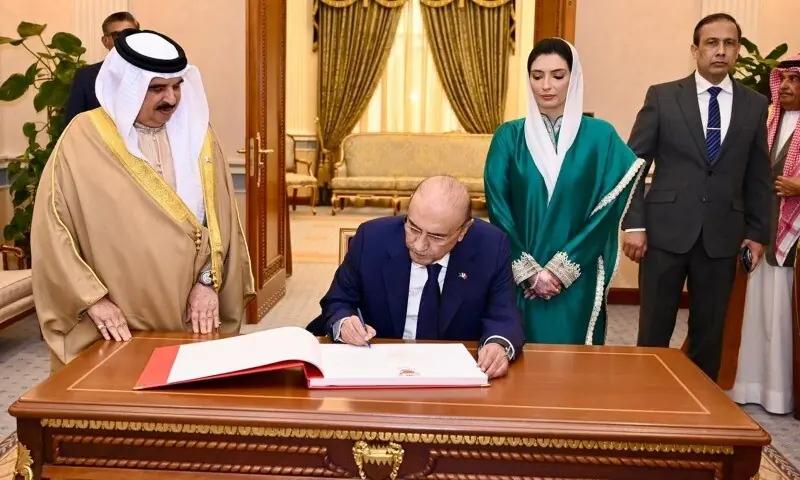
A central pillar of this effort has been renewed engagement with Gulf countries, particularly Saudi Arabia, the United Arab Emirates, and Qatar. These relationships are not merely symbolic; they are economically consequential. Pakistan’s balance-of-payments challenges have made Gulf financial support, deferred oil facilities, and investment commitments critical. Asif Ali Zardari’s outreach has coincided with tangible outcomes, including UAE-backed investment frameworks in energy, logistics, and port development, as well as Saudi Arabia’s continued role as a financial stabiliser during Pakistan’s negotiations with international lenders.
China remains the most strategically significant partner in Pakistan’s foreign policy calculus, and Asif Ali Zardari’s presidency has reaffirmed this alignment. Engagements with Chinese leadership have emphasised moving the China-Pakistan Economic Corridor (CPEC) beyond infrastructure into its “second phase,” prioritising industrial cooperation, agriculture, technology transfer, and special economic zones. This shift reflects a growing recognition in Islamabad that long-term benefits will depend less on roads and power plants and more on export-led growth and industrial productivity.
In South Asia, Asif Ali Zardari’s approach has been cautious but pragmatic. Pakistan’s relations with neighbouring states have long been hostage to security concerns, yet recent engagements with countries such as Sri Lanka and Bangladesh signal an attempt to diversify regional diplomacy. Trade facilitation, educational exchanges, and maritime cooperation have emerged as non-contentious areas where Pakistan can reposition itself as a cooperative regional actor rather than a perpetual outlier.
The outreach to Iraq, though less publicised, is equally noteworthy. Iraq’s post-conflict reconstruction and energy needs present opportunities for Pakistani labour, services, and technical expertise. By expanding diplomatic engagement beyond traditional allies, Asif Ali Zardari’s administration appears intent on widening Pakistan’s economic horizon in the Middle East — a region where geopolitical alignments are rapidly evolving.
On the defence and security front, the president’s messaging has remained consistent: Pakistan seeks regional stability but will safeguard its strategic interests. Defence cooperation with China and select Gulf partners, including training exchanges and intelligence coordination, has continued largely out of the spotlight. This low-profile approach aligns with a broader effort to present Pakistan as a responsible nuclear state focused on deterrence, not escalation.
Equally important is Asif Ali Zardari’s role in reinforcing internal institutional balance. At a time when Pakistan’s political history is marked by friction between civilian governments and state institutions, his presidency has emphasised continuity and coordination. Civil-military alignment, particularly on matters of foreign policy and economic recovery, has helped project an image of coherence — a critical factor for international confidence.
Economically, while the president does not shape fiscal policy directly, his political backing of structural reforms, IMF programme continuity, and investor-friendly signals has contributed to a degree of policy stability. For international partners and markets, such predictability is often as important as reform itself.
Critics may argue that Asif Ali Zardari’s second presidency lacks bold initiatives or transformative breakthroughs. That assessment, however, may overlook the context. In a period defined by constrained choices, global economic volatility, and regional instability, incremental gains and diplomatic steadiness may themselves constitute success.
As Pakistan navigates an uncertain future, Asif Ali Zardari’s presidency appears less concerned with rewriting history than with managing risk — preventing diplomatic isolation, sustaining strategic partnerships, and keeping the state functional amid competing pressures. Whether this approach yields long-term dividends will depend on execution beyond the presidency. But for now, Asif Ali Zardari’s second term reflects a familiar instinct: survive, stabilise, and quietly recalibrate Pakistan’s place in a changing world.