


By Commerce Reporter
LAHORE – Federal Minister for Planning, Development and Special Initiatives Ahsan Iqbal on Saturday stressed the need for a rapid transition towards electric vehicles (EVs), expansion of exports and improvement in tax collection to strengthen Pakistan’s economy and reduce dependence on external financial support.
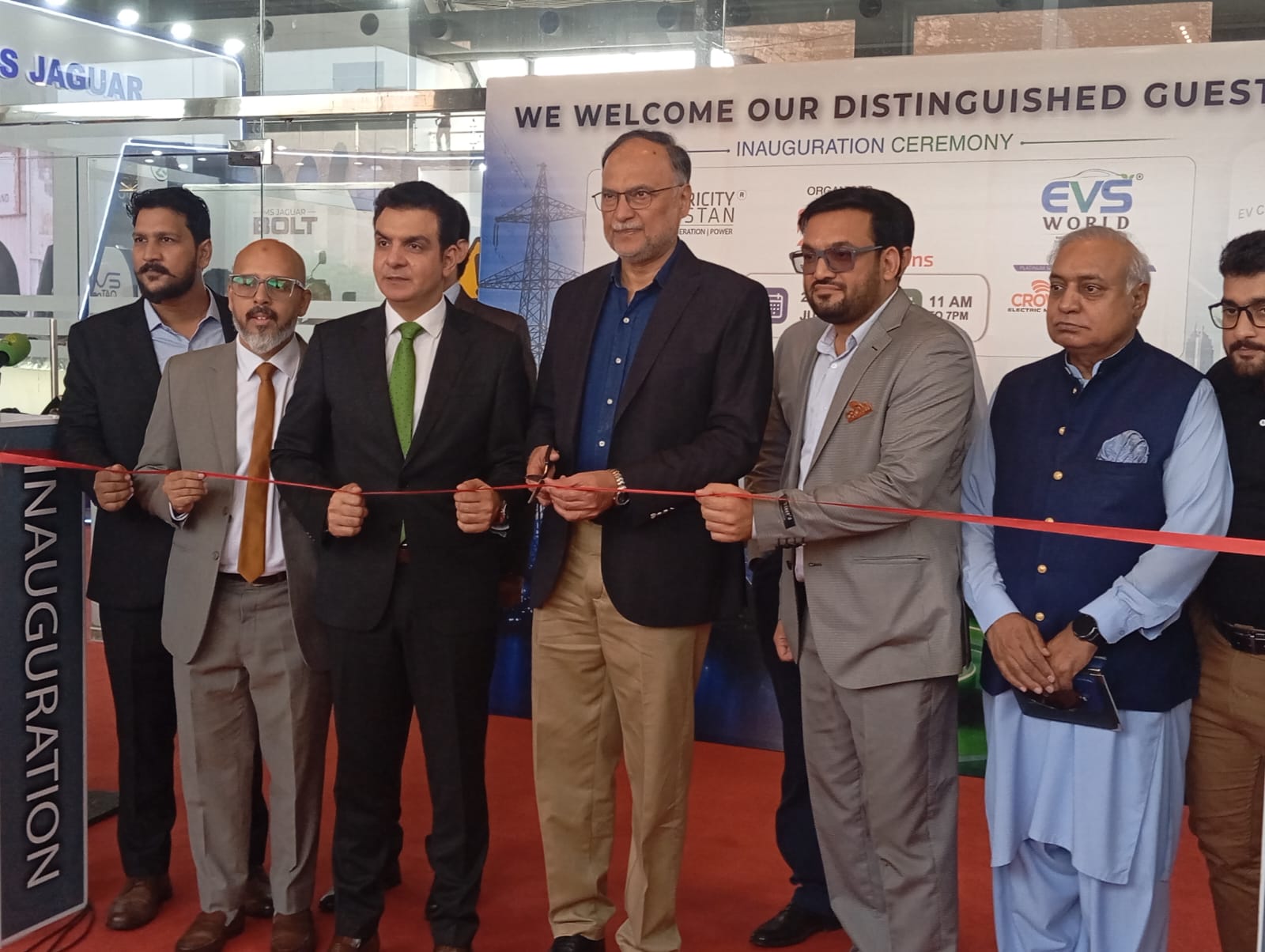
Speaking to media at the Expo Centre Lahore, the federal minister said the world was moving away from petrol-based transportation and an electric vehicle revolution had already started globally.
He said around 80 per cent of petrol consumption in Pakistan was linked to the transport sector, adding that the government wanted to accelerate the shift towards electric mobility.
“Transport sectors need to operate on electricity produced within the country,” Ahsan Iqbal said, adding that Pakistan had significant potential to establish itself as a major player in the EV sector.
The minister said Pakistan’s economic future depended on increasing exports and developing the capacity to earn foreign exchange.
He described Pakistan’s economic challenge as a difference between a “dollar-consuming” and “dollar-earning” economy, stressing that the country must increase its export capacity to achieve sustainable growth.
Ahsan Iqbal said nearly nine million overseas Pakistanis were contributing around $40 billion to the economy and emphasised the need to further expand dollar-earning sectors.
“Pakistan’s economy will become invincible when our exporters perform at their maximum potential,” he said.
He added that Pakistani exporters were already selling products in international markets, but the country needed to increase exports further, including an additional growth target of around 10 per cent.
Tax reforms essential for economic stability
The federal minister said the government had introduced several reforms in the Federal Board of Revenue (FBR), but acknowledged that Pakistan remained among the countries with the lowest tax-to-GDP collection rates.
He said countries that achieved economic development generally collected taxes ranging between 14 and 16 per cent, while Pakistan needed to improve compliance and broaden its tax base.
“If tax evasion continues, how will we provide facilities to the people?” he questioned.
Ahsan Iqbal said taxpayers who regularly paid their dues were effectively carrying the burden of those avoiding taxes, adding that continued tax evasion would increase pressure on compliant citizens.
Oil prices linked with international market
Commenting on rising petroleum prices, the minister said Pakistan was affected by fluctuations in global oil markets.
He said whenever international oil prices increased, Pakistan was also forced to adjust domestic prices accordingly.
“People can check international oil prices on Google. As soon as prices in the global market come down, we will also reduce prices,” he said.
Ahsan Iqbal said the economic impact of tensions between Iran and the United States was not limited to Pakistan, adding that inflationary pressures were also being felt in the US.
Hope for Iran-US agreement
Talking about regional tensions, the minister said Pakistan and its friendly countries had played a role in encouraging dialogue between Iran and the United States.
He expressed hope that both sides would return to negotiations and that a positive breakthrough could emerge soon.
“The effects of this conflict are being felt by 193 countries,” he said, adding that the international community wanted peace and stability.
Ahsan Iqbal said Pakistan hoped the leadership of Iran and the United States would move back towards an agreement to avoid further economic and geopolitical challenges.


