


NEW DELHI (Web Desk) – India’s youth-led protest movement, known as the Cockroach Janta Party (CJP), has called off weeks-long demonstrations after Education Minister Dharmendra Pradhan resigned following growing public anger over alleged examination paper leaks and concerns affecting millions of students.
The resignation marked a major victory for the protesters, who had demanded accountability over repeated controversies surrounding competitive examinations and alleged failures in India’s education system.
Pradhan announced his resignation on Saturday through a post on social media platform X, saying the decision was taken in view of the situation developing at the main protest site in New Delhi and across the country.
“Considering the situation that has arisen at Jantar Mantar and across the country, so that anti-national forces do not take advantage of this situation, I have sent my resignation letter to Prime Minister Narendra Modi,” Pradhan wrote.
He added that he respected the aspirations, feelings and legitimate expectations of India’s youth.
The resignation came shortly before another round of talks between protest leaders and government representatives. Earlier, police used tear gas to disperse demonstrators gathered at Jantar Mantar in the Indian capital.
Following discussions with government officials, CJP leaders announced that the demonstrations would end after claiming that all their demands had been accepted.
“We request the protesters to withdraw immediately and return home peacefully,” CJP spokesperson Ashutosh Ranka said after the meeting with government ministers.
Protesters’ demands accepted
Apart from seeking the education minister’s resignation, the movement had raised several other demands linked to examination irregularities and police action during demonstrations.
The protesters demanded financial assistance of 10 million rupees ($103,554) for families of students who died by suicide after being asked to retake examinations.
They also called for protection from legal action against participants of the protests and sought a public apology from Delhi Police and the Rapid Action Force over alleged use of force against demonstrators.
A federal minister confirmed that the government had accepted the protesters’ demands and appealed for an end to the agitation.
Celebrations across India
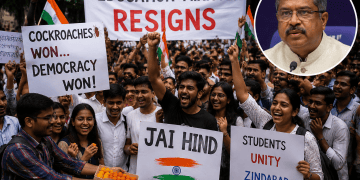
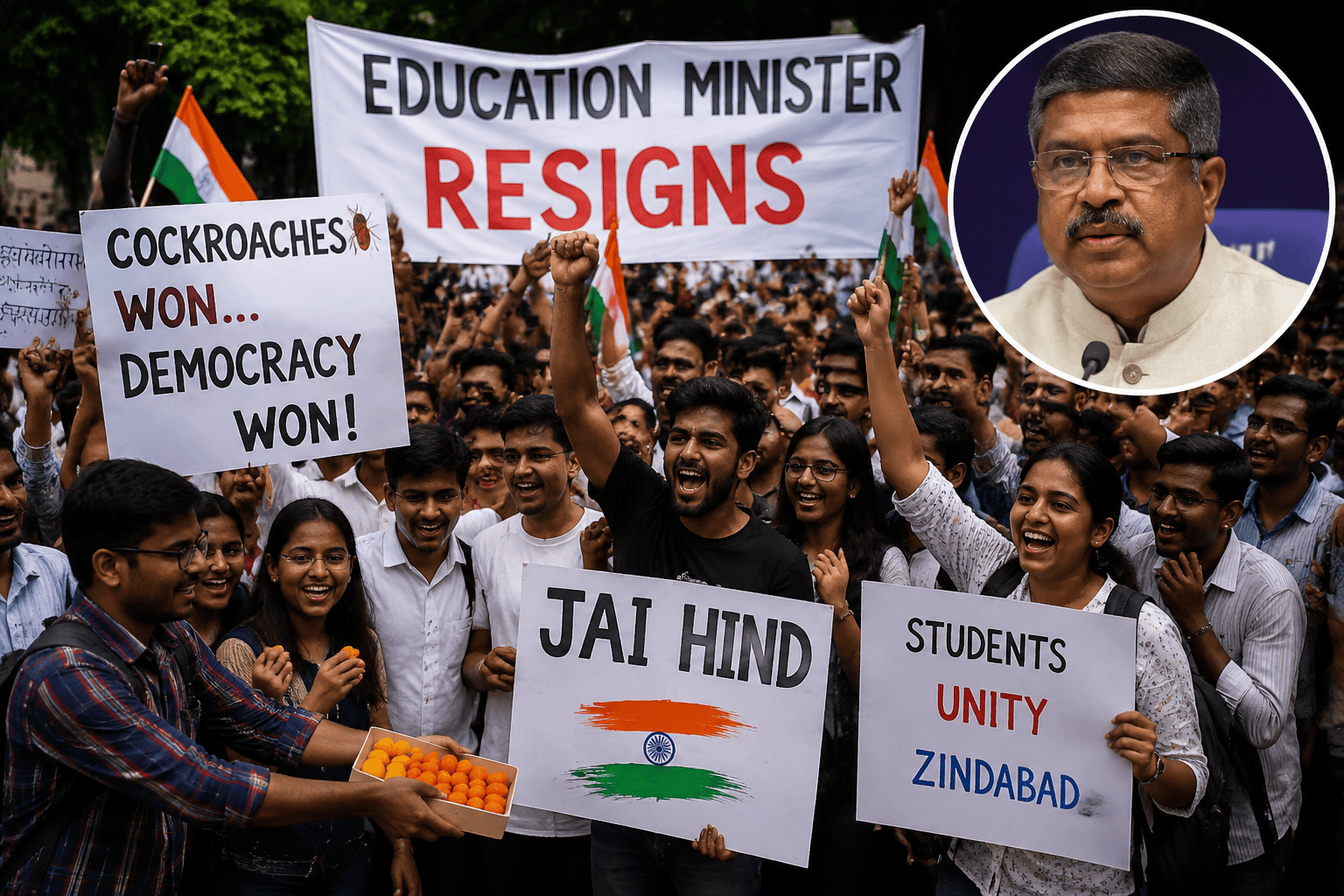
Following the announcement, celebrations erupted among supporters at Jantar Mantar, where thousands had gathered during the protest movement.
CJP founder Abhijeet Dipke declared the development a success, telling supporters: “We have done it,” as crowds celebrated the resignation.
The protesters raised patriotic slogans, including “Jai Hind”, while the national anthem was played through loudspeakers. Sweets were distributed among demonstrators, while a large police presence remained at the protest site.
Authorities had earlier restricted internet access around Jantar Mantar and closed several metro stations in the area during the demonstrations. After the resignation announcement, mobile internet services were restored.
The CJP celebrated the outcome in a post on X, stating: “Cockroaches won… Democracy won!”
Support from activists and opposition
Climate activist Sonam Wangchuk, who had staged a 26-day hunger strike in support of the youth-led movement, described the resignation as a victory for peace, patience and perseverance.
Opposition Congress leader Rahul Gandhi welcomed Pradhan’s resignation but demanded accountability from those responsible for actions against protesting students.
Gandhi said Prime Minister Narendra Modi should apologise over the use of force during demonstrations and ensure that students’ concerns were properly addressed.
Growing concerns over examination system
The protests were triggered by allegations of examination paper leaks, which have become a major issue among students preparing for competitive exams in India.
Millions of young Indians rely on government examinations for access to jobs and higher education opportunities. Any disruption or cancellation of exams creates uncertainty for candidates who spend years preparing for these tests.
The youth movement gained momentum by using social media platforms to organise demonstrations and highlight concerns about transparency, fairness and accountability in the examination process.
Political analysts said the resignation of a senior cabinet minister following youth protests could increase pressure on governments to strengthen examination security and improve confidence among students.
Impact on Indian politics
The end of the protests represents a significant moment for India’s youth activism, with demonstrators portraying the development as a victory for democratic participation.
While the government has accepted the protesters’ demands, questions remain over long-term reforms needed to prevent examination leaks and restore public trust in competitive testing systems.
The episode also highlights the growing influence of young voters and online-led movements in shaping political discussions in India.


