
• Latest
  • All
  • Pakistan
From water “crisis” to water “bankruptcy”: Pakistan must stop living on hydrological credit

After treaty: India’s western river push and what It means for Pakistan

March 9, 2026
10-day ceasefire agreement between Israel and Lebanon announced

Israel vows ‘full force’ action in Lebanon despite truce, orders demolition of suspected Hezbollah sites

April 19, 2026
ADVERTISEMENT
KP governor visits residence of  Punjab Assembly speaker, expressed condolences

KP governor visits residence of  Punjab Assembly speaker, expressed condolences

April 19, 2026
LCCI Progressive Group gains momentum as Ferozepur Road traders join associate class

LCCI Progressive Group gains momentum as Ferozepur Road traders join associate class

April 19, 2026
Quetta Gladiators choose to field after winning toss against Peshawar Zalmi

Quetta Gladiators choose to field after winning toss against Peshawar Zalmi

April 19, 2026
US and Iran set for second round of talks in Islamabad amid rising tensions

US and Iran set for second round of talks in Islamabad amid rising tensions

April 19, 2026 - Updated on April 20, 2026
Punjab hosts national marathon and cycling race in Lahore

Punjab hosts national marathon and cycling race in Lahore

April 19, 2026
Iran strongly repeated its promise to limit ships passing through area

Iran strongly repeated its promise to limit ships passing through area

April 19, 2026
Scholarship test 2026 held in Nankana Sahib attracts over 600 students

Scholarship test 2026 held in Nankana Sahib attracts over 600 students

April 19, 2026
Sikh pilgrims conclude Baisakhi visit, depart Pakistan via Wagah Border

Sikh pilgrims conclude Baisakhi visit, depart Pakistan via Wagah Border

April 19, 2026
Energy crisis and temporary measures: Where Pakistan stands and how long can it sustain 

Transport shutdown in twin cities: Security imperatives vs public suffering

April 19, 2026
Iran-India tensions escalate after vessel attack in Strait of Hormuz

Iran-India tensions escalate after vessel attack in Strait of Hormuz

April 18, 2026
Iran shuts Strait of Hormuz again amid US blockade tensions

Iran shuts Strait of Hormuz again amid US blockade tensions

April 18, 2026
Your text
Plugin Install : Cart Detail need WooCommerce plugin to be installed.
Monday, April 20, 2026
The Tribune
  • Login
  • Home
  • Top News
  • World
    • Interview
  • Pakistan
    • Politics
    • Crime
  • Iran-US-Israel war
  • Epaper
  • Opinion
  • Sports
    • Cricket
  • Business
    • Business
    • Science
      • Weird
        • News Analysis
      • FBR & Customs
  • Entertainment
  • History in focus
    • Tech
    • Event News
    • Event Reporting
    • NGOs
  • Health
  • Fake News
No Result
View All Result
  • Home
  • Top News
  • World
    • Interview
  • Pakistan
    • Politics
    • Crime
  • Iran-US-Israel war
  • Epaper
  • Opinion
  • Sports
    • Cricket
  • Business
    • Business
    • Science
      • Weird
        • News Analysis
      • FBR & Customs
  • Entertainment
  • History in focus
    • Tech
    • Event News
    • Event Reporting
    • NGOs
  • Health
  • Fake News
No Result
View All Result
The Tribune
No Result
View All Result
  • Home
  • Top News
  • World
  • Pakistan
  • Iran-US-Israel war
  • Epaper
  • Opinion
  • Sports
  • Business
  • Entertainment
  • History in focus

After treaty: India’s western river push and what It means for Pakistan

The Tribune International by The Tribune International
1 month ago
in Opinion
0 0
A A
0
0
SHARES
4
VIEWS
Share on FacebookShare on Twitter

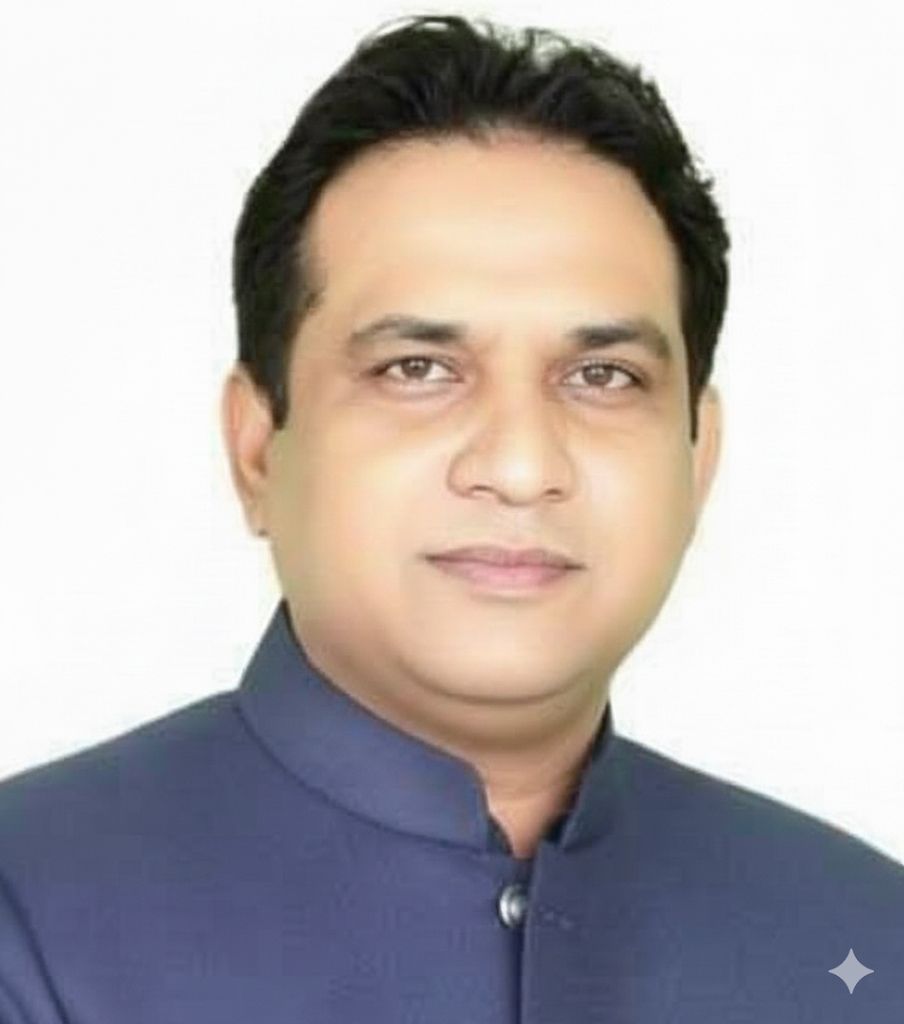
By Mohsin Leghari

When India placed the Indus Waters Treaty of 1960 in abeyance in April 2025, the legal dispute quickly acquired a more concrete dimension: an acceleration of infrastructure development on the western rivers. Projects long stalled by design objections, arbitration, or environmental review have entered a phase of heightened urgency, and the pace of construction across the Chenab, Jhelum, and upper Indus basins has visibly quickened.

Read also: Water scarcity sparks debate over Cholistan Canal Project

The legal position, however, remains unchanged. The Treaty contains no provision for unilateral suspension — a point the World Bank itself publicly confirmed in May 2025. The Court of Arbitration under the Permanent Court of Arbitration, in a unanimous Supplemental Award on Competence issued in June 2025, found that India’s abeyance decision had no effect on the Court’s jurisdiction. By August 2025, the Court had issued a substantive Award on the general interpretation of the Treaty’s provisions governing hydroelectric design, with India declining to participate throughout. A second phase of merits proceedings is now underway. The engineering push and the legal contest proceed in parallel — one on the ground, the other at The Hague.

ADVERTISEMENT

For Pakistan, the more pressing question has shifted from whether these projects are being built — they are — to what kind of hydraulic influence they will ultimately afford India, and how that might reshape the downstream water supplies on which millions of farmers depend.

The Chenab is the most consequential river in this story. It feeds the Marala Headworks and sustains the vast canal colonies that stretch from Sialkot down to Multan, forming the backbone of Punjab’s agricultural economy. What is taking shape upstream is increasingly a structured power cascade — a series of interconnected hydroelectric projects that, in combination, could enhance India’s capacity to manage river flows in ways not possible with isolated run-of-river schemes.

The most significant project under construction is Pakal Dul, a 1,000 MW facility on the Marusudar, a major Chenab tributary. Unlike conventional run-of-river designs, Pakal Dul incorporates meaningful storage. To put that in perspective: the Chenab carries on average roughly 24 million acre-feet annually over the past 35 years. Pakal Dul’s live storage is approximately 0.04 MAF — less than two-tenths of one percent of that annual flow. Even when combined with the Ratle, Kiru, and Kwar projects under construction, the aggregate live storage of the entire cascade reaches only about 0.06 MAF, or one-quarter of one percent of annual discharge. These numbers are important. They tell us that what is being built cannot block the Chenab, cannot sustain seasonal withholding, and cannot threaten Pakistan with outright water denial. The risk is subtler than that.

Downstream of Pakal Dul, the 850 MW Ratle project is a run-of-river facility with pondage and gated spillways that can regulate daily flows. Between the two sit the Kiru (624 MW) and Kwar (540 MW) projects, limited in storage individually but significant in what they enable collectively: a coordinated staging of releases across the cascade. None of these is a volume-capture dam. Together, they function as timing instruments — capable of influencing not how much water reaches Pakistan, but when it does.

Timing, in an irrigation economy, is everything. Pakistan’s sowing windows are governed by the arrival of water at headworks, not merely its annual volume. A cascade that can compress or delay early-season releases, even modestly, introduces uncertainty into planting calendars that farmers and canal administrations have relied upon for generations. The proposed Sawalkote project, the largest in the Chenab system at 1,856 MW, has not yet been built, but if constructed at full height it would mark a more substantial shift — from distributed daily regulation toward genuine seasonal modulation.

On the Jhelum, the dynamics are somewhat different. The Kishanganga project, operational since 2018, diverts water from the Neelum into the Jhelum basin, creating a permanent structural reduction in flows to the Neelum-Jhelum hydropower project on Pakistan’s side. This is not a question of seasonal leverage but of a lasting baseline shift. The historically contested Tulbul navigation project has also resurfaced in discussions; if completed, it could offer India some capacity for lean-season flow regulation on the Jhelum — modest in absolute terms but potentially significant for winter Rabi irrigation in an already stressed system. The Uri-II project, by contrast, is a straightforward run-of-river scheme with limited basin-wide influence.

In Ladakh, India is advancing smaller hydropower projects on the Indus mainstem. These are primarily aimed at supporting regional grid stability, and no major reservoir construction has been reported that would materially affect downstream flows for now.

A separate concern, distinct from hydropower, is the Ranbir Canal at Akhnoor, which diverts Chenab water for irrigation within India. Reports of potential capacity enhancement introduce a different category of risk: consumptive use, which means permanent volumetric reduction rather than timing modulation. Large-scale inter-basin transfers remain unconfirmed as of early 2026, but the direction of travel warrants attention.

What does all of this amount to? In the immediate term, the answer is measured. Most projects remain run-of-river, cumulative storage is a fraction of one percent of annual flows, and no verified operational capacity exists that would enable seasonal blockade of the Chenab. The hydraulic stranglehold that some commentary has warned of is not imminent.

Over the medium term, the picture is less comfortable. As the cascade is progressively commissioned, India will acquire a genuinely enhanced capacity to shape hydrograph timing — to influence the windows within which water reaches Pakistan’s headworks. The risk is not a dramatic shutoff. It is the slow erosion of predictability.

That risk falls on a system already ill-equipped to absorb it. Pakistan’s irrigation infrastructure is aging, its canal measurement systems are imprecise, its transmission losses are substantial, and its governance frameworks for water distribution remain contested. A system in good institutional health could adapt to moderate upstream timing shifts with careful reservoir operation and demand-side management. Pakistan’s system, as it stands, is more vulnerable than it need be.

The western rivers were allocated to Pakistan on hydrological logic — geography creates downstream dependence, and that dependence warranted a treaty guarantee. Infrastructure can alter the character of that dependence without formally violating its terms, and that is precisely what the current construction programme is doing, incrementally.

Pakistan’s response must be proportionate and strategic. Optimising reservoir operations at Mangla and Tarbela, investing in real-time telemetry and canal measurement, reducing transmission losses, and pursuing serious irrigation governance reform are not merely good housekeeping — they are the foundations of resilience.

The contest ahead is not about outright blockade. It is about predictability. Rivers do not need to be stopped to become instruments of influence. They need only to become uncertain. And in an irrigation-dependent economy, predictability is power.


ShareShareTweetShareSendSendShare

Get real time update about this post categories directly on your device, subscribe now.

Unsubscribe
ADVERTISEMENT

Related Posts

Energy crisis and temporary measures: Where Pakistan stands and how long can it sustain 
Opinion

Transport shutdown in twin cities: Security imperatives vs public suffering

April 19, 2026
Historic visit to Tehran reflects strategic signaling and echoes past diplomacy
Opinion

Historic visit to Tehran reflects strategic signaling and echoes past diplomacy

April 17, 2026
Electricity crisis threatens Pakistan’s economy, industry and livelihoods
Opinion

Electricity crisis threatens Pakistan’s economy, industry and livelihoods

April 15, 2026
Faith, strategy and Pakistan’s evolving military role in the Muslim world
Opinion

Faith, strategy and Pakistan’s evolving military role in the Muslim world

April 15, 2026
Islamabad emerges as global diplomatic hub in high-stakes US–Iran Talks
Opinion

A step towards peace: Iran–US talks in Islamabad

April 13, 2026
Islamabad emerges as global diplomatic hub in high-stakes US–Iran Talks
Opinion

Islamabad emerges as global diplomatic hub in high-stakes US–Iran Talks

April 11, 2026
  • Trending
  • Comments
  • Latest
Pioneers Businessmen Group hosts grand iftar dinner in honour of Chairman Ali Hussam Asghar

Pioneers Businessmen Group hosts grand iftar dinner in honour of Chairman Ali Hussam Asghar

March 17, 2026 - Updated on March 21, 2026
Upgradation work at Badshahi Mosque to be completed after Eid: Dr Ehsan Bhutta

Upgradation work at Badshahi Mosque to be completed after Eid: Dr Ehsan Bhutta

March 18, 2026 - Updated on March 19, 2026
Business leaders attend Iftar dinner held in honour of Ali Hussam Asghar in Lahore

Business leaders attend Iftar dinner held in honour of Ali Hussam Asghar in Lahore

March 16, 2026 - Updated on March 18, 2026
Eid ul Fitr amid global conflict: A call for unity and humanitarian leadership in the Muslim World

Eid ul Fitr amid global conflict: A call for unity and humanitarian leadership in the Muslim World

March 18, 2026
Unrest in Iran kills at least 2,000 activists say

Unrest in Iran kills at least 2,000 activists say

4
High-alert security arrangements ensured across city during Eid-ul-Adha

CCPO Kamyana reviews police performance, orders crackdown on gambling and better security for Chinese nationals

2
CM Maryam launches PERA to curb hoarding, land grabbing across Punjab

CM Maryam launches PERA to curb hoarding, land grabbing across Punjab

2
CM Maryam Nawaz Sharif to start latest SRT Train in Lahore

CM Maryam Nawaz Sharif to start latest SRT Train in Lahore

2
10-day ceasefire agreement between Israel and Lebanon announced

Israel vows ‘full force’ action in Lebanon despite truce, orders demolition of suspected Hezbollah sites

April 19, 2026
KP governor visits residence of  Punjab Assembly speaker, expressed condolences

KP governor visits residence of  Punjab Assembly speaker, expressed condolences

April 19, 2026
LCCI Progressive Group gains momentum as Ferozepur Road traders join associate class

LCCI Progressive Group gains momentum as Ferozepur Road traders join associate class

April 19, 2026
Quetta Gladiators choose to field after winning toss against Peshawar Zalmi

Quetta Gladiators choose to field after winning toss against Peshawar Zalmi

April 19, 2026
April 2026
MTWTFSS
 12345
6789101112
13141516171819
20212223242526
27282930 
« Mar    
ADVERTISEMENT

Browse by Category

  • Apps
  • Business
  • Business
  • Cricket
  • Crime
  • Entertainment
  • Epaper
  • Event News
  • Event Reporting
  • Fake News
  • Fashion
  • FBR & Customs
  • Food
  • Gadget
  • Gaming
  • Health
  • History in focus
  • Interview
  • Iran-US-Israel war
  • Mobile
  • Movie
  • Music
  • News Analysis
  • NGOs
  • Opinion
  • Pakistan
  • Politics
  • Politics
  • Review
  • Science
  • Science
  • Sports
  • Startup
  • Tech
  • Top News
  • Travel
  • Weird
  • World
  • #21289 (no title)
  • About Us
  • Blog
  • Cart
  • Checkout
  • Contact Us
  • Disclaimer
  • My account
  • Privacy Policy
  • Shop
  • Terms and Conditions
  • 📰 Advertise With Us

© 2026 The Tribune International. All rights reserved. | Powered by JNews
Disclaimer: The Tribune International is an independent platform and is not affiliated with any other organisation.
Reach us: Thetribuneintl@gmail.com

Welcome Back!

Sign In with Facebook
Sign In with Google
Sign In with Linked In
OR

Login to your account below

Forgotten Password?

Retrieve your password

Please enter your username or email address to reset your password.

Log In
Translate »

Add New Playlist

No Result
View All Result
  • Home
  • Top News
  • World
    • Interview
  • Pakistan
    • Politics
    • Crime
  • Iran-US-Israel war
  • Epaper
  • Opinion
  • Sports
    • Cricket
  • Business
    • Business
    • Science
      • Weird
      • FBR & Customs
  • Entertainment
  • History in focus
    • Tech
    • Event News
    • Event Reporting
    • NGOs

© 2026 The Tribune International. All rights reserved. | Powered by JNews
Disclaimer: The Tribune International is an independent platform and is not affiliated with any other organisation.
Reach us: Thetribuneintl@gmail.com