


By Our Correspondent
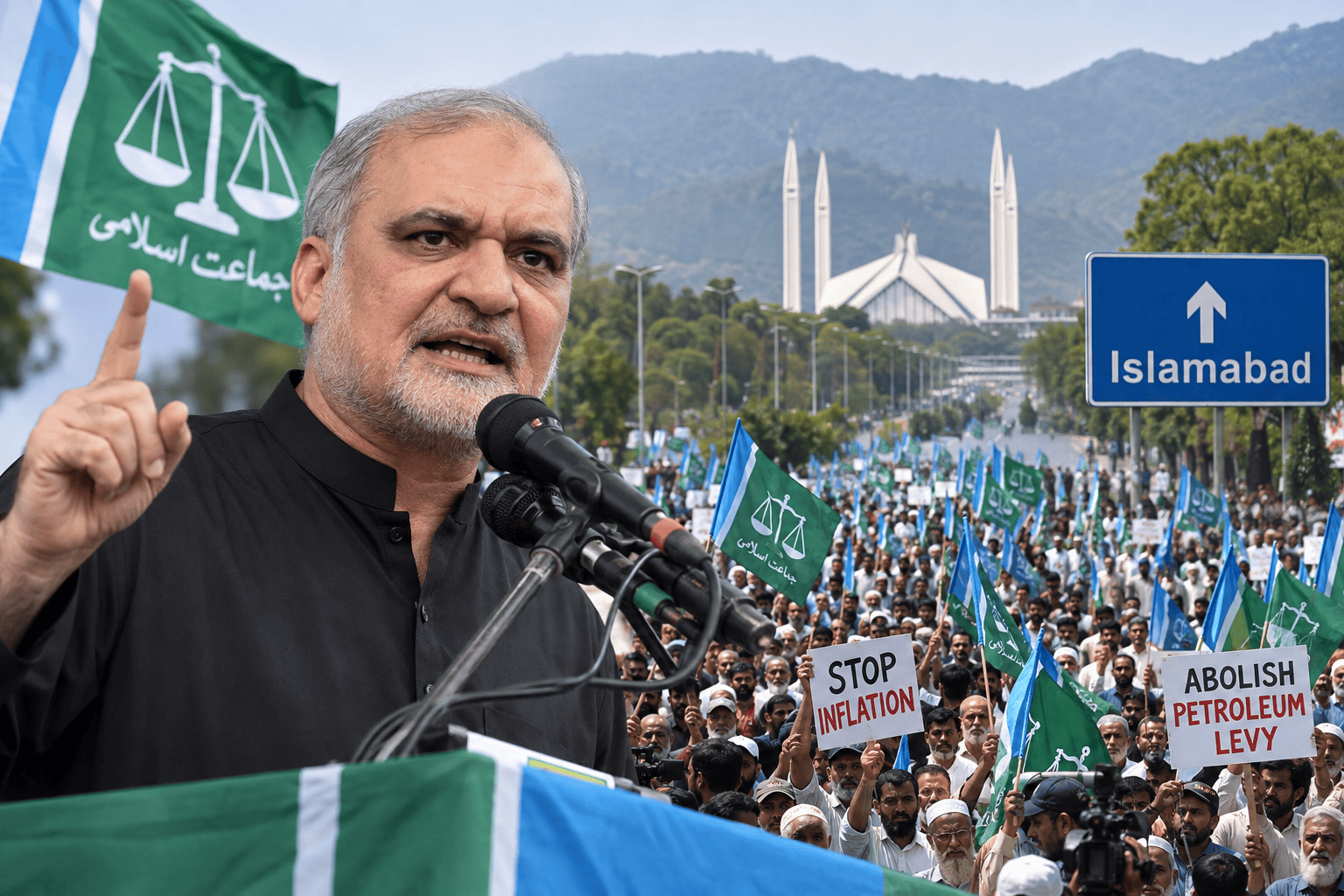
LAHORE: Jamaat-e-Islami (JI) chief Hafiz Naeemur Rehman has announced a long march towards Islamabad on September 20, intensifying his party’s campaign against the petroleum levy, rising fuel prices and inflation.
Addressing an anti-inflation gathering in Gujranwala on Friday, Hafiz Naeem said people from across Pakistan would participate in what he described as a “historic” march on the federal capital.
He said negotiations between Jamaat-e-Islami and the government had failed, claiming the government had maintained that it lacked the fiscal space to abolish the petroleum levy.
The JI chief demanded that the government withdraw the levy and reduce what he described as an excessive tax burden on electricity and consumers. He warned that failure to provide relief could turn the party’s campaign against inflation into a broader movement against the government.
Hafiz Naeem also announced a march from Liaquat Bagh towards Islamabad on Saturday, September 12, saying he would personally lead the Rawalpindi-Islamabad protest.
Calling on party workers to prepare for a larger mobilisation, he said both men and women would participate regardless of any containers or other restrictions placed in their way.
Hafiz Naeem criticised the government’s spending priorities, questioning why ordinary citizens were being asked to bear additional taxes and levies while, in his view, public expenditure remained high.
He also targeted Prime Minister Shehbaz Sharif and Punjab Chief Minister Maryam Nawaz during his speech, accusing the ruling leadership of failing to understand the economic pressure faced by ordinary Pakistanis.
“Listen to the public anger,” Hafiz Naeem said while addressing the prime minister, according to the remarks reported from the rally.
In one of his strongest political statements, the JI chief referred to former Bangladesh prime minister Sheikh Hasina while warning the government about the potential consequences of mounting public anger. His remarks represented political rhetoric by the opposition leader rather than an indication of any imminent change in government.
The September 20 march would mark a significant escalation of Jamaat-e-Islami’s current campaign, shifting it from rallies and sit-ins towards a nationwide mobilisation focused on fuel taxation, electricity costs and inflation.
What it means
The announcement increases political pressure on the federal government at a time when household and business costs remain a major public concern. JI is seeking to turn economic grievances, particularly those surrounding petroleum and electricity charges, into a wider political campaign.