



By Our Correspondent
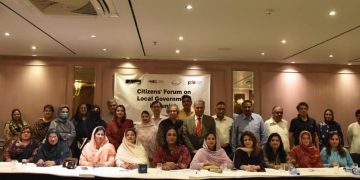
LAHORE: HomeNet Pakistan, in collaboration with AwazCDS-Pakistan, organized the Citizen Forum for the Restoration of Constitutional Local Governance at Hotel Lahore. The forum brought together Members of the Provincial Assembly (MPAs), former local councilors, civil society organizations, legal experts, governance practitioners, academics, media representatives, youth leaders, women representatives, and development professionals to discuss pathways for strengthening Pakistan’s local government system.
The forum provided a platform for dialogue on the constitutional, administrative, financial, and political autonomy of local governments. Participants emphasized that strong and empowered local governments are essential for strengthening democracy, improving public service delivery, enhancing citizen participation, promoting accountability, and supporting sustainable development.
In her keynote address, Ms. Ume Laila Azhar highlighted the importance of strong, inclusive, and representative local governments to ensure the meaningful participation of women, home-based workers, marginalized communities, and citizens in local decision-making processes. She stated that stronger local democracy would contribute to improved public services, greater social inclusion, and sustainable community development.
Mr. Zia ur Rehman, Chief Executive of AwazCDS-Pakistan, stated that elected and empowered local governments are not merely an administrative arrangement but a constitutional and democratic necessity. He emphasized that the continued absence of functioning local governments weakens citizen participation, accountability, and the delivery of essential public services. He called for the timely conduct of local government elections and the meaningful transfer of political, administrative, and financial authority to elected local representatives in accordance with Article 140-A of the Constitution. He further stressed that local government laws must ensure continuity, institutional autonomy, adequate fiscal resources, and inclusive representation of women, youth, workers, minorities, persons with disabilities, and other marginalized groups.
Speaking at the forum, Member of the Punjab Assembly Ms. Fizzah Maimona Rao, MPA highlighted the importance of providing proper authority to elected councilors, both women and men. She stressed that powers should not remain concentrated with chairpersons while other elected representatives are unable to effectively address community concerns. She stated that empowered councilors can play a vital role in resolving local issues and strengthening political institutions.
Sharing her experience as a former councilor, Ms. Ruksana Kausar said that her continued connection with communities helped her understand people’s everyday challenges. She emphasized that issues such as sanitation, sewerage, gas supply, and other basic services require effective local representation and timely solutions. She further noted that women representatives often remain closely connected with communities and play an important role in understanding and addressing citizens’ concerns.
Member of the Punjab Assembly Ms. Sumbal Maalik Hussain appreciated the initiative of the Citizen Forum and said that such platforms create awareness, encourage dialogue, and help develop solutions to public issues. She assured her support for efforts to strengthen local governance and stated that elected representatives should be empowered to play their proper role in Union Councils and local institutions. She appreciated the concerns raised by participants and said that strengthening local governments would enable elected representatives to resolve community-level issues more effectively.
Ms. Farzana Abbas, MPA stated that the government is committed to improving the local government system and expressed hope that continued efforts would lead to effective implementation and positive outcomes. Participants expressed concern over the continued delay in local government elections, limited financial resources, and insufficient administrative authority available to local governments. They agreed that restoring empowered and elected local governments would strengthen accountability, transparency, citizen participation, and the delivery of essential public services.
Mr. Anwar Hussain underscored the importance of decentralization for democratic governance and effective public institutions. He stated that transferring political, administrative, and financial authority to local governments would enhance transparency, improve service delivery, and enable elected representatives to respond more effectively to citizens’ needs.
Mr. Ishtiaq Chaudhry emphasized that democratic local governments are the foundation of a strong democracy. He noted that transferring powers to the grassroots level empowers citizens and makes government institutions more responsive. He also highlighted that despite Article 140A of the Constitution, Punjab continues to face challenges in restoring elected local governments and ensuring the effective transfer of powers at the local level.
Mr. Arshid Mahmood Mirza highlighted the importance of evidence-based policymaking and the use of reliable data to strengthen local governance systems. He emphasized that data on community needs, service delivery gaps, and citizens’ priorities is essential for effective planning, accountability, and responsive decision-making at the local level.
Mr. Salman Abid stressed the importance of timely and transparent local government elections for strengthening democratic institutions. He stated that regular elections, empowered local representatives, and effective transfer of powers are necessary to ensure meaningful citizen participation and improve governance outcomes.
Ms. Humera Aslam stressed the need to strengthen local governments by providing greater authority to elected local representatives. She emphasized the importance of conducting local government elections on time, transferring political, administrative, and financial powers to local governments, and ensuring adequate financial resources for effective service delivery. She further highlighted that local governments must function as the constitutional third tier of governance.
A key outcome of the consultation was the formal launch of the Citizen Forum as a multi-stakeholder platform. Participants agreed to work collectively to advocate for the restoration of elected local governments in Punjab and promote constitutional, inclusive, and accountable local governance.
The Forum also agreed to continue engagement with Members of the Provincial Assembly, policymakers, political parties, civil society organizations, local councilors, media, academia, and development partners through research, policy dialogue, advocacy, and public awareness initiatives to advance democratic decentralization in Pakistan.
Participants further emphasized the importance of ensuring meaningful representation of women, youth, persons with disabilities, workers, farmers, religious minorities, and transgender persons in local government institutions. They called for timely local government elections, greater financial and administrative autonomy, stronger citizen oversight, and full implementation of constitutional provisions related to local governance.
The recommendations emerging from the consultation will be compiled and shared with relevant government institutions, parliamentarians, and stakeholders to support ongoing reforms for stronger, more effective, and inclusive local governments in Pakistan.


