


NEW DEHLI (Web Desk) – The Odisha government has launched an investigation after the inclusion of Bollywood song lyrics in a Class 8 school textbook triggered widespread criticism from parents, teachers, education experts, and social media users.
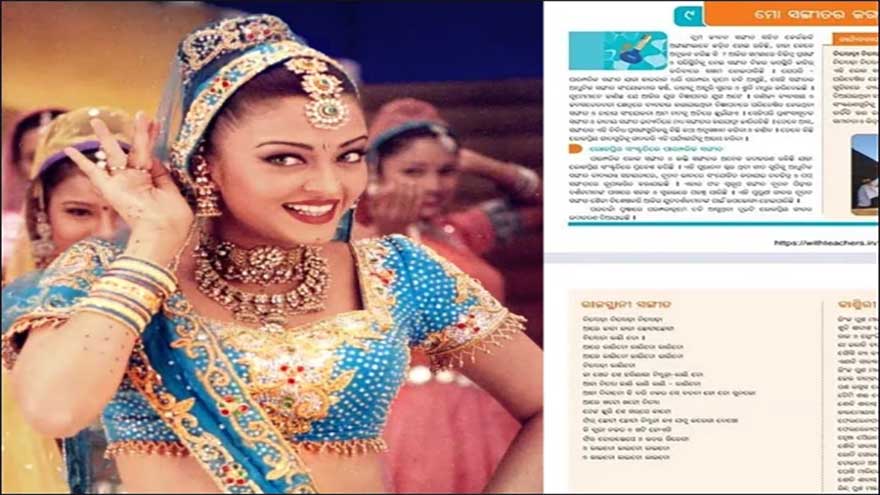
The controversy centers on the Class 8 Art Education textbook, Kirti, prepared under India’s National Education Policy (NEP) 2020. The textbook includes the complete lyrics of the popular song “Nimbooda Nimbooda,” which gained nationwide fame after featuring in the 1999 Bollywood film Hum Dil De Chuke Sanam. The book identifies the composition as a traditional Rajasthani folk song.
The inclusion of another Bollywood track, “Rind Posh Maal,” from the film Mission Kashmir, has further fueled public debate. Critics argue that school textbooks should prioritize regional culture, literature, and traditional art forms rather than songs made popular through commercial cinema.
The issue came to light after photographs of the textbook were widely shared on social media, prompting questions about the content selection process. Many users expressed concern that Odisha’s own cultural traditions and folk heritage were overlooked despite the state’s rich artistic history.
Parents and educators have also questioned whether the selected material aligns with the educational objectives of an art curriculum. Some education experts believe folk traditions can be taught effectively through authentic regional content while maintaining national cultural diversity.
The controversy expanded after reports revealed that newly introduced textbooks contained 1,678 errors across multiple subjects. The reported mistakes include factual inaccuracies, editing issues, formatting problems, and content-related concerns, raising broader questions about the textbook review and approval process.
Responding to the criticism, Odisha Chief Minister Mohan Charan Majhi directed authorities to take immediate action. The state government suspended senior officials from the State Council of Educational Research and Training (SCERT), the institution responsible for preparing the textbooks.
Education Minister Nityananda Gond also ordered formal investigations against six additional officials linked to the publication process. The government said accountability would be ensured if negligence or procedural failures were found during the inquiry.
A special investigation committee has been established to examine how the disputed content and numerous errors were approved for publication. The committee will review the textbook development process, evaluate editorial standards, and recommend improvements to prevent similar issues in future editions.
Among its initial recommendations is the creation of a dedicated Quality Assurance Cell to strengthen textbook review mechanisms before publication. Officials believe additional layers of academic scrutiny will help improve educational materials and reduce the possibility of factual or editorial mistakes.
Education specialists have welcomed the government’s decision to conduct a comprehensive review but stressed that textbook preparation should involve subject experts, language specialists, and cultural scholars. They argue that quality educational content requires rigorous evaluation before reaching classrooms.
The incident has also renewed discussions about balancing national and regional cultural representation within school curricula. While many acknowledge that songs like “Nimbooda Nimbooda” originated from traditional folk traditions before their adaptation into films, critics maintain that textbooks should clearly distinguish between folk heritage and cinematic presentation.
The Odisha government has assured students, parents, and schools that necessary corrections will be made after the inquiry concludes. Officials said revised editions will reflect higher academic standards and undergo stricter verification before distribution.
The outcome of the investigation is expected to influence future textbook preparation across the state, with authorities emphasizing accuracy, cultural representation, and stronger quality control as key priorities for upcoming educational publications.


