


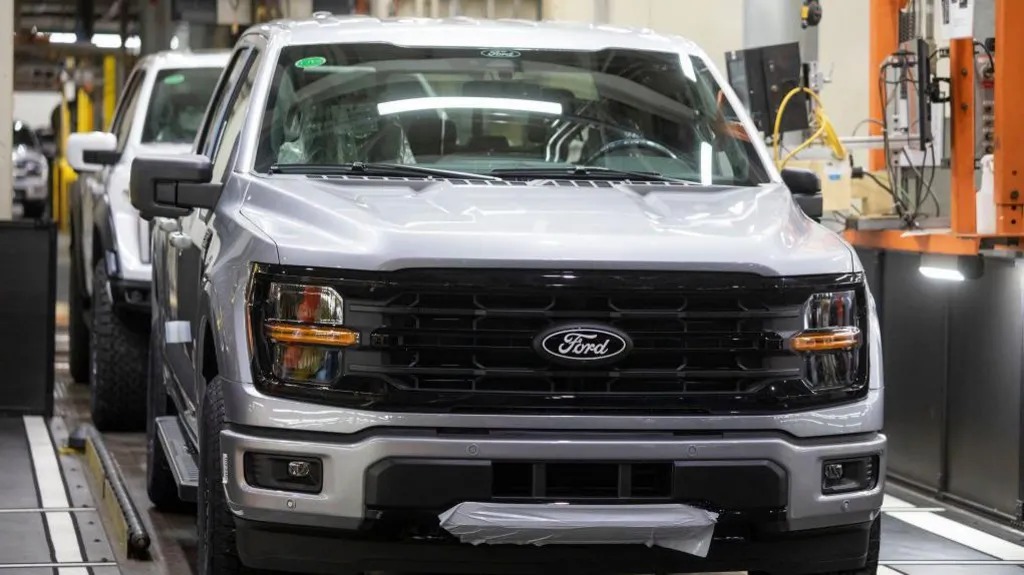
DETROIT (Agencies) – Ford Motor Company has brought back hundreds of experienced engineers into key vehicle development and quality assurance roles after concluding that artificial intelligence (AI) alone could not match the expertise gained through decades of hands-on engineering experience.
The move marks a notable shift in strategy for one of the world’s largest automakers, as companies across the automotive and manufacturing sectors increasingly embrace AI to improve efficiency, reduce costs and accelerate product development.
According to company officials, Ford had expanded the use of AI across several engineering functions, including design validation and quality checks, with the expectation that advanced algorithms could help identify defects and improve vehicle reliability. However, the company found that while AI proved to be a valuable support tool, it was unable to replicate the judgement and practical knowledge of veteran engineers.
Charles Poon, Ford’s Vice President of Vehicle Hardware Engineering, said artificial intelligence remains an important technology but stressed that its effectiveness depends entirely on the quality of the data and experience behind it.
“Artificial intelligence is a fantastic tool, but it’s only as good as the information you use to train it,” Poon said while explaining the company’s decision to strengthen human involvement in the engineering process.
He acknowledged that Ford had underestimated the importance of engineers who had spent decades working through multiple vehicle development cycles and understood problems that software alone could not easily detect.
“Over prior years, we didn’t pay as much attention as we should have to the experience of our most knowledgeable engineers that have been with us through many product cycles,” he said.
Poon admitted that the company had expected AI-driven quality systems to produce better outcomes than they ultimately delivered.
“Mistakenly, we thought that by just introducing artificial intelligence and ingesting the design requirements that we had, that would produce a high-quality product,” he said.
As part of its revised engineering strategy, Ford has recruited approximately 300 experienced engineers to play a larger role in vehicle design and quality assurance.
Unlike engineers directly involved in production schedules, these specialists will serve as internal reviewers, conducting mandatory weekly design assessments aimed at identifying weaknesses and eliminating potential defects before vehicle designs move to manufacturing.
The company said this approach is intended to improve product quality at the earliest stages of development, reducing costly design flaws before production begins.
Industry experts say the decision reflects a growing recognition that while AI can analyse enormous amounts of technical data and automate repetitive tasks, it still struggles to replace human intuition, contextual understanding and engineering judgement developed over years of practical experience.
Rather than abandoning AI, Ford appears to be shifting toward a hybrid model in which advanced technology supports engineers instead of replacing them.
The strategy also coincides with a significant improvement in Ford’s product quality.
The automaker recently announced that it ranked as the top mainstream automotive brand in the J.D. Power 2026 U.S. Initial Quality Study (IQS), achieving the milestone after years of efforts to improve manufacturing standards and customer satisfaction.
According to the company, Ford climbed from 15th place in 2023 to the highest-ranked mainstream brand in the latest annual survey, which measures the quality of new vehicles based on feedback from owners during the first months of ownership.
Company officials believe the renewed emphasis on experienced engineering talent, combined with better use of AI as a supporting tool rather than a replacement for human expertise, will help sustain improvements in quality and reliability.
The decision comes at a time when businesses across multiple industries are rapidly integrating artificial intelligence into daily operations. While AI has demonstrated significant benefits in data analysis, predictive maintenance and manufacturing automation, Ford’s experience highlights the continuing importance of skilled professionals in making complex engineering decisions.
Analysts say the company’s move may influence other manufacturers evaluating the balance between automation and human expertise, reinforcing the view that AI is most effective when used to enhance—not replace—the knowledge and judgement of experienced workers.